Clinical Simulation
Bradycardia


About This Course
What you'll experience
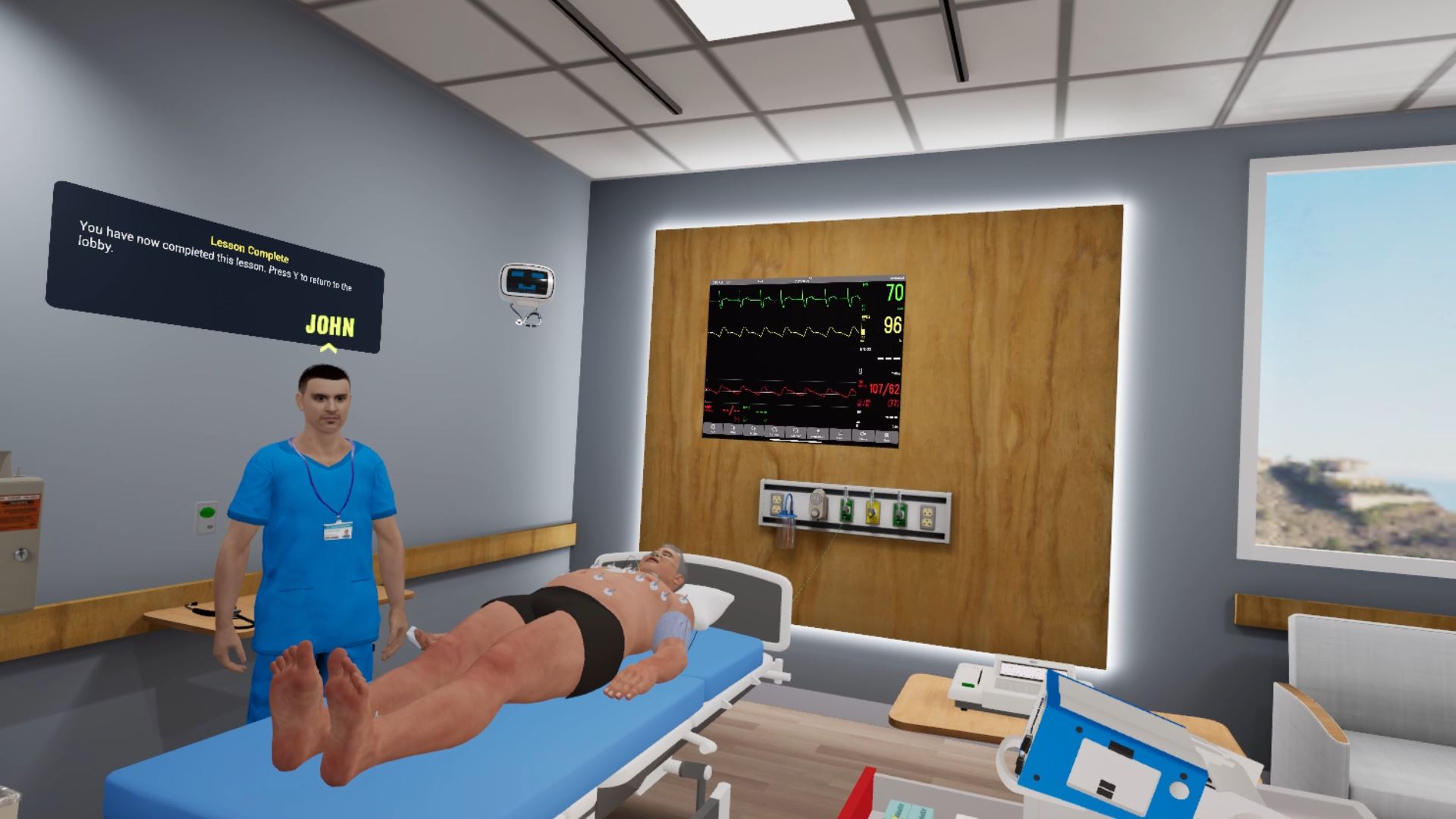
This is a case of a middle-aged patient who is feeling dizzy and weak. The team is expected to perform an initial assessment using SAMPLE and OPQRST and obtain an ECG. Upon recognizing a heart block, they should ensure IV access, prepare, and perform pacing before calling for cardiology.
Both single-player and multiplayer modes are available for this course. The multiplayer mode facilitates users to collaborate as a team, perform procedures with fellow participants, communicate over voice chat in real-time and share knowledge and experiences.
The open scenario allows learners to perform independently without guidance and practice their knowledge and skill. A debriefing is provided to help them assess their performance.
This is a case of a middle-aged patient who is feeling dizz y and weak. The team is expected to perform an initial assessment using SAMPLE and OPQRST and obtain an ECG. Upon recognizing a heart block, they should ensure IV access, prepare, and perform pacing before calling for cardiology.
Learning Objectives
- Use a focused history to elicit a patient history
- Identify the rhythm displayed on the monitor
- Perform cardiac pacing
- Assess patient using SAMPLE and OPQRST methods
- Initiate appropriate ACLS management
References
- Panchal, A. R., Bartos, J. A., Cabañas, J. G., Donnino, M. W., Drennan, I. R., Hirsch, K. G., Kudenchuk, P. J., Kurz, M. C., Lavonas, E. J., Morley, P. T., O'Neil, B. J., Peberdy, M. A., Rittenberger, J. C., Rodriguez, A. J., Sawyer, K. N., Berg, K. M., & Adult Basic and Advanced Life Support Writing Group (2020). Part 3: Adult Basic and Advanced Life Support: 2020 American Heart Association Guidelines for Cardiopulmonary Resuscitation and Emergency Cardiovascular Care. Circulation, 142(16_suppl_2), S366–S468. https://doi.org/10.1161/ CIR.0000000000000916
What you'll practice
Core Skills Training
Core Skill
Bradycardia
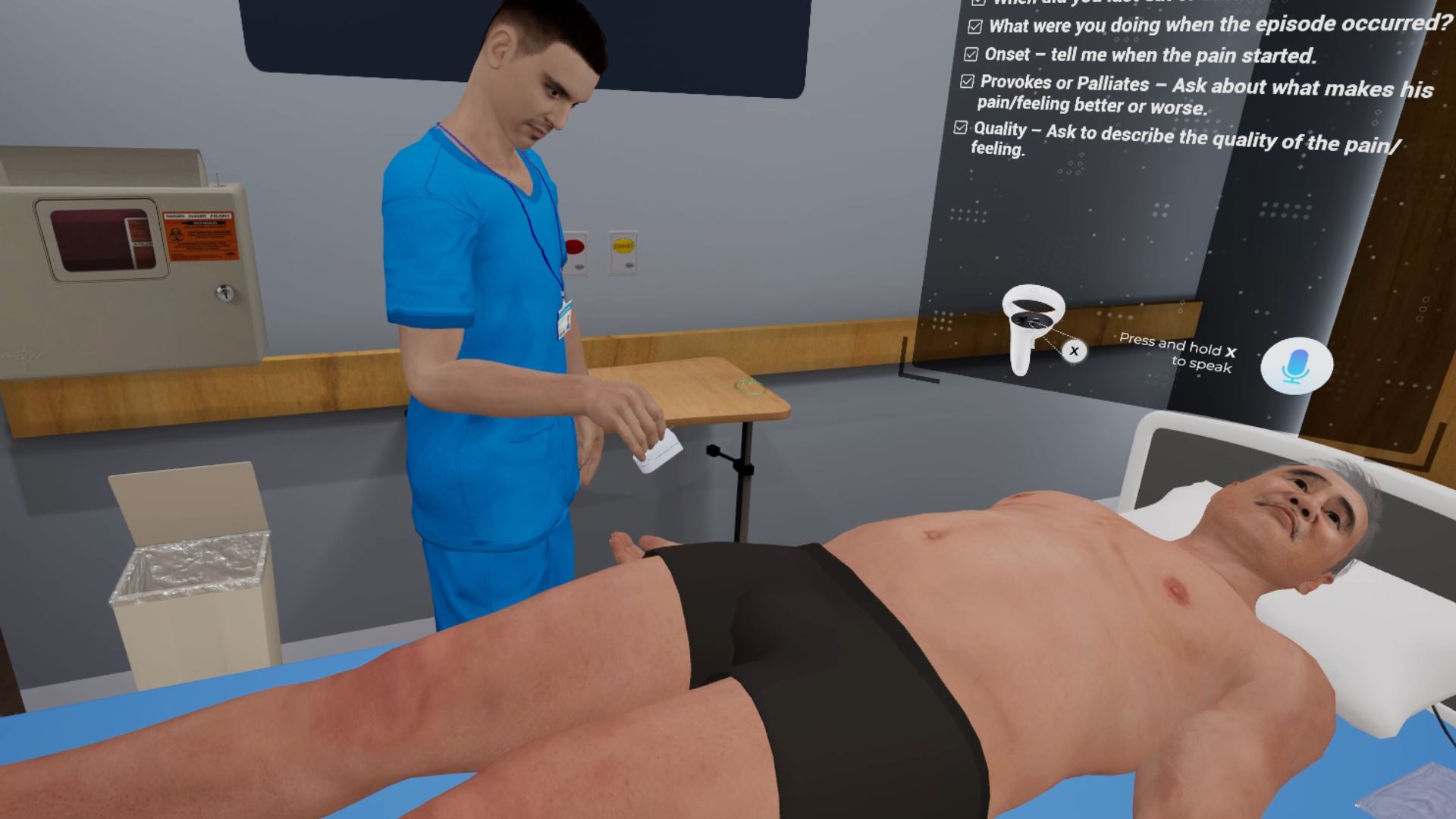
Bradycardia, a slow heart rate, can be a life-threatening condition which requires prompt intervention from healthcare providers. As part of the Emergency Care Curriculum, this simulation focuses on providing both pharmacologic and electrical conversion of the arrhythmia. In this scenario participants will interview, assess, and treat a virtual patient.
Tailored to You
Customize Your Program
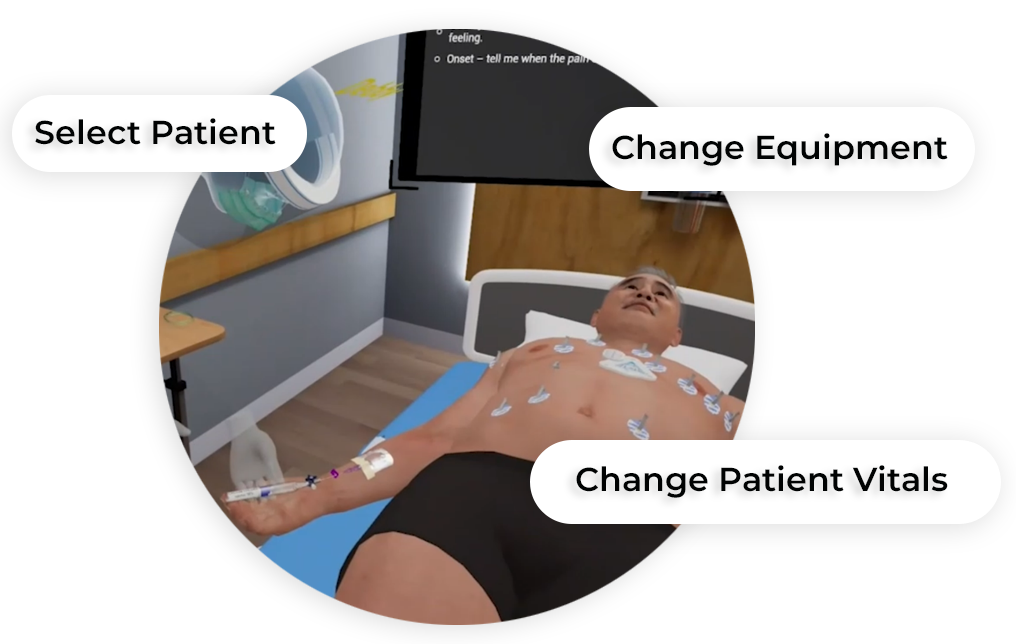
MedVR Education is bringing to you in-VR customization that will enable you to put together your own simulations by making selections from a wide range of feature choices.
- Select patient from a diverse background
- Choose preferred virtual environment
- Configure patient vitals
- Define simulation duration
- Create patient history and train with AI-Humans
- Customize session-end debriefing
- …..many more to come
Additional customization options are available and can be developed to meet your specific training needs.
 AI Patient Assessment
 Natural Language Processing
 Multi-player Sessions
 Physics-Based Interaction
How it works
Training
End-of-task debriefing to assess one’s performance, evaluate actions, and get the most out of the session. The debriefing includes crucial points related to the scenario.
- Thorough patient assessment
- Completion of necessary steps
- Correct medication administration to patient
- Sequential completion of task
- Execution of time-sensitive tasks
Get started
Ready to transform clinical training?
Book a demo to see Bradycardia and our full simulation library in action.