Clinical Simulation
Autism De-escalation


About This Course
What you'll experience
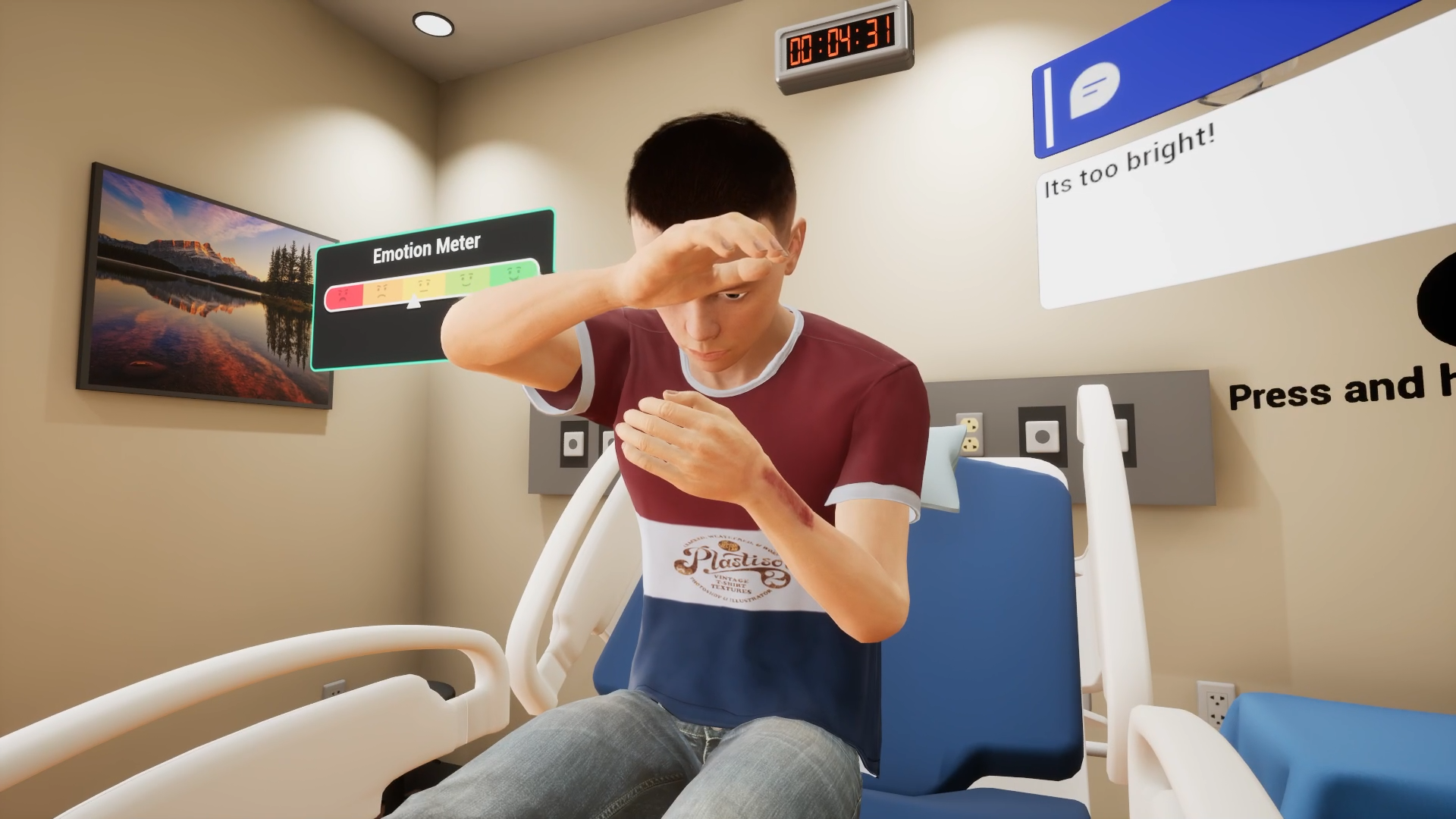
Seventeen-year-old Alex Johnson has autism spectrum disorder (ASD). He fell from his bike and hurt his wrist. X-ray does not reveal any fracture; only a sprain for which Alex will require a splint for his wrist. Alex can communicate but unfamiliar surroundings, like the emergency department, overwhelm him. He gets visibly anxious when approached by strangers but calms down when things are explained to him clearly. This VR simulation for Verbal De-escalation is designed to provide practitioners practice in managing and de-escalating tensed situations like an anxious and overwhelmed autistic patient. It helps test learners on their patient management and critical thinking skills.
Learning Objectives
- Applying active listening and empathy to de-escalate tense situations.
- Modeling the use of respectful language and maintaining a composed tone during interactions with an autistic patient.
- Identifying and applying appropriate conflict resolution strategies for various scenarios encountered in clinical practice.
- Demonstrating collaborative problem-solving techniques to address the underlying issues contributing to anxious and overwhelming behavior.
References
- Crisis Prevention Institute. (2023). De-escalation tips and techniques for verbal intervention.
- American Psychological Association. (2020). Strategies for verbal de-escalation.
What you'll practice
Core Skills Training
Core Skill
Applying Verbal De-escalation Techniques
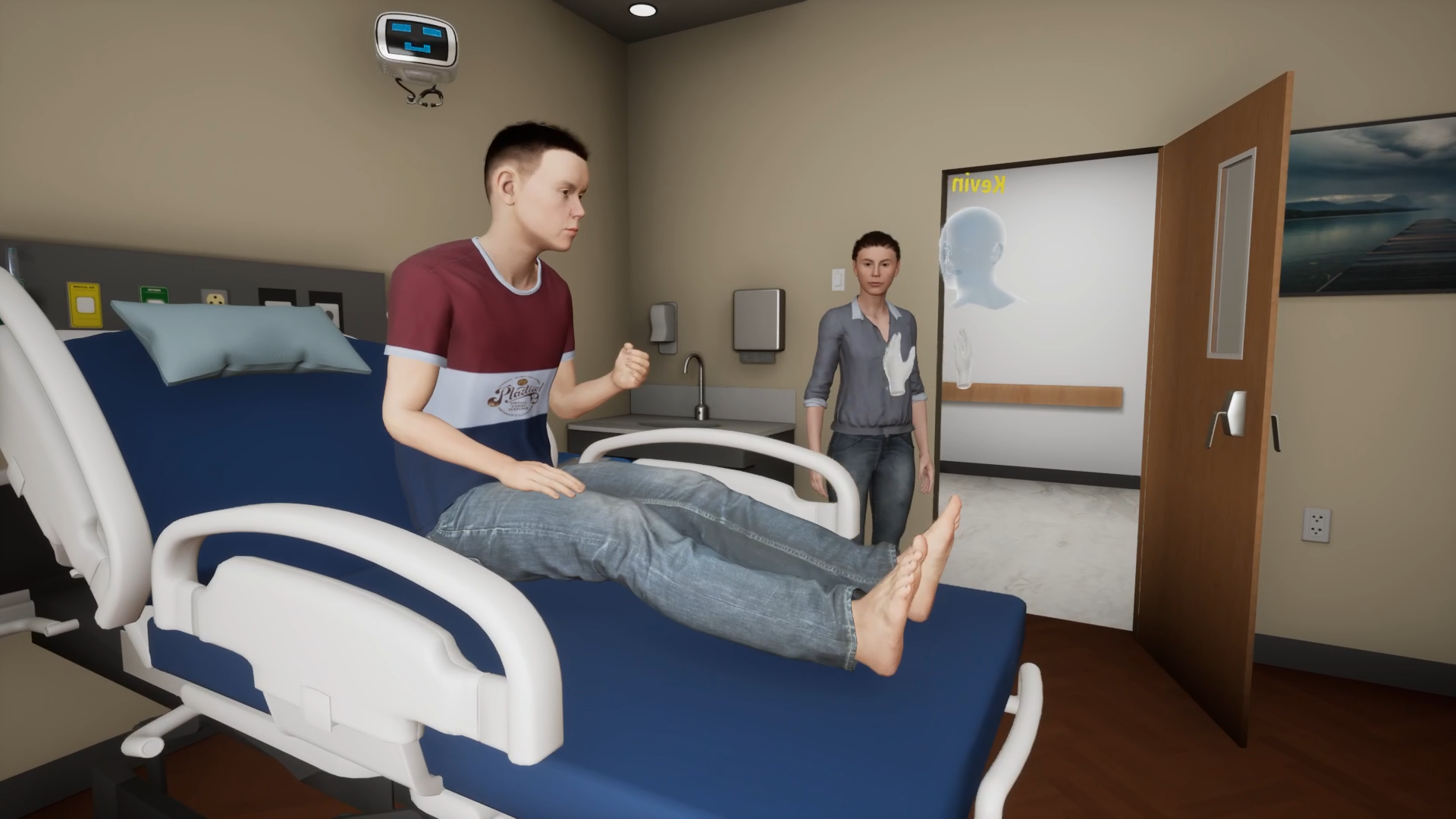
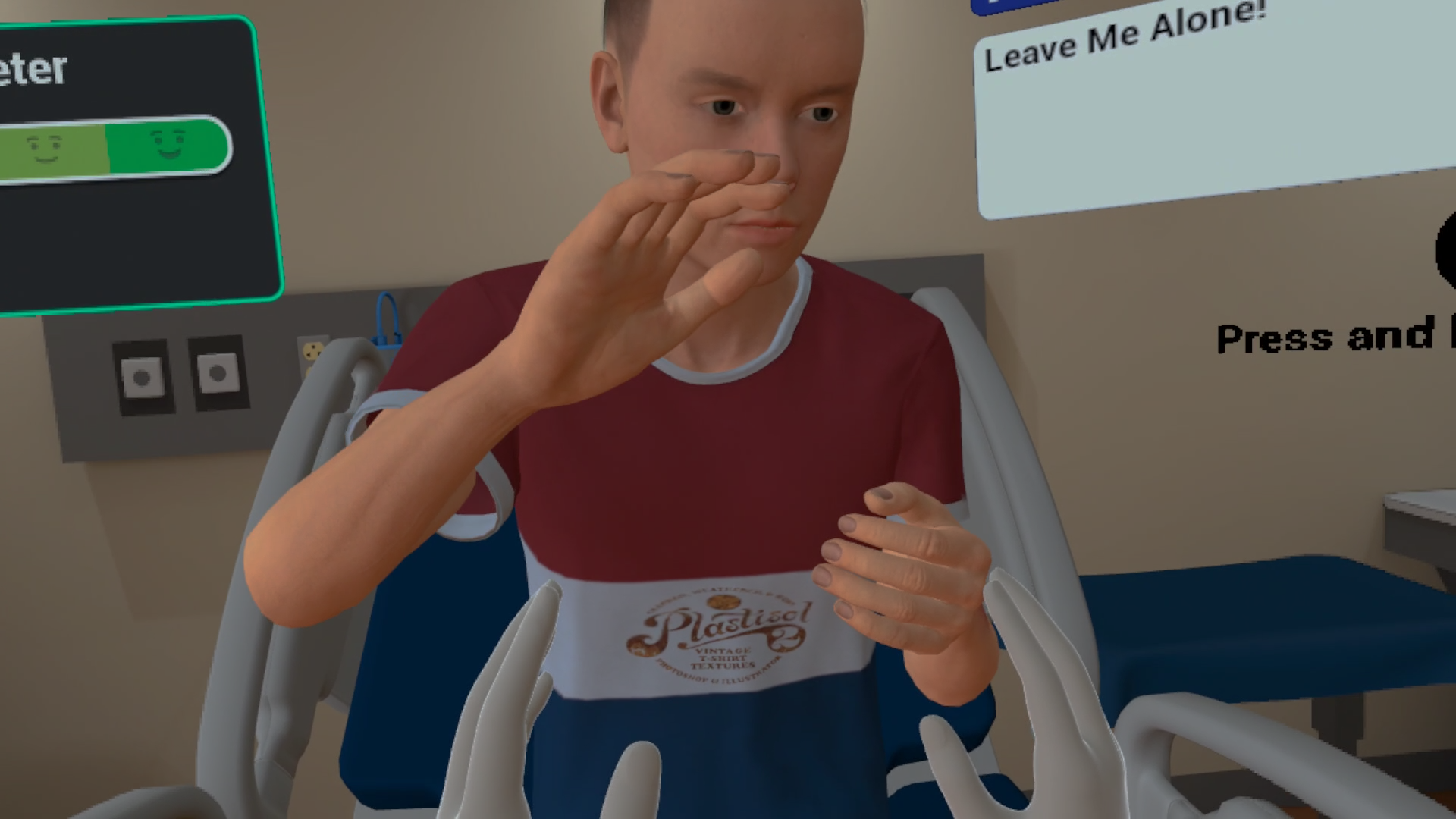
As a part of this Verbal De-escalation procedure, the learner is working with the patient to apply the splint. The patient’s mother leaves the room for a few minutes when the learners in alone with the patient. As the patient tends to get anxious and overwhelmed in unfamiliar surroundings and with strangers, the learner will have to use de-escalation techniques like talking calmly, expressing empathy and explaining the procedure clearly.
All necessary affordances are provided to complete the procedure with efficiency.
Tailored to You
Customize Your Program
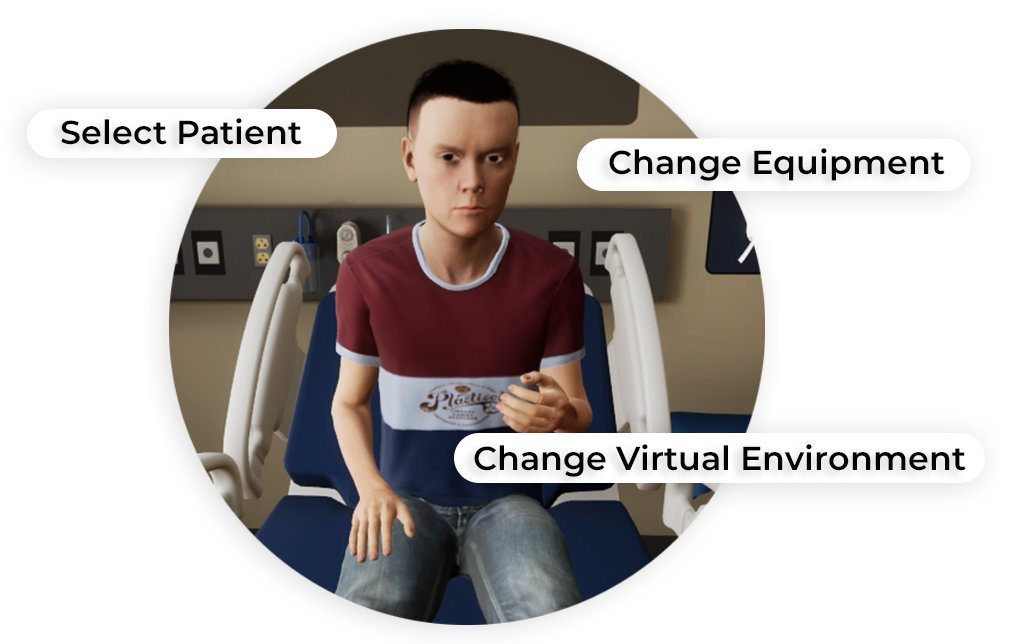
MedVR Education is bringing to you in-VR customization that will enable you to customize your procedural simulations by making selections from a range of feature choices.
- Select patient from a diverse background
- Choose preferred virtual environment
- Configure patient vitals
- Define simulation duration
- Create patient history and train with AI-Humans
- Customize session-end debriefing
- …..many more to come
Additional customization options are available and can be developed to meet your specific training needs.
 Multi-player Sessions
 Physics-based Interactions
How it works
Training
End-of-task debriefing to assess one’s performance, evaluate actions, and get the most out of the training. Examples of topics being touched upon in the debriefing include the following:
- Thorough patient assessment
- Completion of necessary steps
- Correct medication administration to patient
- Sequential completion of task
- Execution of time-sensitive tasks
Get started
Ready to transform clinical training?
Book a demo to see Autism De-escalation and our full simulation library in action.