Clinical Simulation
Cardiac Tamponade


About This Course
What you'll experience
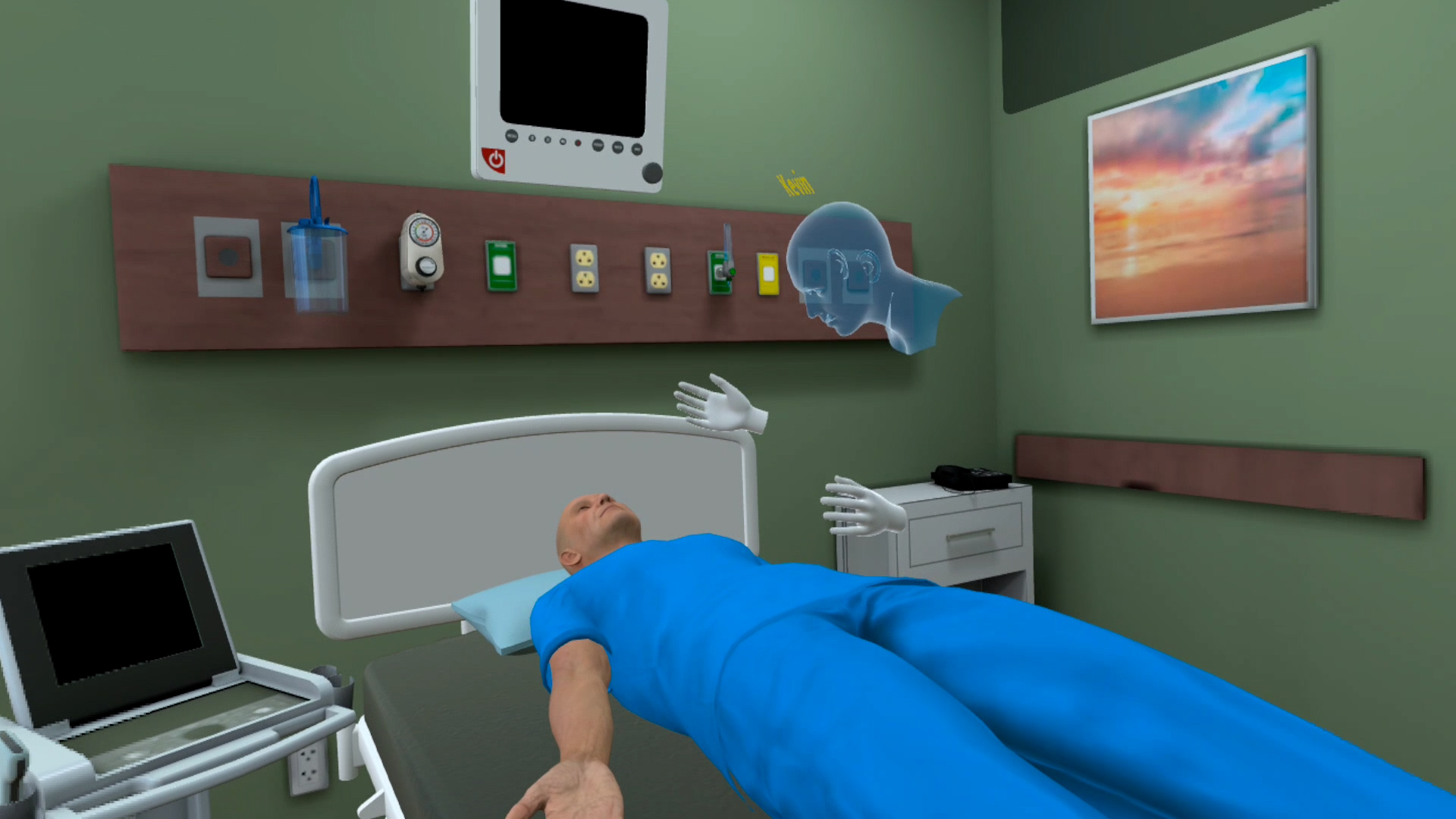
Mark Johnson, a 67-year-old male patient diagnosed with lung cancer, is presented with hypotension and shortness of breath. His last cycle of chemotherapy was eleven days ago. Clinical assessment reveals a large malignant pericardial effusion resulting in cardiac tamponade. This VR simulation is designed to enhance clinical decision-making by guiding users through the recognition of tamponade physiology, initiating prompt resuscitative measures, including IV fluid administration, and coordinating timely cardiology consultation for pericardiocentesis.
Learning Objectives
- Recognize and diagnose pericardial effusion with cardiac tamponade in a cancer patient
- Develop and understand the wide differential diagnosis for hypotension in an immunocompromised oncology patient
- Correctly integrate laboratory, EKG, imaging, and ultrasound findings with clinical presentation
- Implement appropriate immediate management including fluid resuscitation and consult cardiology for pericardiocentesis
References
- Spodick, D. H. (2003). Cardiac tamponade. The New England Journal of Medicine.
What you'll practice
Core Skills Training
Core Skill
Managing Cardiac Tamponade
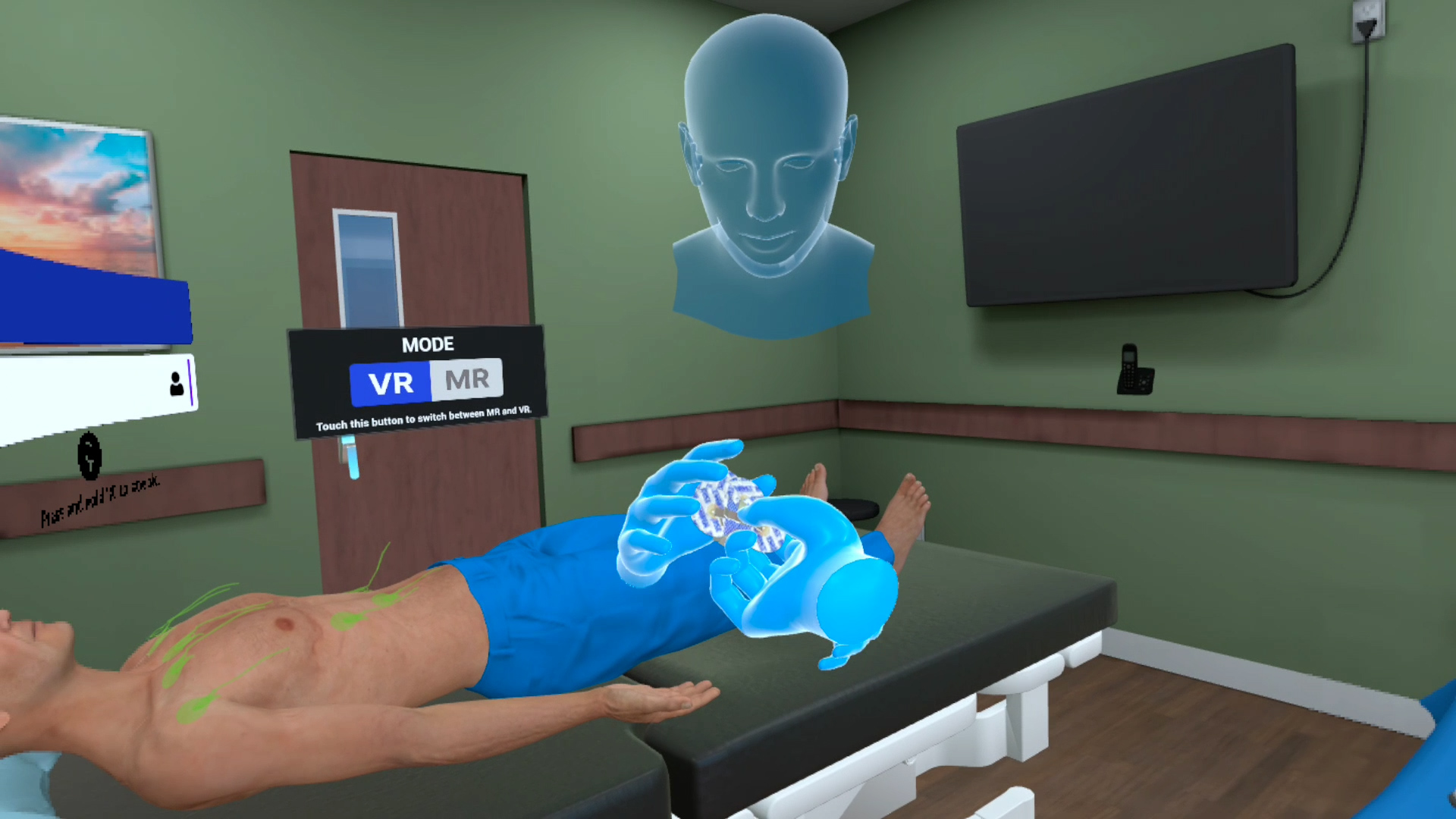
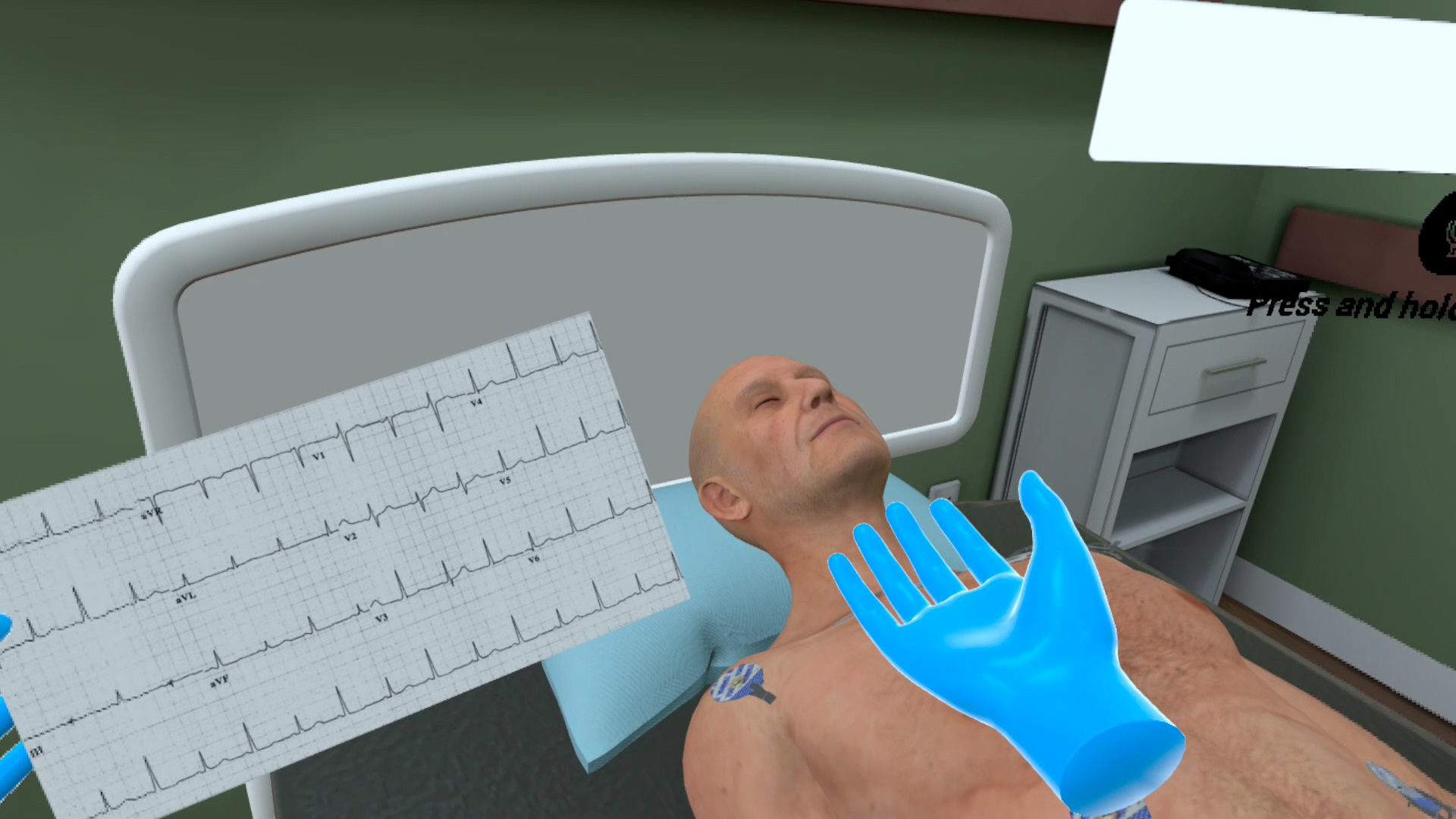
As part of the Cardiac Tamponade simulation, the user is presented with a cachectic patient who is alert but slightly confused. After establishing rapport and introducing themselves, users proceed to initiate a focused clinical workup-ordering essential laboratory tests, obtaining a 12-lead EKG, and securing IV access.
Once the patient has been started on fluids, the next critical step is performing a bedside cardiac ultrasound. The imaging reveals a large pericardial effusion with classic signs of tamponade physiology, while lab results show elevated lactate levels, indicating compromised perfusion.
Learners must promptly recognize the need for emergent pericardiocentesis and engage cardiology for immediate consultation, after which the patient is taken to the cath lab for the procedure.
This scenario is set in a photorealistic environment, with all necessary affordances available to support learners in performing their tasks efficiently and effectively.
Tailored to You
Customize Your Program
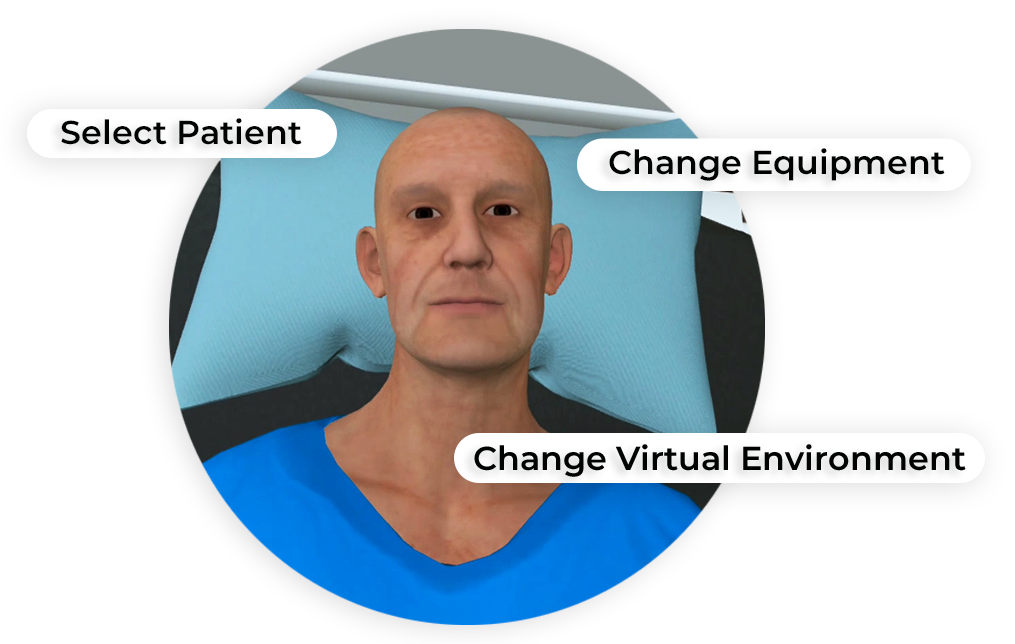
MedVR Education is bringing to you in-VR customization that will enable you to customize your procedural simulations by making selections from a range of feature choices.
- Select patient from a diverse background
- Choose preferred virtual environment
- Configure patient vitals
- Define simulation duration
- Create patient history and train with AI-Humans
- Customize session-end debriefing
- …..many more to come
Additional customization options are available and can be developed to meet your specific training needs.
 Multi-player Sessions
 Physics-based Interactions
How it works
Training
End-of-task debriefing to assess one’s performance, evaluate actions, and get the most out of the training. Examples of topics being touched upon in the debriefing include the following:
- Thorough patient assessment
- Completion of necessary steps
- Correct medication administration to patient
- Sequential completion of task
- Execution of time-sensitive tasks
Get started
Ready to transform clinical training?
Book a demo to see Cardiac Tamponade and our full simulation library in action.