Clinical Simulation
Chest Pain


About This Course
What you'll experience
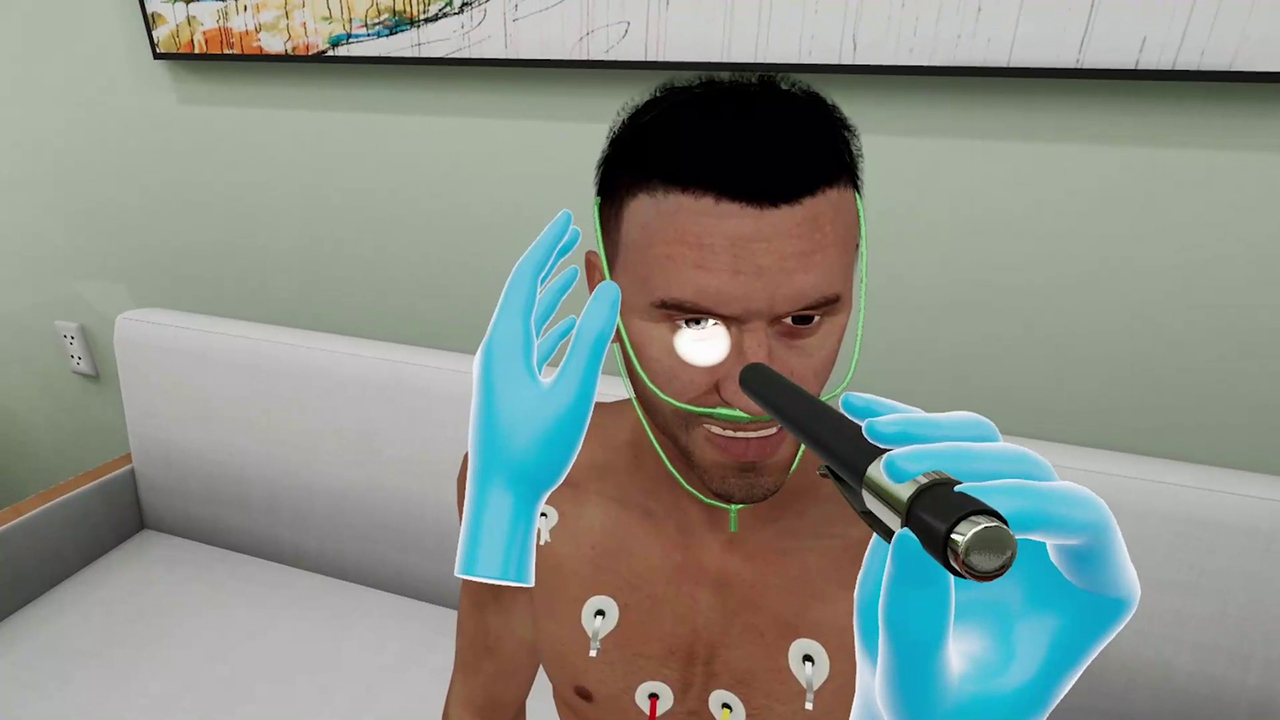
Successful completion of this chest pain emergency care scenario will help learners refine their emergency care skills and prepare for EMS association courses, and state and national EMS provider exams. Mark Willey is a 54-year-old male car mechanic with a history of hypertension and coronary artery disease. He began having chest pains about 6 hours ago while working in his garage. Your task is to attend to the patient at his home and provide initial care after conducting a proper assessment. You will then prepare to transport him to the hospital. This multiplayer VR patient assessment simulation focuses on prehospital assessment and management of a patient with chest pain. It is designed to help EMS professionals practice assessment and management skills in a safe and controlled virtual setup with a virtual patient.
Learning Objectives
- Effectively communicate with patients experiencing chest pain.
- Develop the skills to initiate appropriate and timely management for patients presenting with chest pain
- Accurately assess and diagnose the underlying causes of chest pain in a patient by integrating history-taking, physical examination, and appropriate diagnostic tests
References
- Panchal, A. R., Bartos, J. A., Cabañas, J. G., Donnino, M. W., Drennan, I. R., Hirsch, K. G., Kudenchuk, P. J., Kurz, M. C., Lavonas, E. J., Morley, P. T., O’Neil, B. J., Peberdy, M. A., Rittenberger, J. C., Rodriguez, A. J., Sawyer, K. N., Berg, K. M., & Adult Basic and Advanced Life Support Writing Group (2020). Part 3: Adult Basic and Advanced Life Support: 2020 American Heart Association Guidelines for Cardiopulmonary Resuscitation and Emergency Cardiovascular Care. Circulation, 142(16_suppl_2), S366–S468. https://doi.org/10.1161/ CIR.0000000000000916
What you'll practice
Core Skills Training
Core Skill
Chest Pain
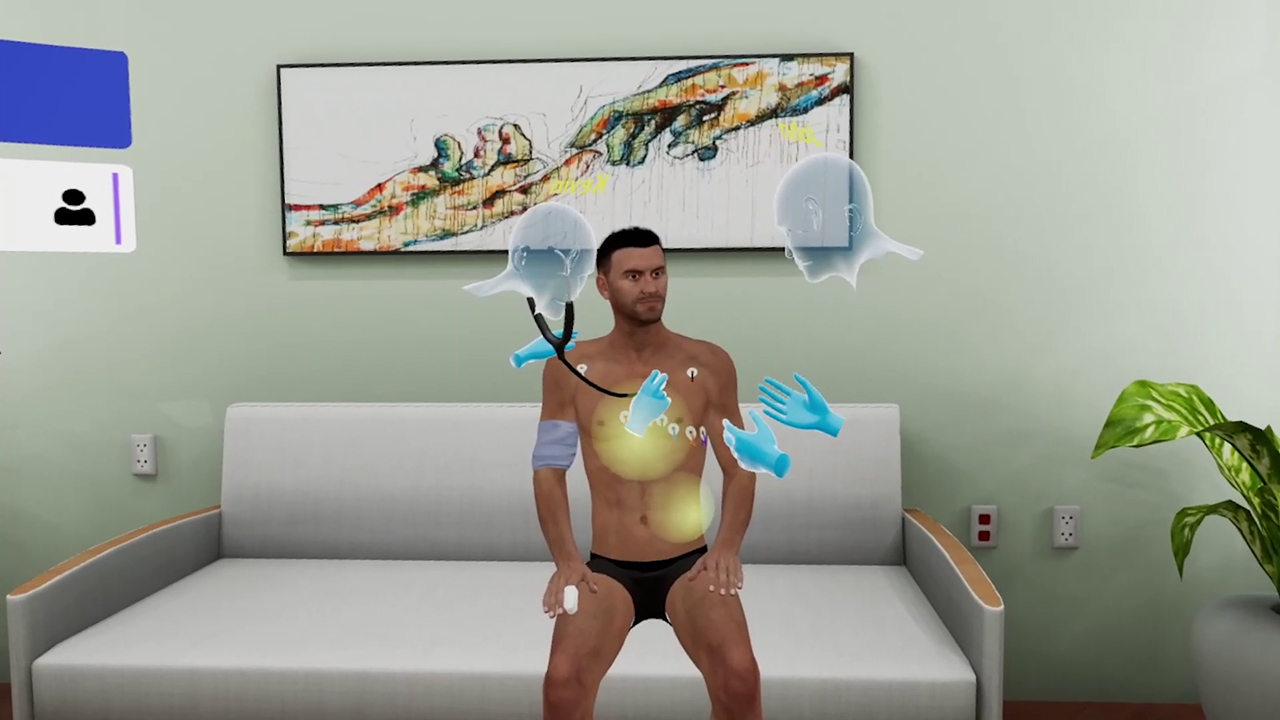
As part of this open scenario, the learner will begin by conducting a detailed assessment of the patient. This will include determining the patient’s condition, assessing vitals, and verifying patient’s responsiveness. The learner will further check the patient’s pupils and pulse. The patient will be ready for transport to the ambulance when the initial treatment is complete.
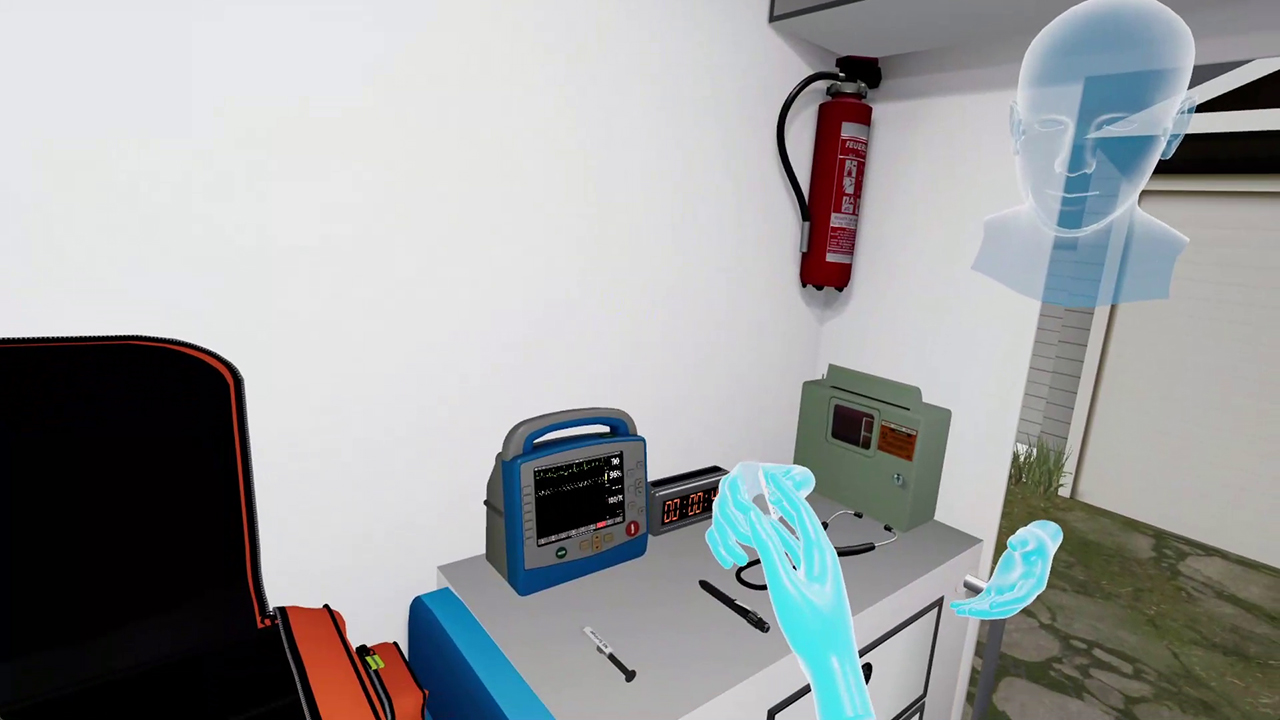
All affordances are provided within the environment to provide a realistic and immersive learning experience.
Tailored to You
Customize Your Program
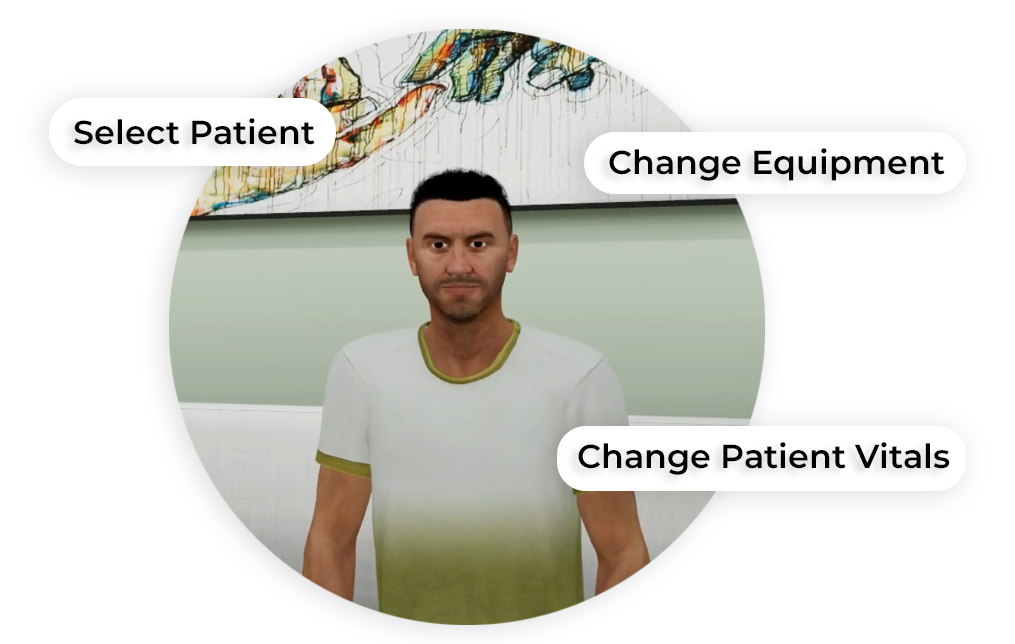
MedVR Education is bringing to you in-VR customization that will enable you to put together your own simulations by making selections from a wide range of feature choices.
- Select patient from a diverse background
- Choose preferred virtual environment
- Configure patient vitals
- Define simulation duration
- Create patient history and train with AI-Humans
- Customize session-end debriefing
- …..many more to come
Additional customization options are available and can be developed to meet your specific training needs.
 AI Patient Assessment
 Natural Language Processing
 Multi-player Sessions
 Physics-based Interaction
How it works
Training
End-of-task debriefing to assess one’s performance, evaluate actions, and get the most out of the training. Examples of topics being touched upon in the debriefing include the following:
- Thorough patient assessment
- Completion of necessary steps
- Correct medication administration to patient
- Sequential completion of task
- Execution of time-sensitive tasks
Get started
Ready to transform clinical training?
Book a demo to see Chest Pain and our full simulation library in action.