Clinical Simulation
ECG
About This Course
What you'll experience
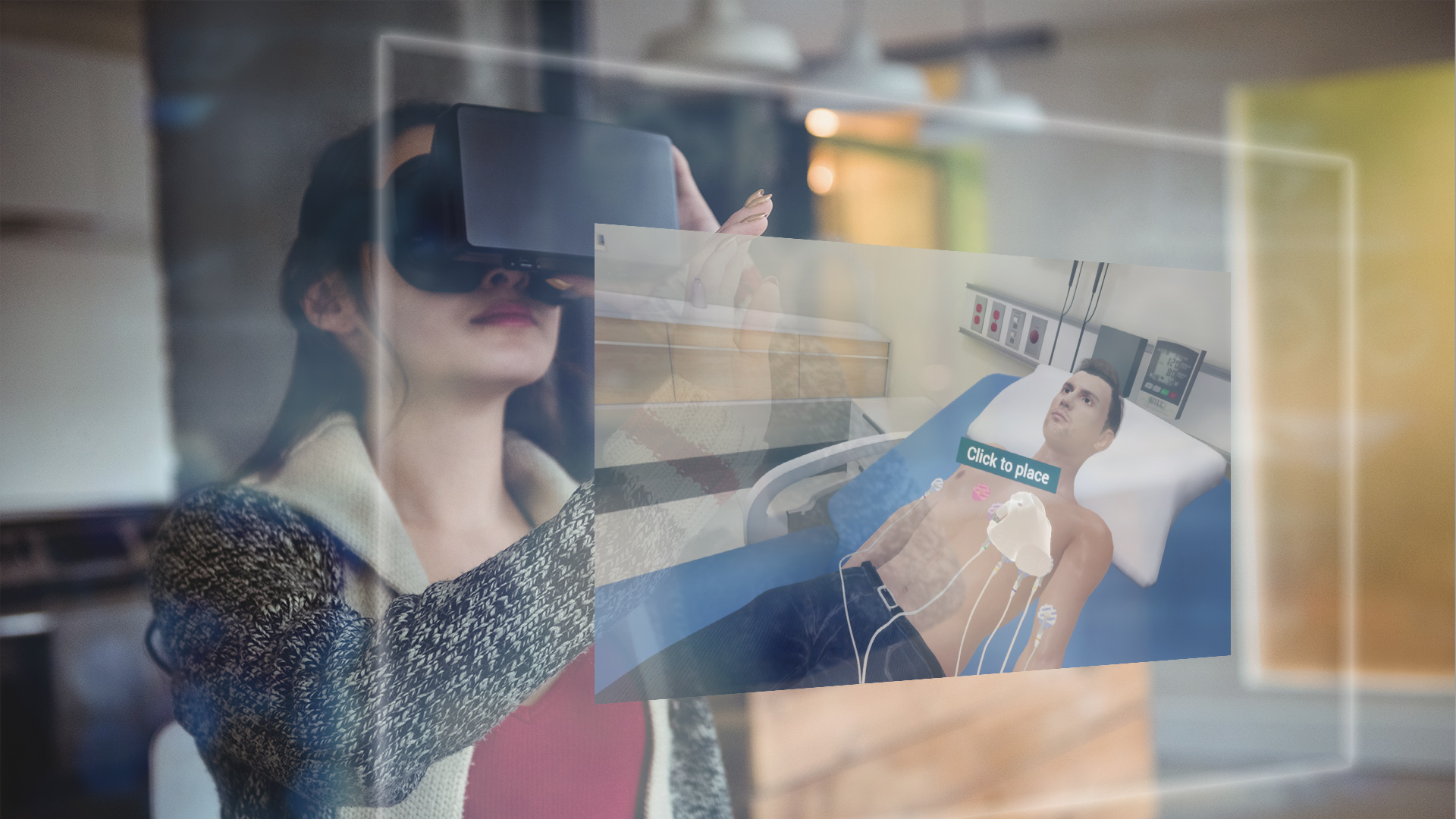
The ECG procedure may not be difficult to perform but surely requires competence and accuracy. Each electrical current of the heart must be precisely traced as this is what helps in deciding upon the course of care and treatment. Even a slight mistake may result in an inaccurate reading and lead to the wrong medication or treatment procedure.
Learning Objectives
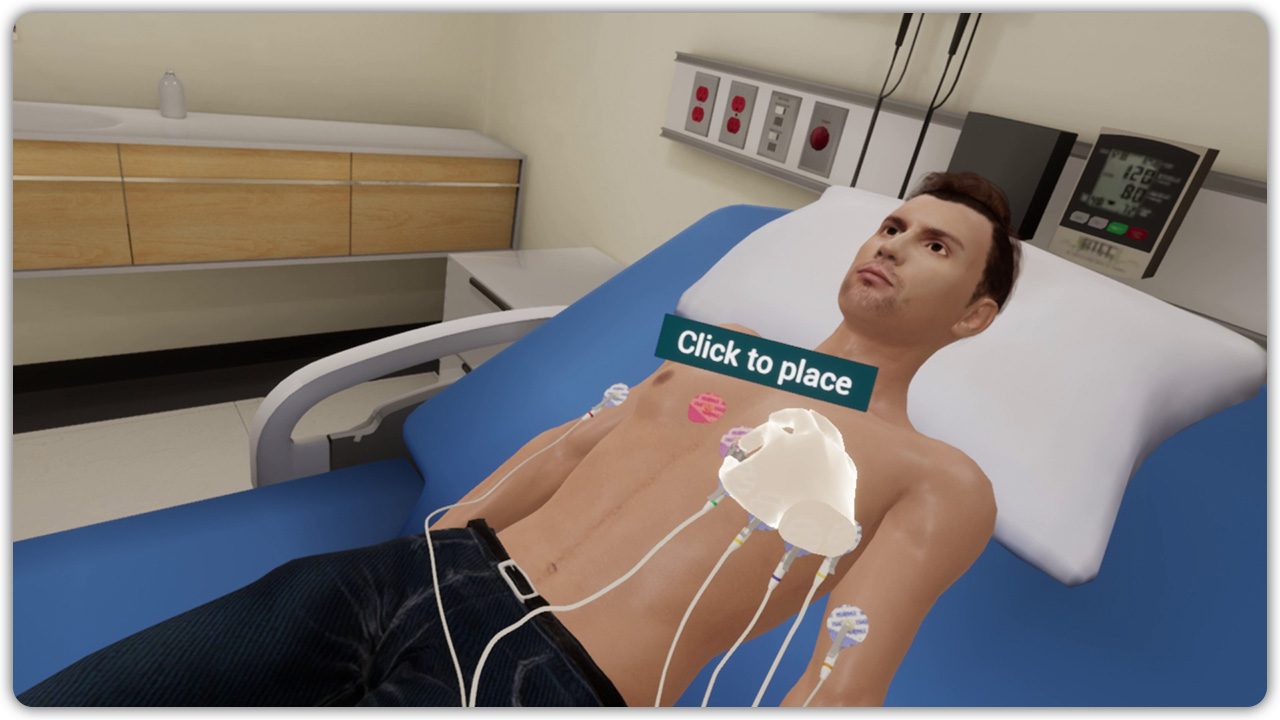
- Identifying and placing leads correctly on a virtual patient
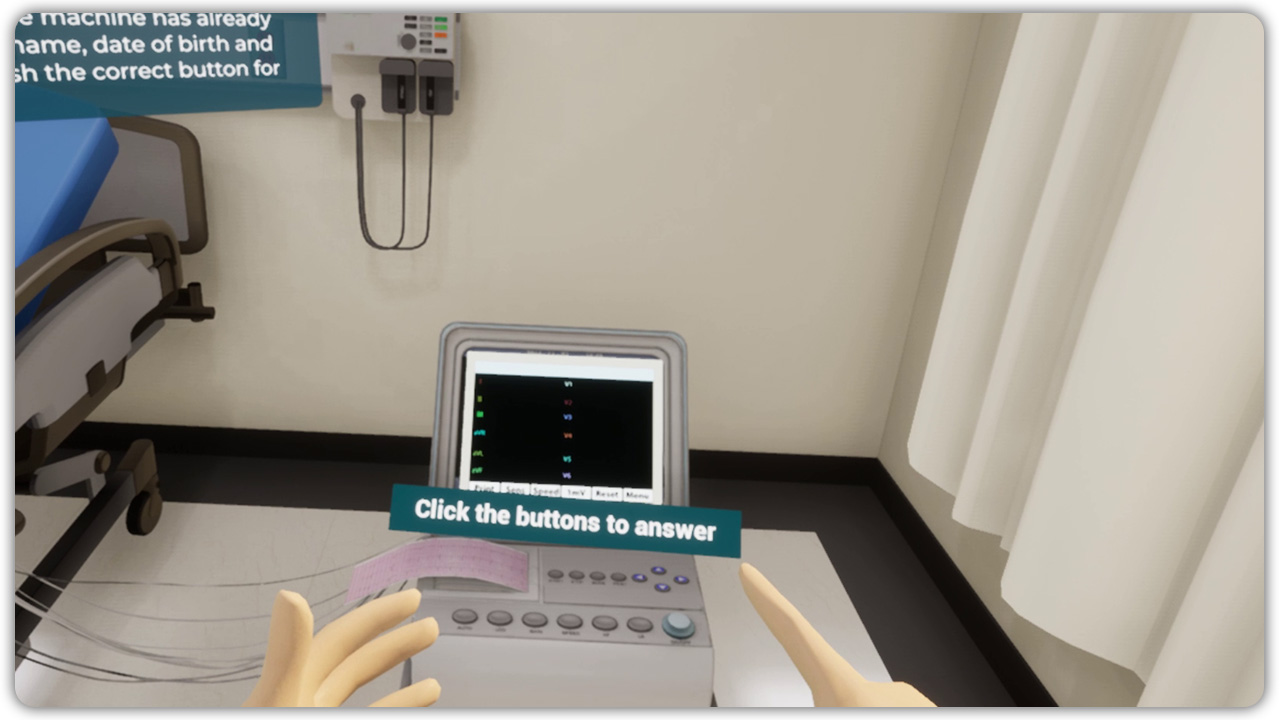
- Understanding the controls of an ECG machine and steps to generate a report
- Mastering the five-step process of gathering and interpreting ECG data
- Identifying sinus rhythms and analyzing rhythm strips
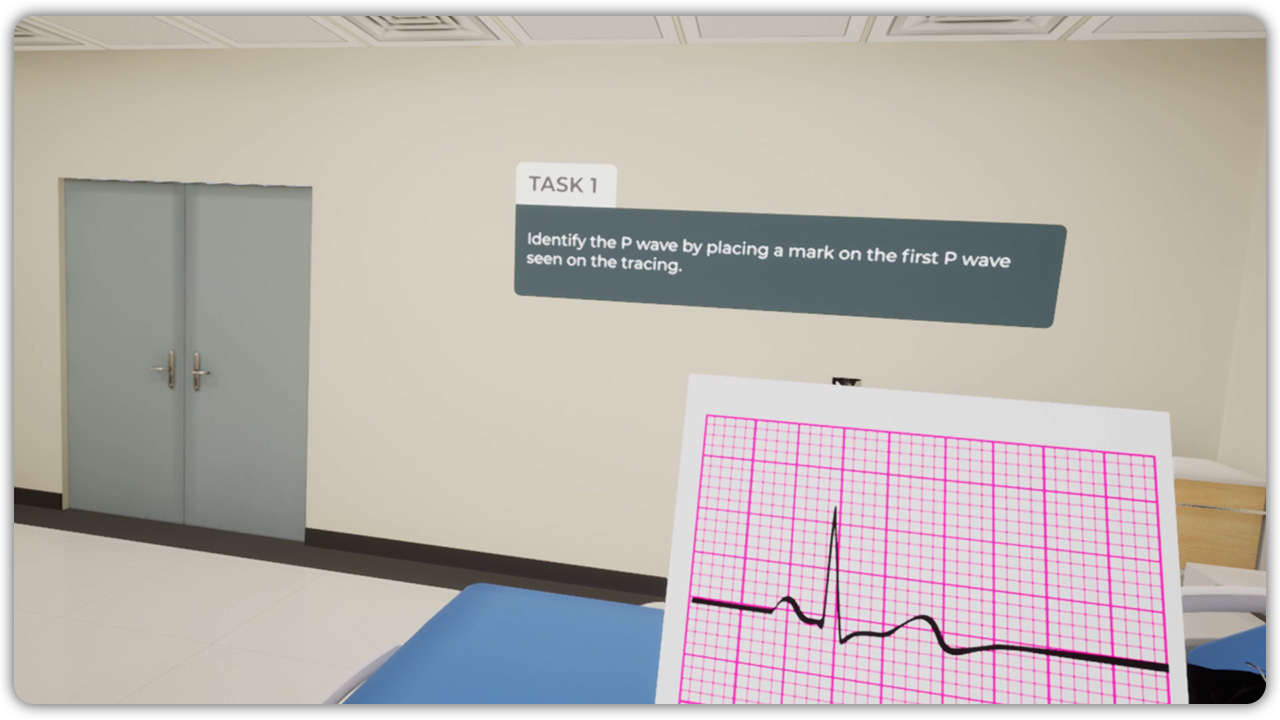
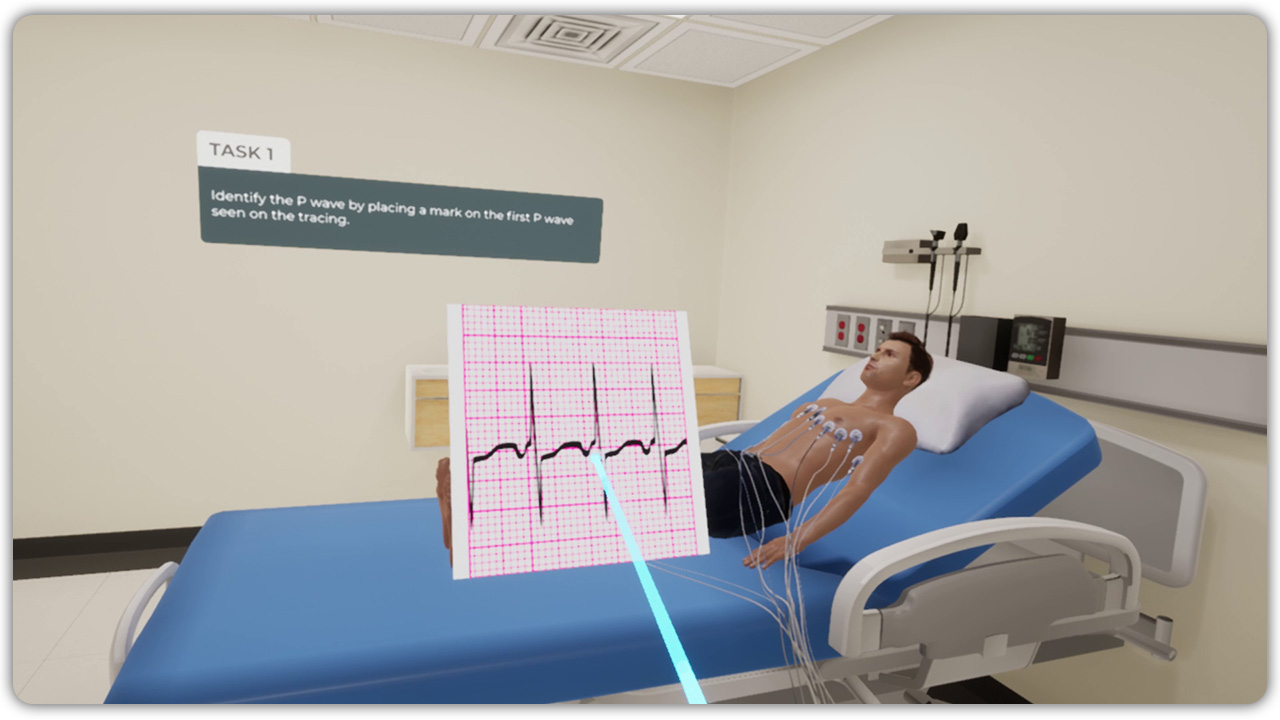
- Identifying inverted P morphology formations, P wavelengths and their relation to QRS complexes
References
- Developed in alignment with Electrocardiography for Healthcare Professionals (Fifth Edition) by Kathryn Booth and Thomas E. O’Brien.
What you'll practice
Core Skills Training
Core Skill
Leads and Waveforms
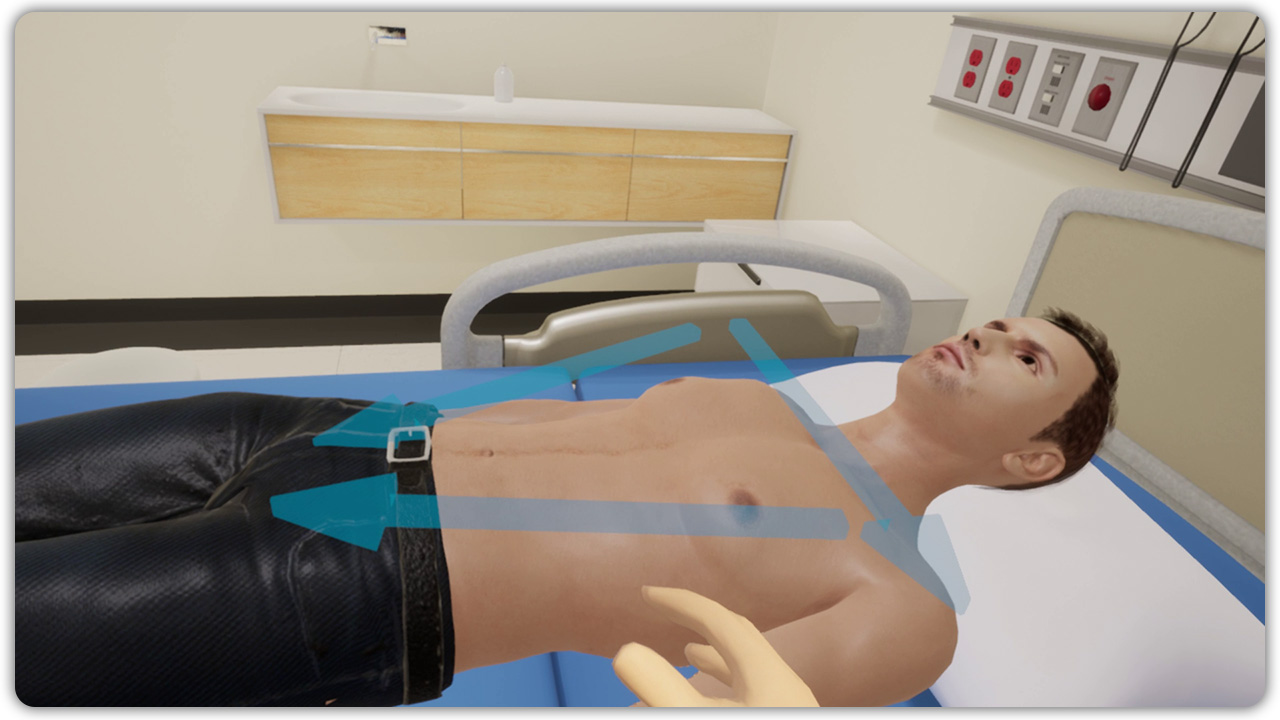
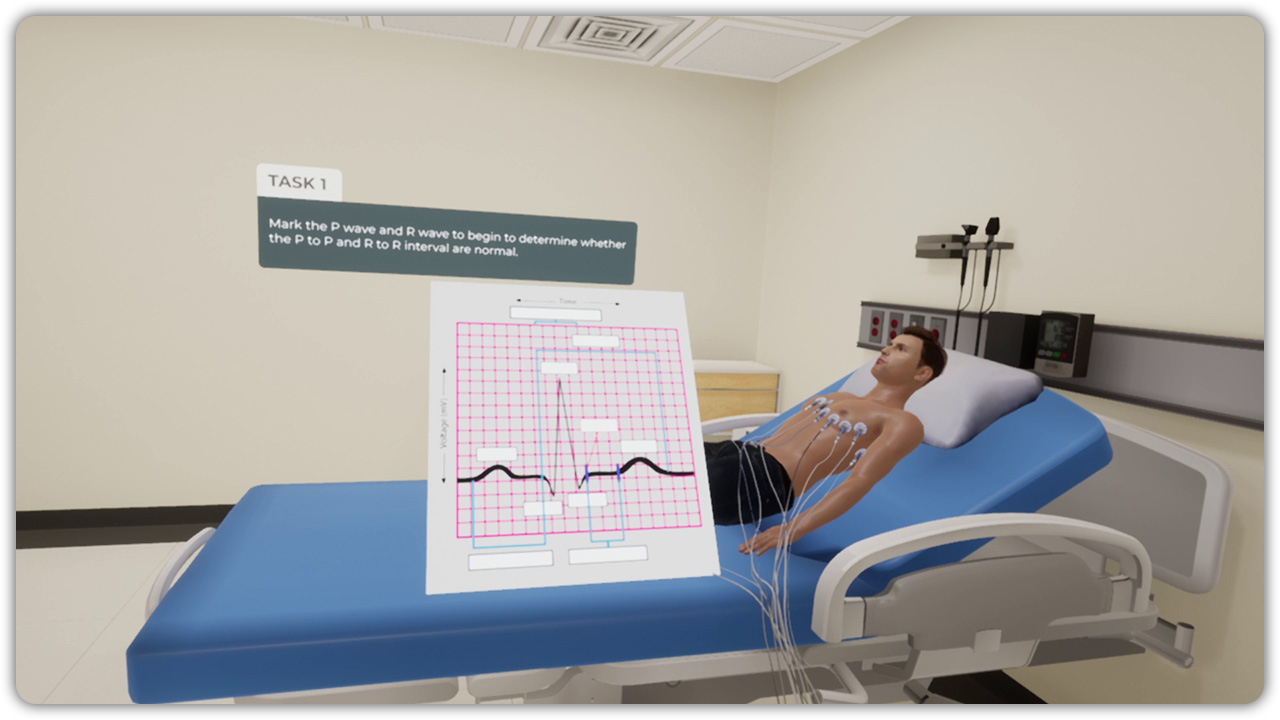
The 12-lead ECG, that records the electrical activities of the heart, makes use of electrodes and lead wires to complete the process. Lead wires are connected to electrodes, small sensors, on one end and to the ECG machine on the other end. The electrodes are placed on the skin to read the electrical activities which are transmitted to the ECG machine through the lead wires. Though named 12-lead ECG, 10 lead wires are used for the purpose. This VR training, helps learners reinforce their knowledge about the 12-lead ECG system and how the electrical activity works across various leads. Theoretical knowledge is applied in a practical scenario containing a virtual patient and various interactive tools. The interactions have been designed to help learners visualize directions of currents produced by various lead combinations.
Tailored to You
Customize Your Program
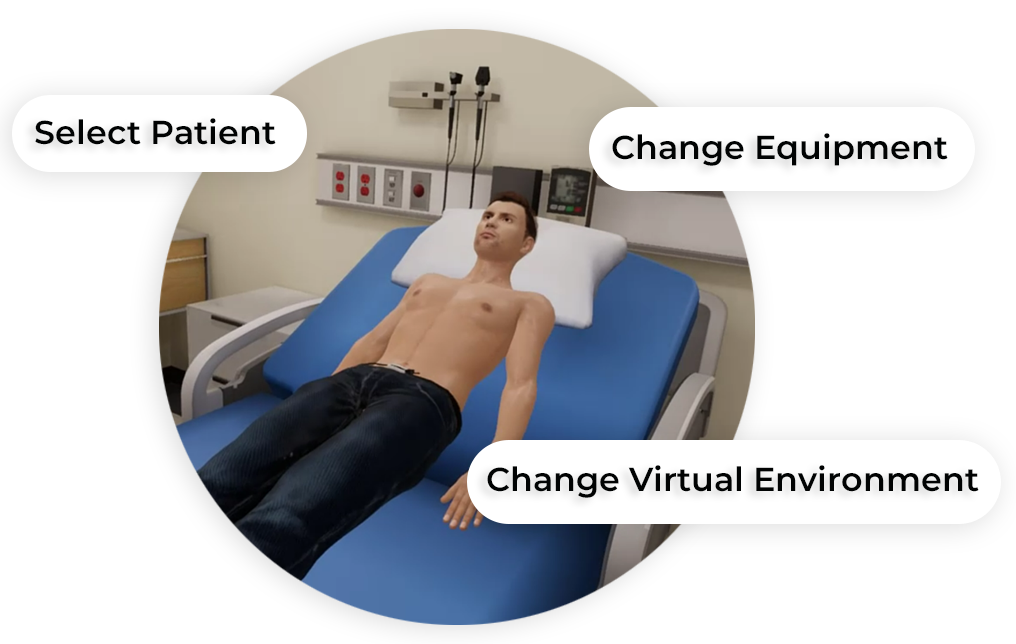
MedVR Education is bringing to you in-VR customization that will enable you to customize your procedural simulations by making selections from a range of feature choices.
- Select patient from a diverse background
- Choose preferred virtual environment
- Select equipment used in the procedure
- Modify difficulty level of the assessment mode
- …..many more to come
Additional customization options are available and can be developed to meet your specific training needs.
 Physics-based Interaction
Get started
Ready to transform clinical training?
Book a demo to see ECG and our full simulation library in action.