Clinical Simulation
Fascia Iliaca Block


About This Course
What you'll experience
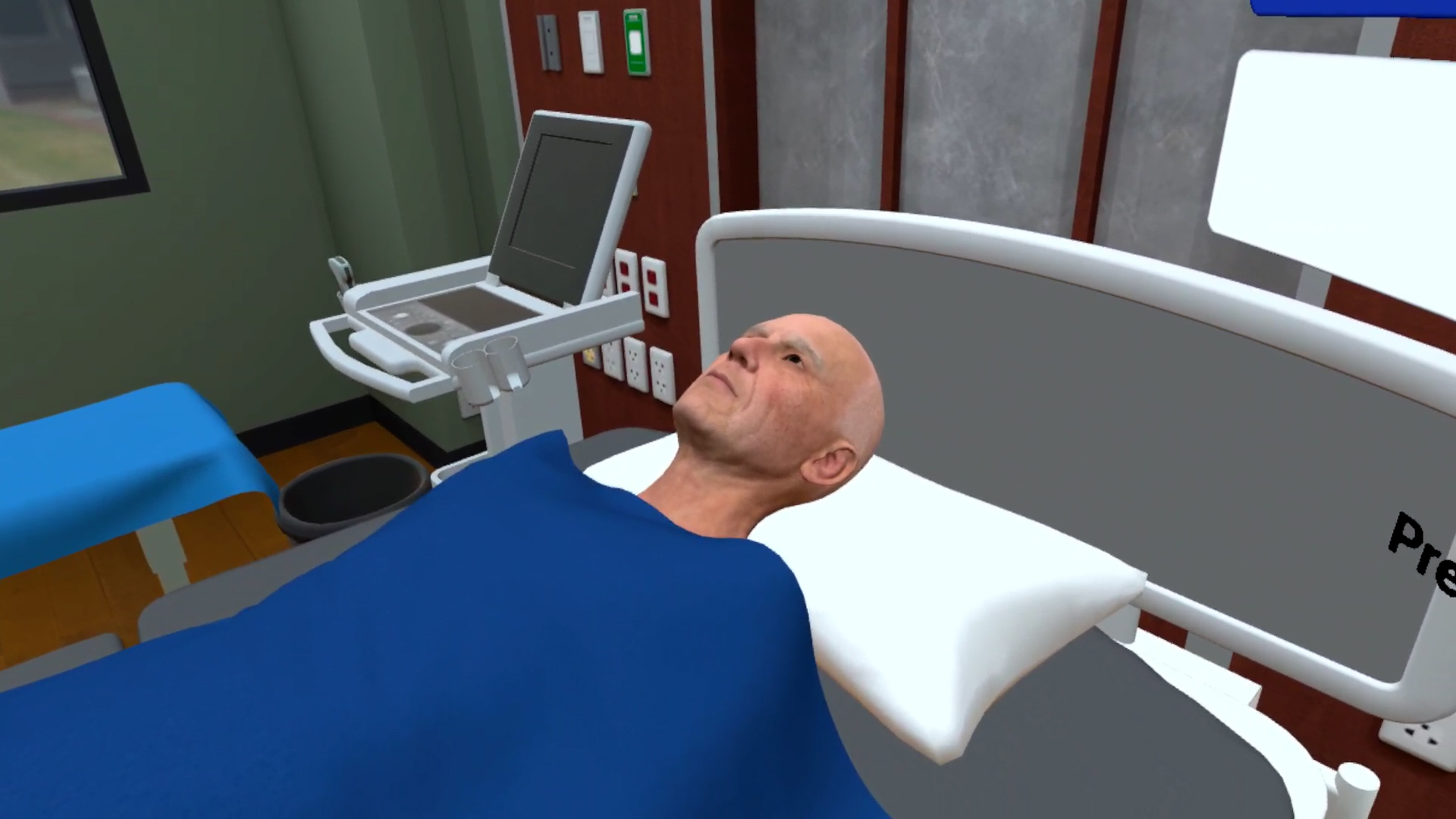
Sixty-eight-year-old John Spencer was admitted to the Emergency Department after slipping on wet pavement. He experienced a sharp pain in his right hip and has not been able to walk since then. X-ray revealed a right hip fracture. This VR simulation for Fascia Iliaca Block is designed to help practitioners practice performing the procedure in a virtual environment with a virtual patient. With both training and assessment modes, learners can perform the procedure and assess themselves on their performance.
Learning Objectives
- Assessing patient condition and identifying indications for a fascia iliaca block
- Identifying key anatomical landmarks and using ultrasound to guide needle placement
- Maintaining a sterile field and following aseptic technique during the procedure
- Aspirating to confirm needle placement and safely administering local anesthetic
References
- American Society of Anesthesiologists. (2023). Fascia iliaca block: An overview.
What you'll practice
Core Skills Training
Core Skill
Performing Fascia Iliaca Block
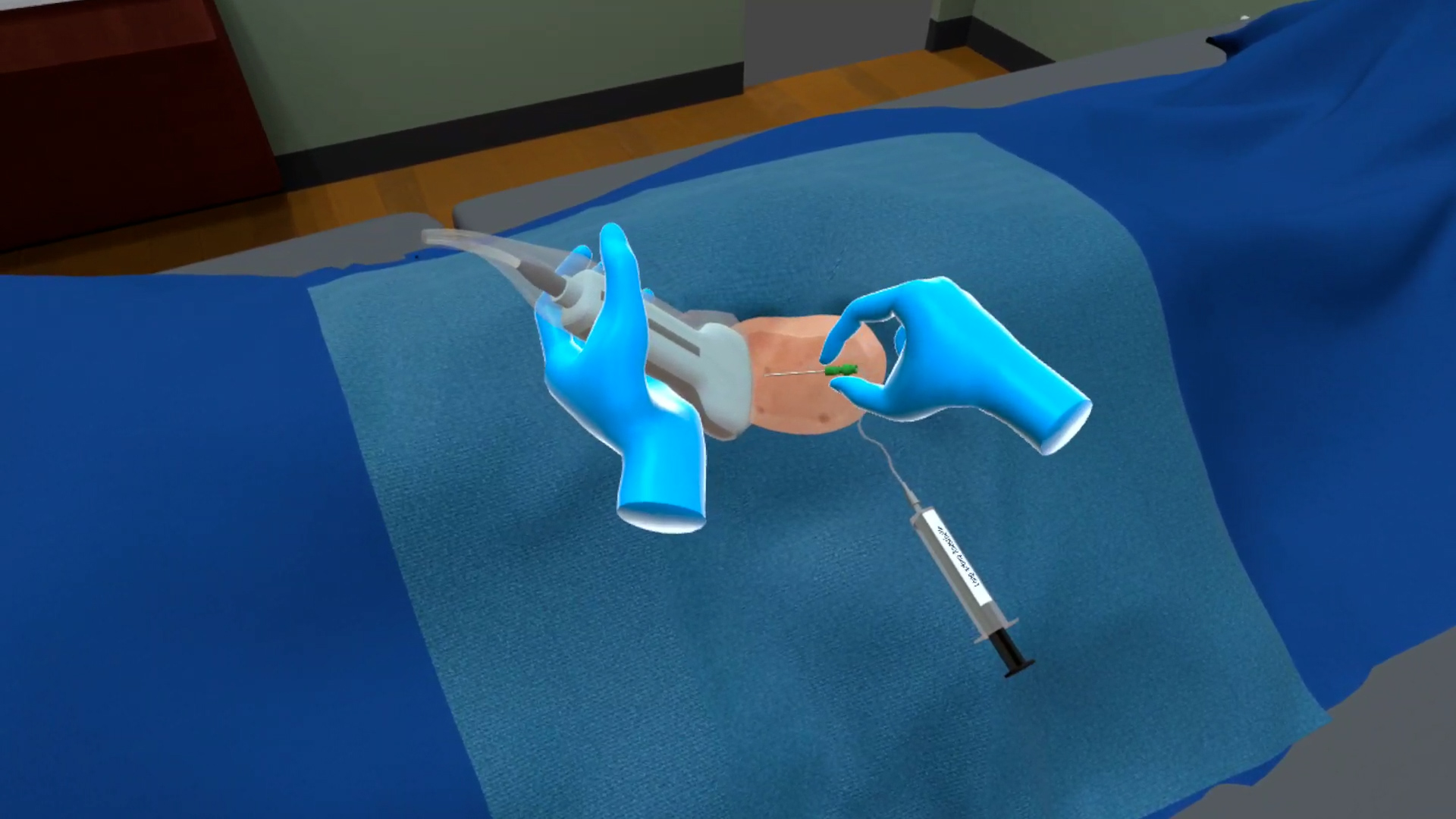
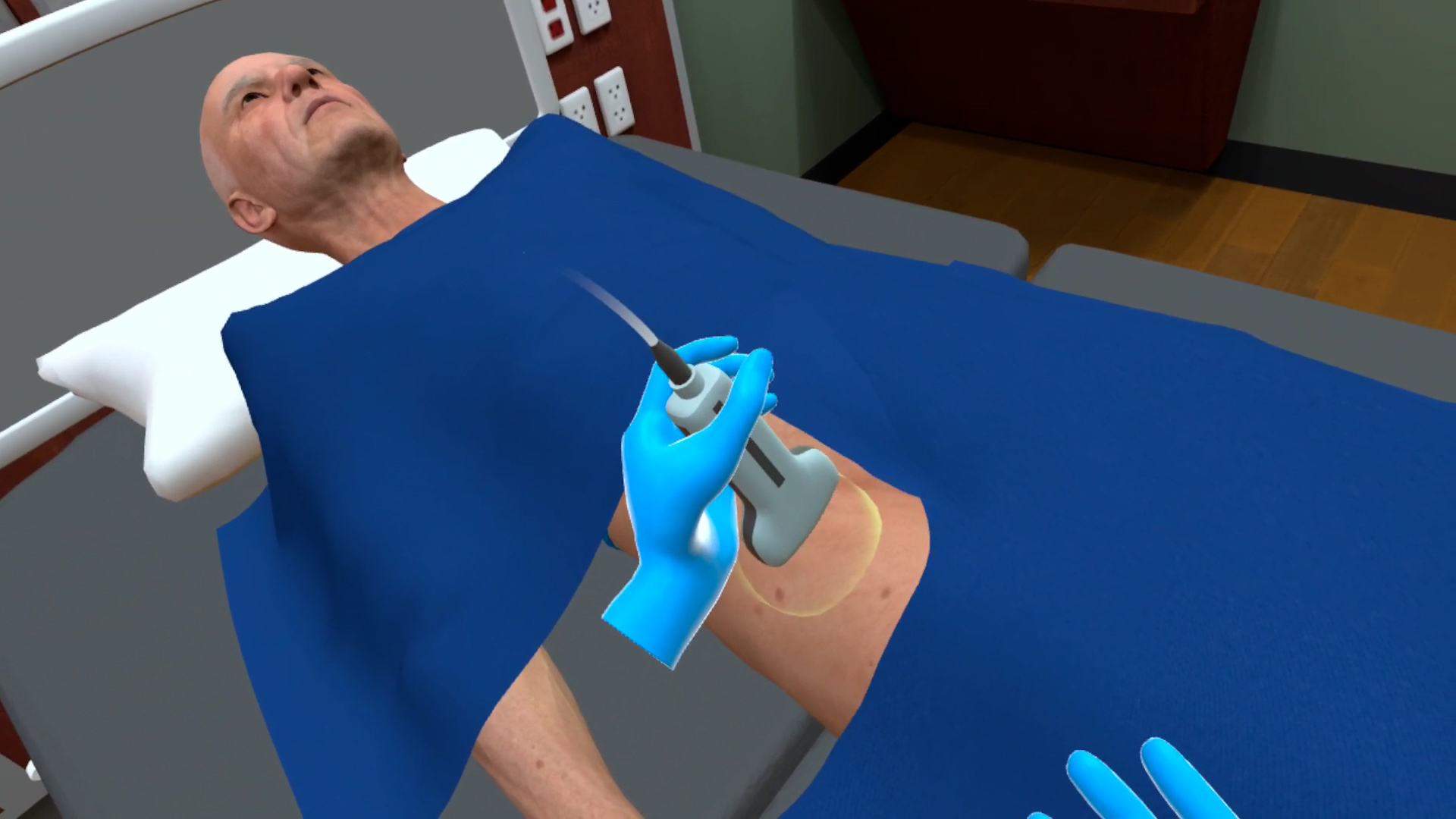
As a part of this Fascia Iliaca Block procedure, the learner will begin by confirming the identity of the patient and obtaining a consent for the procedure. After performing hand hygiene, a bedside ultrasound will be performed to identify femoral artery, femoral vein, and fascia iliaca. The learner will prepare lidocaine, acting anesthesia, and open remain supplies, following sterile techniques. The learner will then don sterile gloves and using ultrasound to obtain view of femoral vessels and fascia iliaca, insert the nerve block needle in long axis until it punctures and passes through the fascia iliaca. Calculated amount of long-acting anesthetic while be inserted, while watching on ultrasound to see a fluid pocket appear.
All necessary affordances are provided to complete the procedure with efficiency.
Tailored to You
Customize Your Program
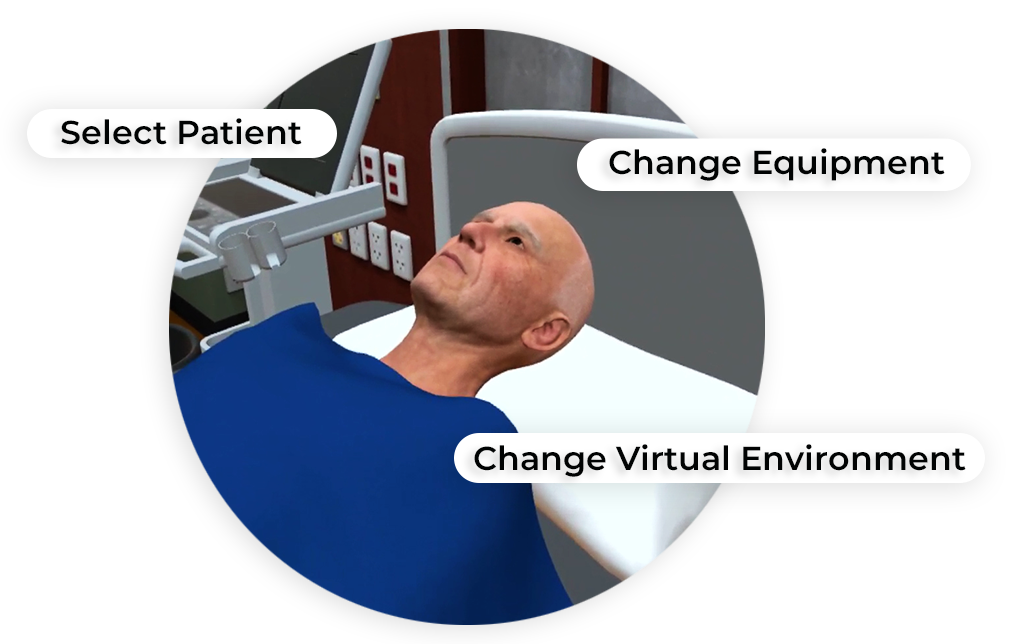
MedVR Education is bringing to you in-VR customization that will enable you to customize your procedural simulations by making selections from a range of feature choices.
- Select patient from a diverse background
- Choose preferred virtual environment
- Select equipment used in the procedure
- Modify difficulty level of the assessment mode
- …..many more to come
Additional customization options are available and can be developed to meet your specific training needs.
 Multi-player Sessions
 Physics-based Interactions
How it works
Training
With prompts, guidance and affordances learners are hand-held through the process to practice the procedure in a virtual environment with a virtual patient.
- Photorealistic virtual environment
- Physics-based interactions
- Detailed instructions
- Adequate affordances to assist in task completion
Measure progress
Assessment
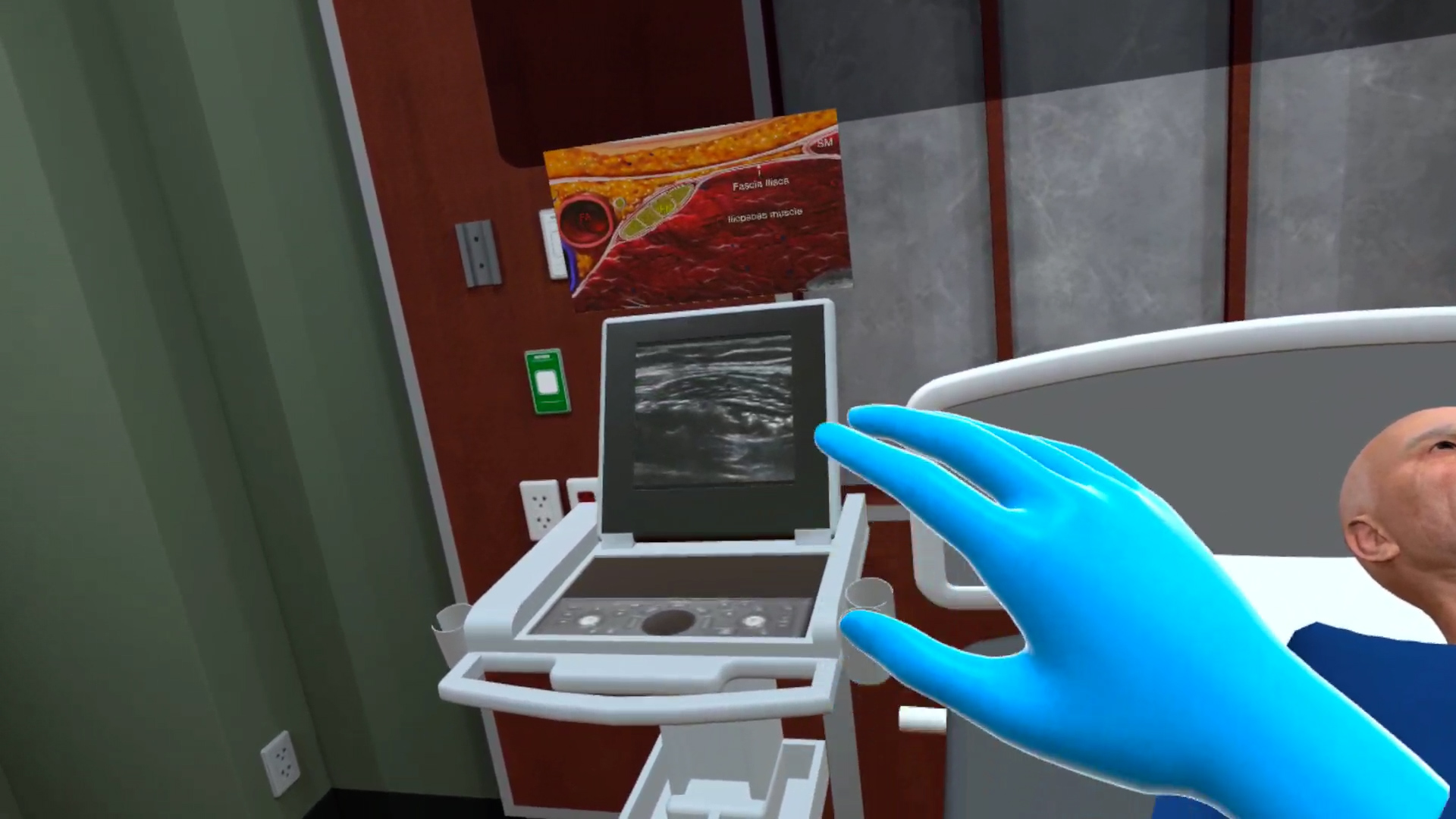
Test acquired skills to perform the procedures from start to finish without prompts. An incorrect step will take the learner back to the start to start afresh.
- Live scoring
- Instant feedback
- Adequate affordances for efficient performance
- Time tracking to monitor activity completion
Get started
Ready to transform clinical training?
Book a demo to see Fascia Iliaca Block and our full simulation library in action.