Clinical Simulation
Pediatric Anaphylaxis


About This Course
What you'll experience
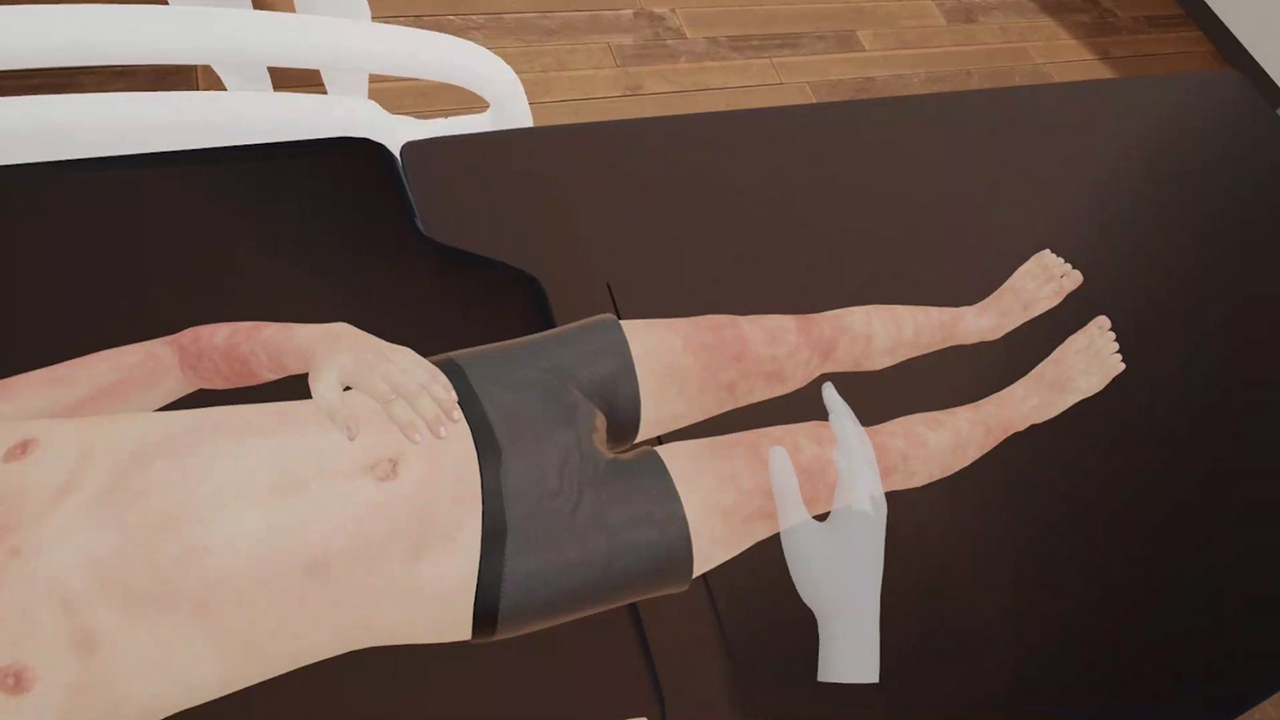
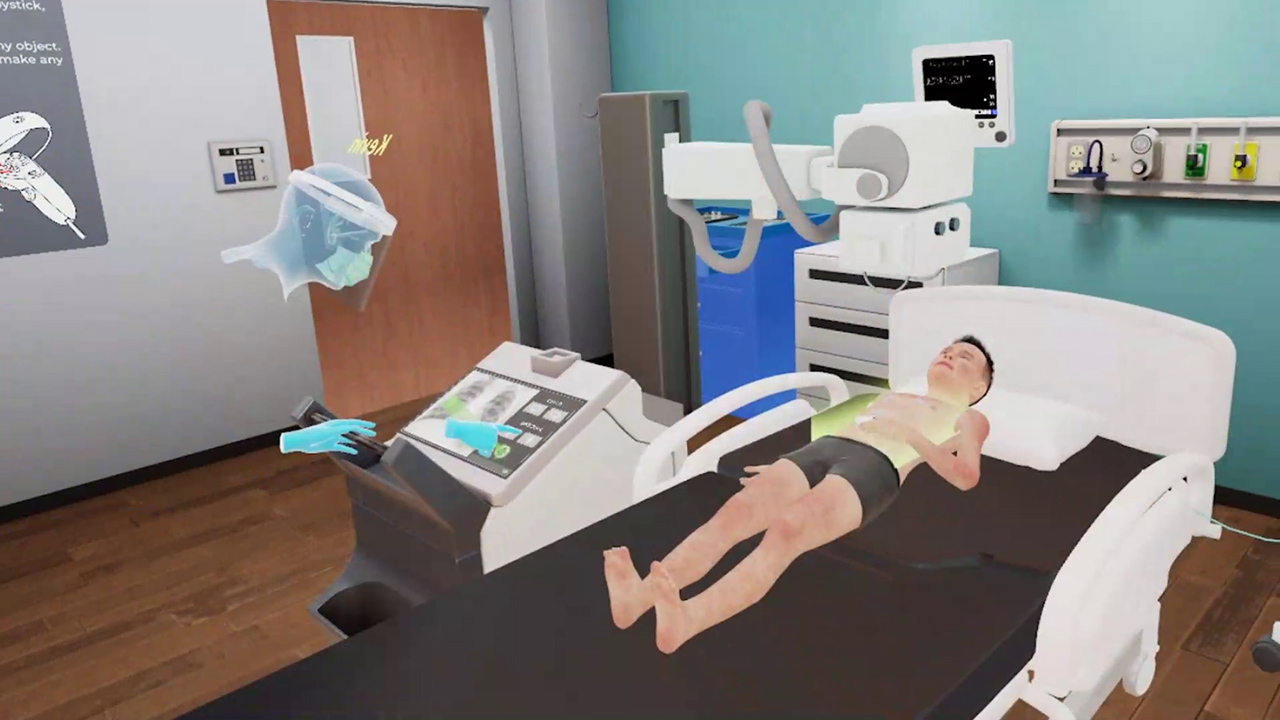
Seven-year-old Kevin is brought via EMS with an increased work of breathing. Kevin is known to be allergic to peanuts. After eating a cake at a birthday party, he developed wheeze, shortness of breath and rash within 10 minutes. His mother administered his epinephrine auto-injector and called EMS. This multiplayer VR session is designed to expose learners to case of severe anaphylaxis and laryngospasm complication and provide training to manage the case with efficiency.
Learning Objectives
- Implement emergency treatment of anaphylaxis
- Predict and prepare for difficult intubation
- Demonstrate an approach to laryngospasm during intubation
- Employ good communication and coordination skills
References
- Marx, J. A., Hockberger, R. S., Walls, R. M., & Adams, J. (2013). Rosen's emergency medicine: Concepts and clinical practice. St. Louis: Mosby.
- Hobaika AB, Lorentz MN. [Laryngospasm]. Rev Bras Anestesiol. 2009 Jul-Aug;59(4):487-95. Review. Portuguese. PubMed PMID: 19669024
What you'll practice
Core Skills Training
Core Skill
Anaphylaxis
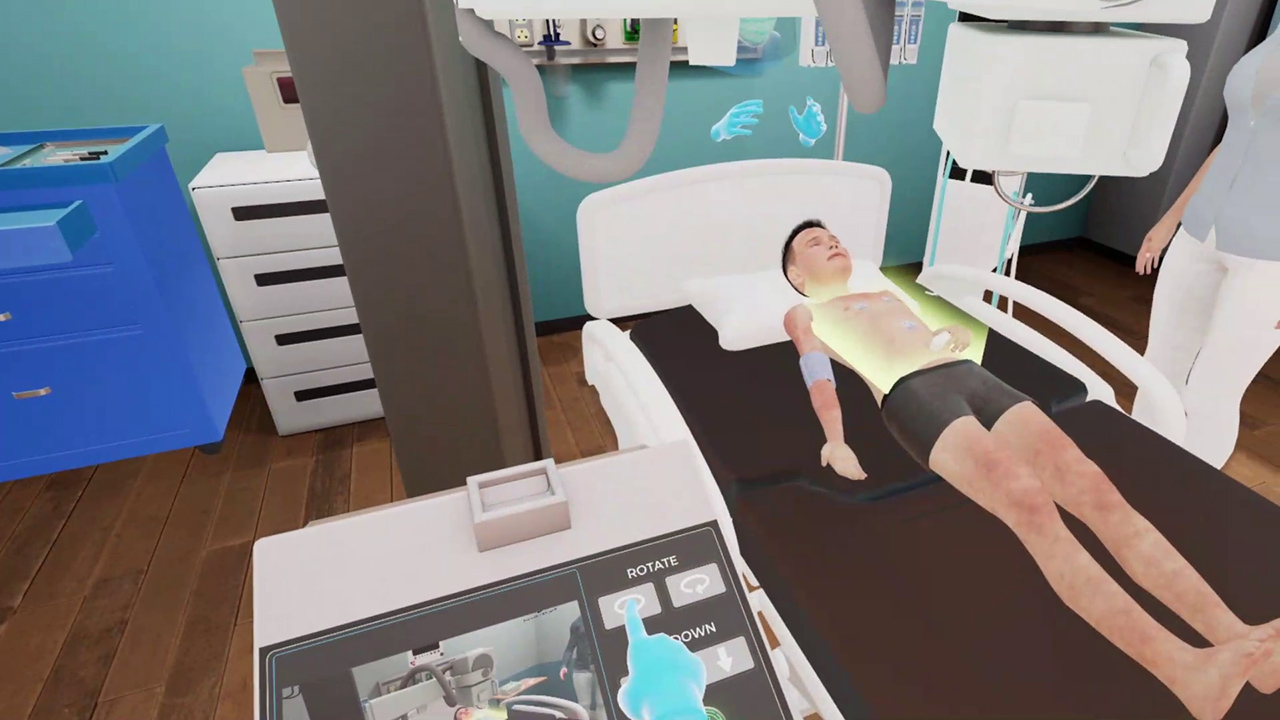
As part of this open scenario, the learner is expected to initiate usual anaphylaxis treatment including salbutamol for bronchospasm. When the patient develops worsened hypotension, the user is required to start an epinephrine infusion. With the patient experiencing increased angioedema, there will be a need to consider intubation. If no paralytic is used the patient may experience laryngospasm but if used in time the user will be able to successfully intubate the patient.
All necessary affordances are made available to learners to help them complete the process with efficiency.
Tailored to You
Customize Your Program
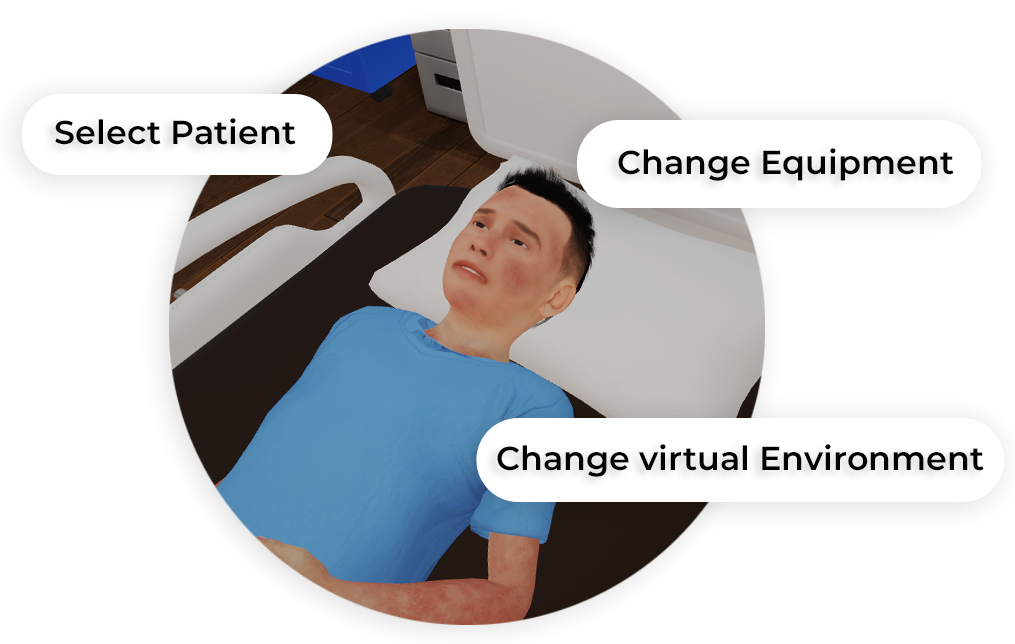
MedVR Education is bringing to you in-VR customization that will enable you to put together your own simulations by making selections from a wide range of feature choices.
- Select patient from a diverse background
- Choose preferred virtual environment
- Configure patient vitals
- Define simulation duration
- Create patient history and train with AI-Humans
- Customize session-end debriefing
- …..many more to come
Additional customization options are available and can be developed to meet your specific training needs.
 AI Patient Assessment
 Natural Language Processing
 Multi-player Sessions
 Physics-Based Interaction
How it works
Training
End-of-task debriefing to assess one’s performance, evaluate actions, and get the most out of the training. Examples of topics being touched upon in the debriefing include the following:
- Thorough patient assessment
- Completion of necessary steps
- Correct medication administration to patient
- Sequential completion of task
- Execution of time-sensitive tasks
Get started
Ready to transform clinical training?
Book a demo to see Pediatric Anaphylaxis and our full simulation library in action.