Clinical Simulation
Pediatric Bronchiolitis


About This Course
What you'll experience
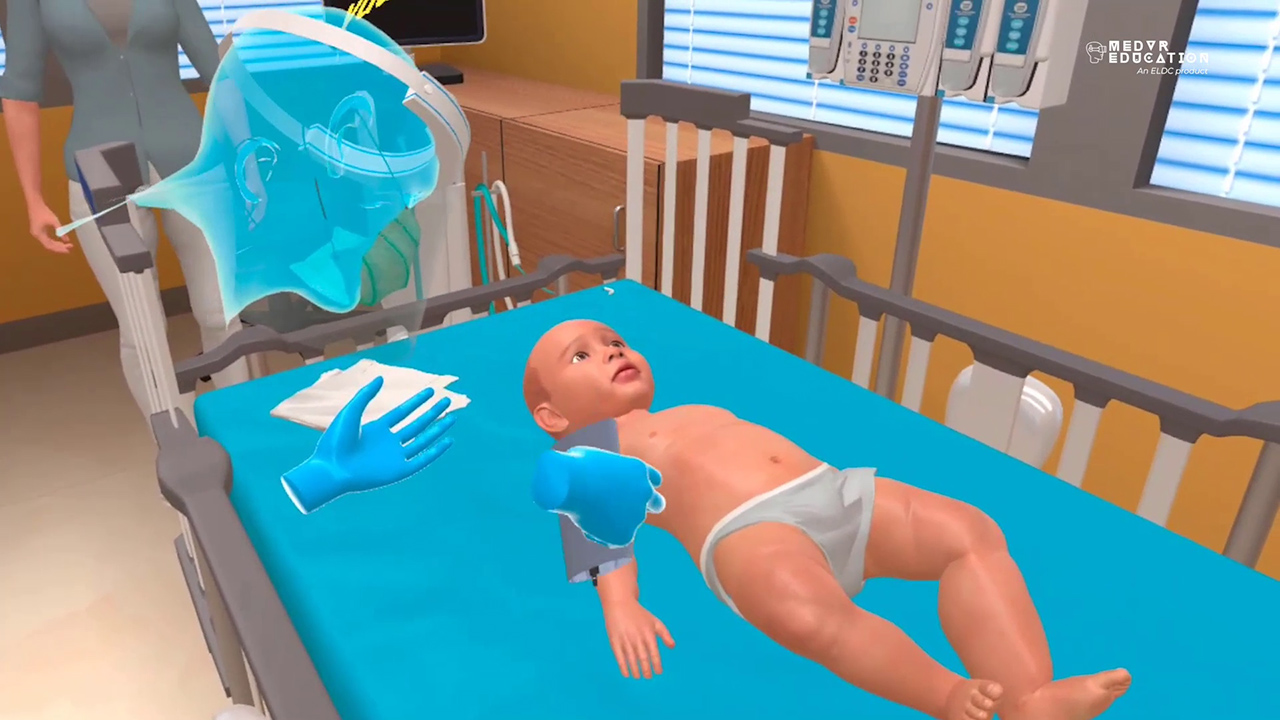
Tania is 7-months old. Her older sibling developed a cold four days prior and the next day Tania had a running nose and a cough. She was doing fine until yesterday when she did not eat or drink much. This morning, she had some noisy breathing, and her chest looked funny while she was breathing. When the condition persisted for a couple of hours, they were directed to the emergency department. Tania has not urinated today. Her last bowel movement was yesterday evening, and it was normal. She is otherwise healthy and fully up to date with her vaccines. This multiplayer, open-scenario VR simulation is designed to help healthcare practitioners identify respiratory distress in an infant and respond to it. The post-session debriefing serves as a self-analysis, helping learners identify errors and rectify them.
Learning Objectives
- Identify respiratory distress in an infant.
- Review the diagnosis of bronchiolitis.
- Initiate supportive care with supplemental oxygen and fluids.
- Recognize treatment failure and intubate an infant.
References
- Friedman J, Rieder M, Walton J. Bronchiolitis: Recommendations for diagnosis, monitoring and management of children one to 24 months of age [Internet]. Canadian Pediatric Society; 2021. Available from: https://cps.ca/en/documents/position /bronchiolitis
What you'll practice
Core Skills Training
Core Skill
Bronchiolitis and Respiratory Failure
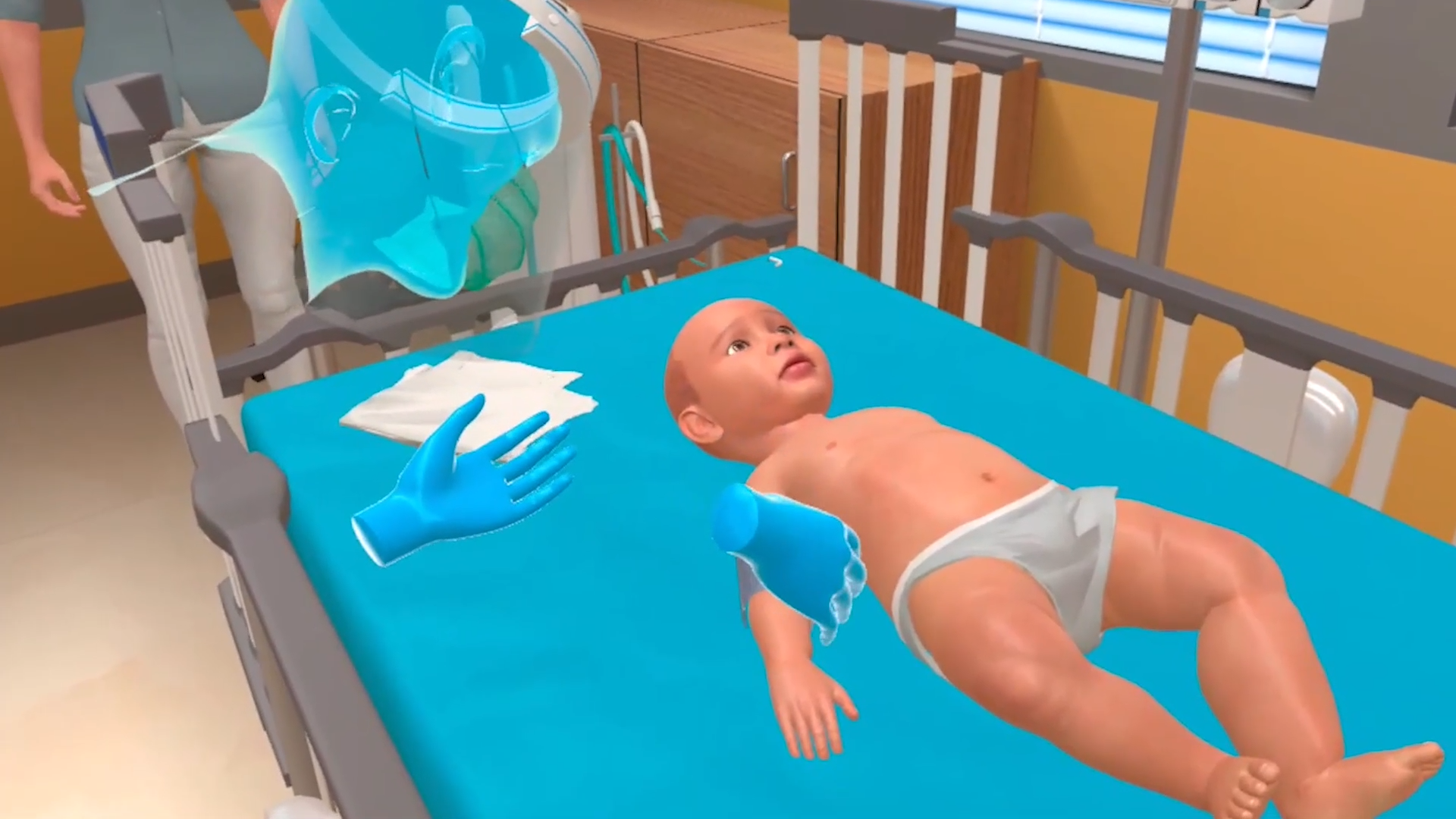
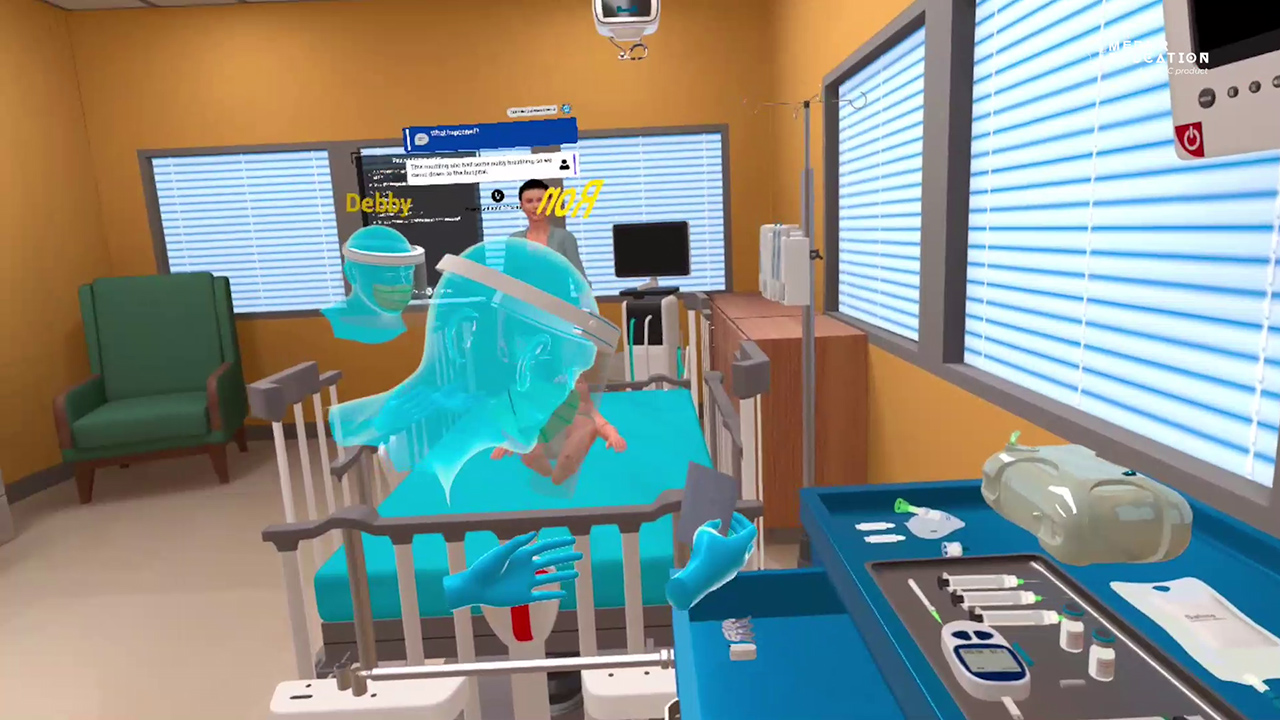
In this multiplayer open scenario VR simulation, learners are expected to react to a case of bronchiolitis in an infant. They will identify the respiratory distress and review the diagnosis of bronchiolitis. Learners will start with oxygen, achieve IV access and give fluid bolus. With a dropping oxygen saturation level, learners will have to perform an endotracheal intubation and call PICU at the pediatric referral center.
Affordances are made available to perform the necessary steps in the scenario. The team can discuss the case and share knowledge and experiences to treat the patient.
Tailored to You
Customize Your Program
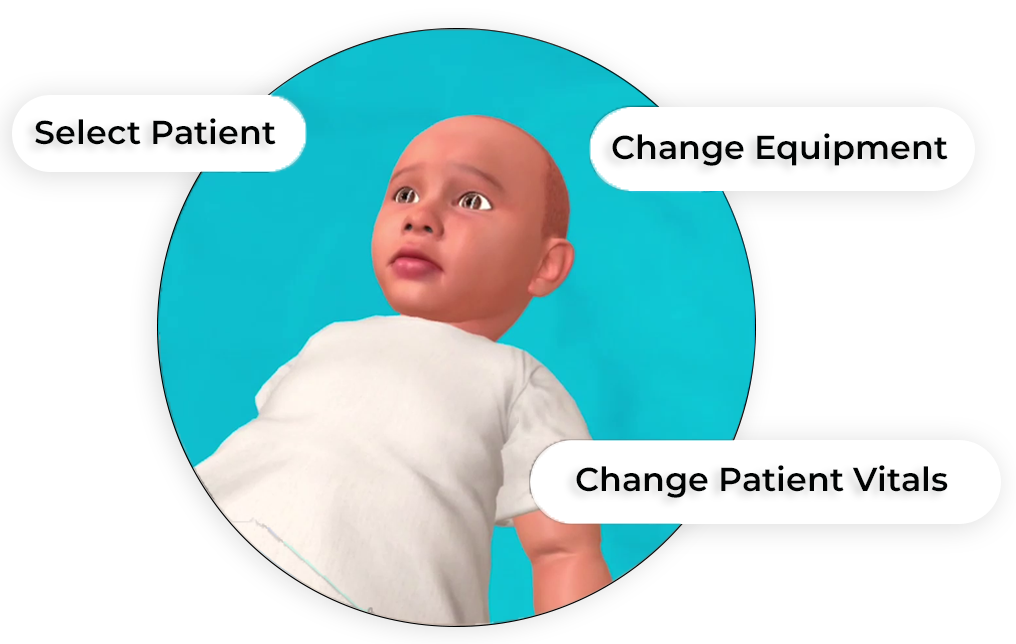
MedVR Education is bringing to you in-VR customization that will enable you to put together your own simulations by making selections from a wide range of feature choices.
- Select patient from a diverse background
- Choose preferred virtual environment
- Configure patient vitals
- Define simulation duration
- Create patient history and train with AI-Humans
- Customize session-end debriefing
- …..many more to come
Additional customization options are available and can be developed to meet your specific training needs.
 AI Patient Assessment
 Natural Language Processing
 Multi-player Sessions
 Physics-based Interaction
How it works
Training
End-of-task debriefing to assess one’s performance, evaluate actions, and get the most out of the session. The debriefing includes crucial points related to the scenario.
- Thorough patient assessment
- Completion of necessary steps
- Correct medication administration to patient
- Sequential completion of task
- Execution of time-sensitive tasks
Get started
Ready to transform clinical training?
Book a demo to see Pediatric Bronchiolitis and our full simulation library in action.