Clinical Simulation
Pediatric DKA


About This Course
What you'll experience
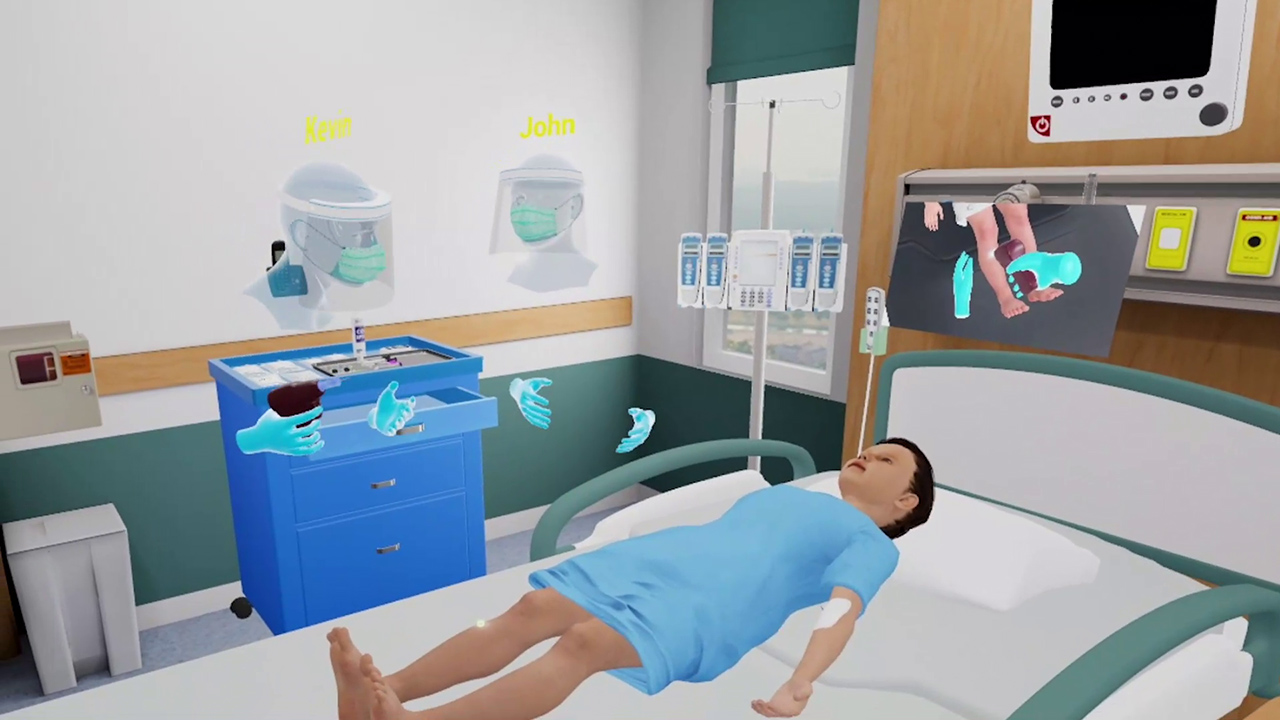
Anna, an eight-year-old girl, has been transferred to the ED with DKA. She has been unwell for the past three days, with some accompanying abdominal pain and vomiting. Anna has received a 20cc/kg bolus for initial hypotension as well as an insulin bolus of 8 units. On arrival, EMS stated that they lost the IV en route, and the patient is now more somnolent in the ED. This multiplayer Pediatric DKA open scenario by MedVR Education helps healthcare professionals practice the steps involved in managing an acutely unwell child.
Learning Objectives
- Implementing an EBM approach for resuscitation and treatment of pediatric DKA
- Recognizing the need for IO access after failure to obtain peripheral IV
- Recognizing cerebral edema and implementing timely treatment
- Anticipating decline in a DKA patient requiring intubation and planning accordingly
References
- Marx, J. A., Hockberger, R. S., Walls, R. M., & Adams, J. (2013). Rosen's emergency medicine: Concepts and clinical practice. St. Louis: Mosby. Chapter 126: Diabetes Mellitus and Disorders of Glucose Homeostasis.
What you'll practice
Core Skills Training
Core Skill
Pediatric DKA
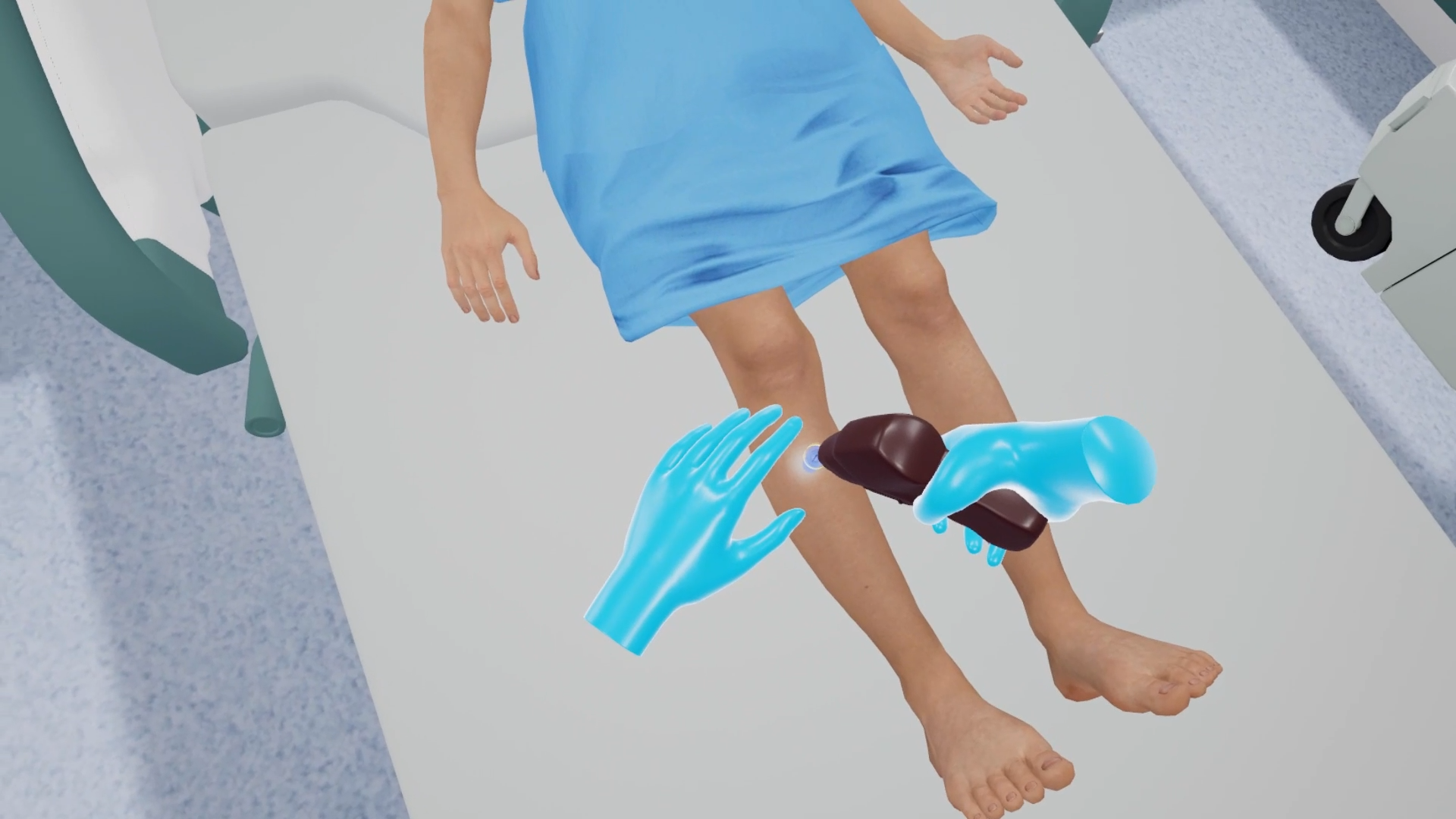
As part of this open scenario, the learners is expected to begin empiric treatment for likely cerebral edema and concurrently manage the DKA. Since a physical exam will reveal a peritonitic abdomen with guarding in the RLQ, empiric abx should be started for likely appendicitis.
A decreasing neurologic status and vomiting in the patient will eventually require an advanced airway. The challenge is to optimize the peri-intubation course and ventilation to allow for compensation of her metabolic acidosis.
Tailored to You
Customize Your Program
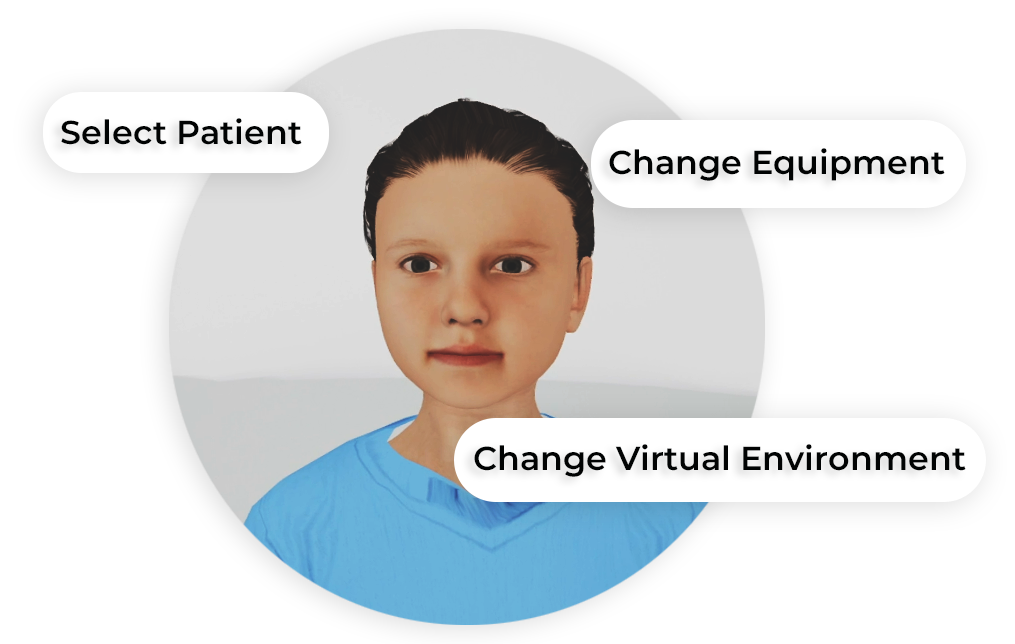
MedVR Education brings to you in-VR customization, enabling you to put together your own simulations by making selections from a wide range of feature choices.
- Select patient from a diverse background
- Choose preferred virtual environment
- Configure patient vitals
- Define simulation duration
- Create patient history and train with AI-Humans
- Customize session-end debriefing
- …..many more to come
Additional customization options are available and can be developed to meet your specific training needs.
 AI Patient Assessment
 Natural Language Processing
 Multi-player Sessions
 Physics-based Interaction
How it works
Training
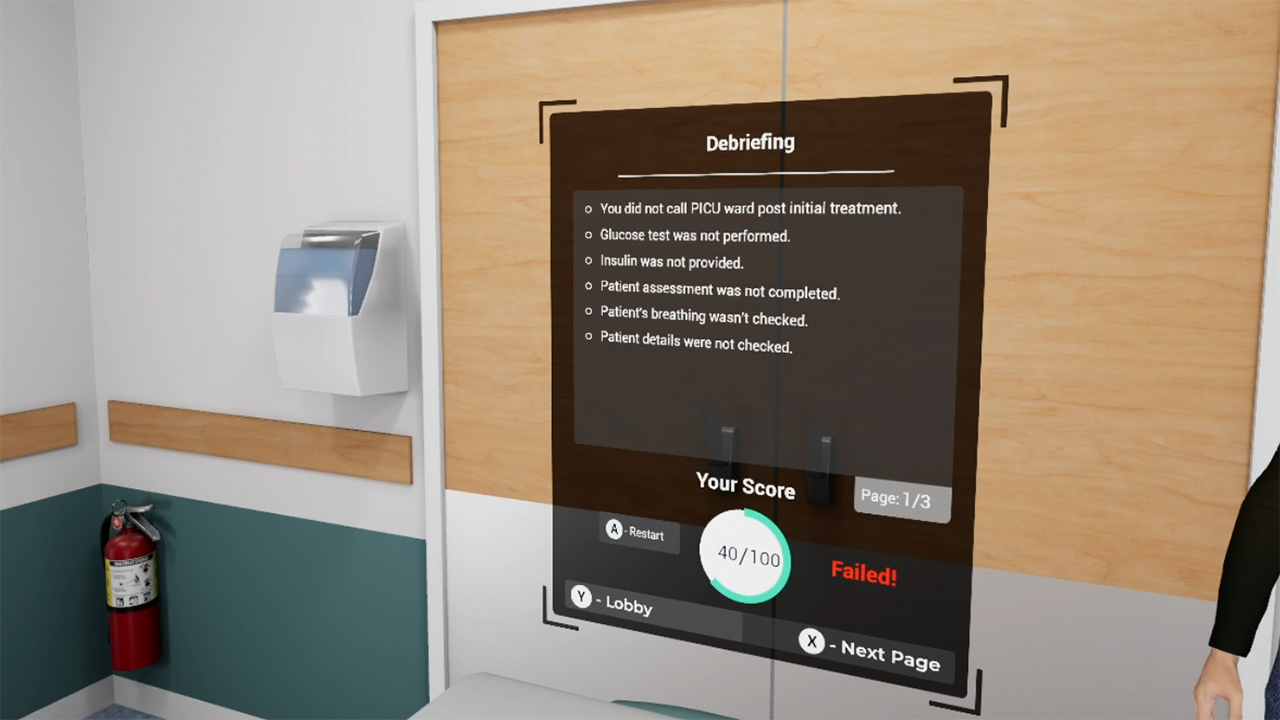
End-of-task debriefing to assess one’s performance, evaluate actions, and get the most out of the training. Examples of topics being touched upon in the debriefing include the following:
- Thorough patient assessment
- Completion of necessary steps
- Correct medication administration to patient
- Sequential completion of task
- Execution of time-sensitive tasks
Get started
Ready to transform clinical training?
Book a demo to see Pediatric DKA and our full simulation library in action.