Clinical Simulation
Pediatric Septic Shock


About This Course
What you'll experience
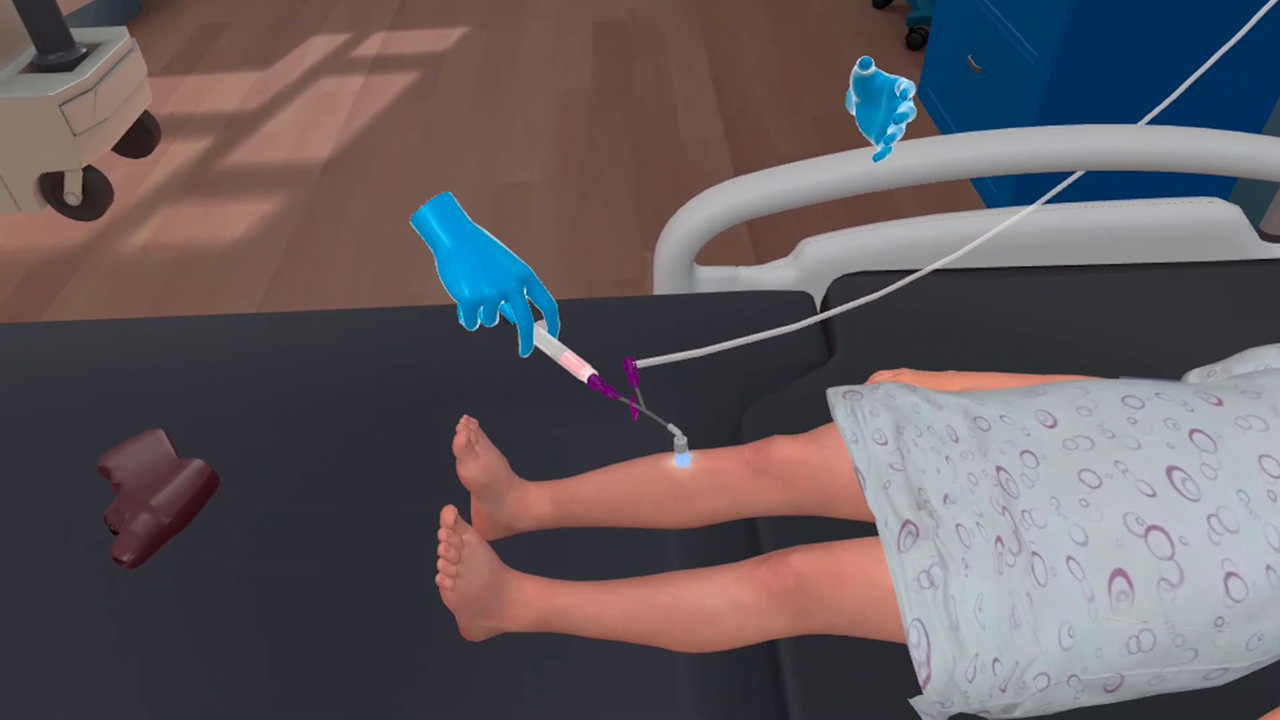
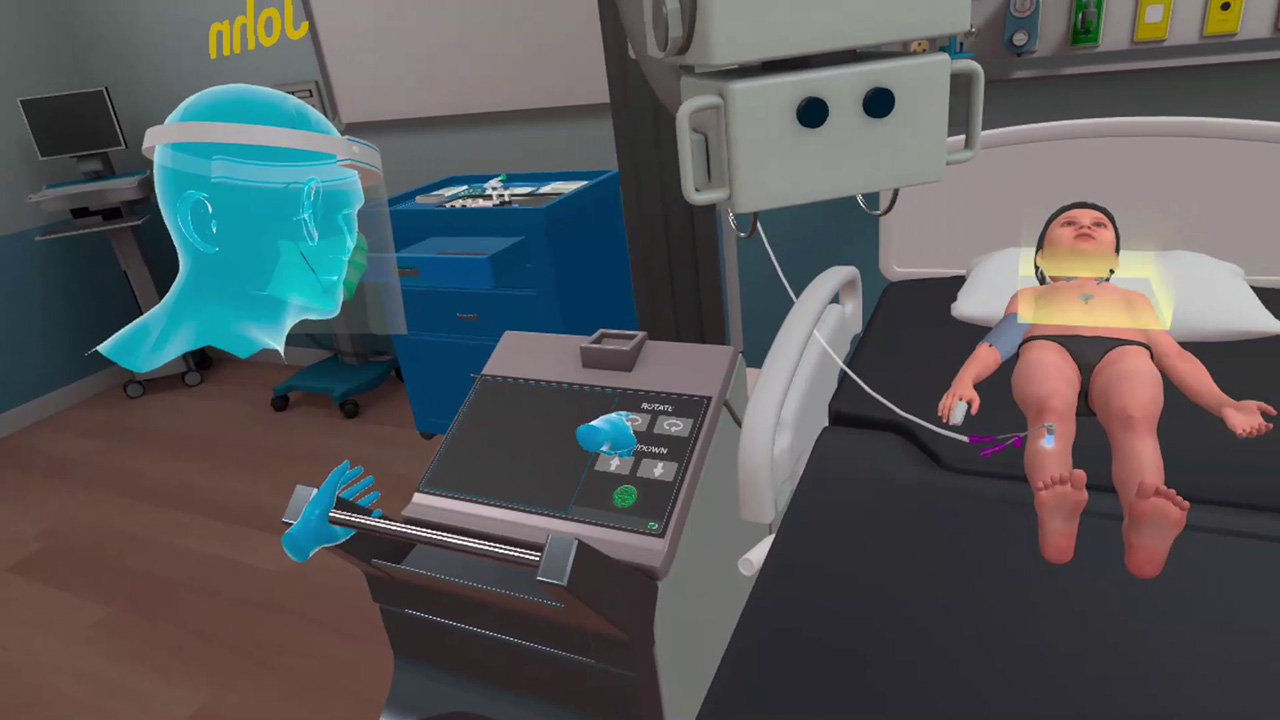
Four-year-old Olivia is brought to the Emergency Department as she is lethargic and “not herself”. She has had a fever and cough for the past three days. On arrival she looks toxic and has delayed capillary refill, a glazed stare, tachypnea, and tachycardia. This multiplayer, open-scenario VR simulation is designed to help healthcare practitioners practice and manage common issues associated with pediatric resuscitation. The post-session debriefing serves as a self-analysis, helping learners identify areas for improvement and avoid errors in the real world.
Learning Objectives
- Recognize the need for early IO (intraosseous) access in a critically unwell child where IV access is unsuccessful
- Check capillary blood glucose
- Prioritize IV fluid boluses then vasopressors in the setting of septic shock
- Administer IV antibiotics
- Recognize the need to intubate a septic child with altered level of consciousness
References
- Marx, J. A., Hockberger, R. S., Walls, R. M., & Adams, J. (2013). Rosen's emergency medicine: Concepts and clinical practice. St. Louis: Mosby.
- Intraosseous access - https://www.rch.org.au/clinicalguide/ guideline_index/Intraosseous_access/
- Part 12: Pediatric Advanced Life Support. https://www.ahajournals.org/action/ showCitFormats?doi=10.1161%2FCIR.000000000000 0266
What you'll practice
Core Skills Training
Core Skill
Pediatric Septic Shock
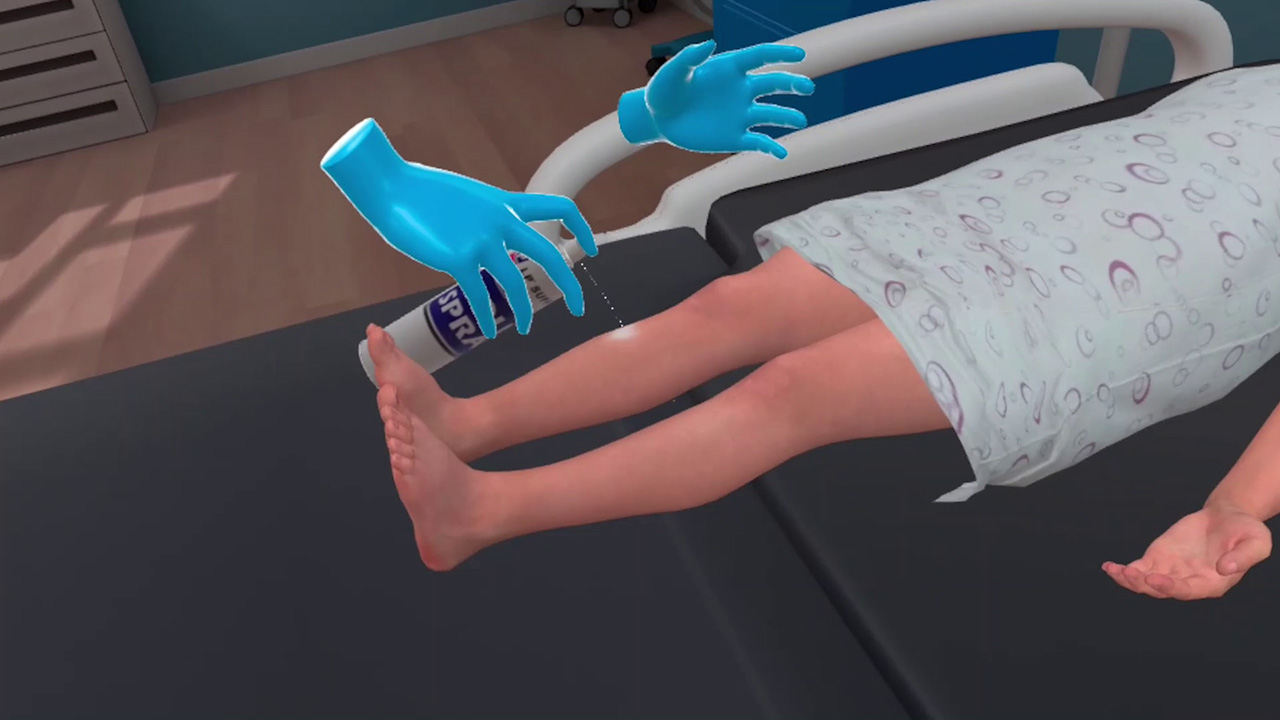
In this open scenario simulation, the learner is expected to identify and respond to a critical case of pediatric septic shock. The four-year-old patient is toxic on arrival with delayed capillary refill, a glazed stare, tachypnea, and tachycardia. Being unable to obtain IV access, the team will need to insert an IO. Having gained IO access, they will be required to resuscitate the child by prioritizing fluids, antibiotics, and vasopressors. If a capillary glucose is not checked and the hypoglycemia is not corrected, the patient will seize. The patient will remain listless after fluid resuscitation and the team will have to decide whether to intubate the patient.
Tailored to You
Customize Your Program
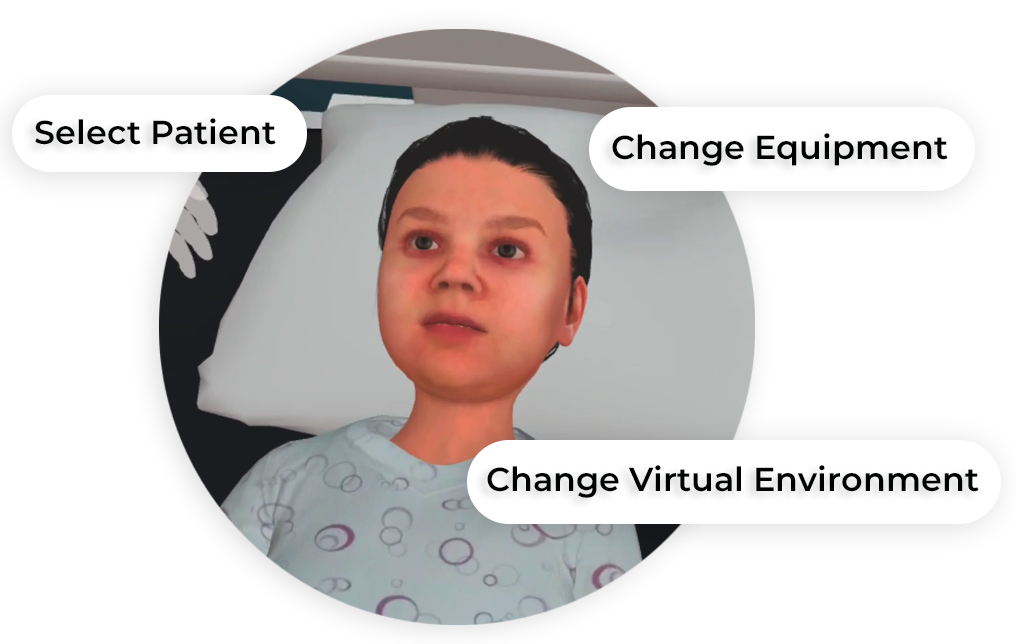
MedVR Education is bringing to you in-VR customization that will enable you to put together your own simulations by making selections from a wide range of feature choices.
- Select patient from a diverse background
- Choose preferred virtual environment
- Configure patient vitals
- Define simulation duration
- Create patient history and train with AI-Humans
- Customize session-end debriefing
- …..many more to come
Additional customization options are available and can be developed to meet your specific training needs.
 AI Patient Assessment
 Natural Language Processing
 Multi-player Sessions
 Physics-based Interaction
How it works
Training
End-of-task debriefing to assess one’s performance, evaluate actions, and get the most out of the session. The debriefing includes crucial points related to the scenario.
- Thorough patient assessment
- Completion of necessary steps
- Correct medication administration to patient
- Sequential completion of task
- Execution of time-sensitive tasks
Get started
Ready to transform clinical training?
Book a demo to see Pediatric Septic Shock and our full simulation library in action.