Clinical Simulation
PTSD Assessment
About This Course
What you'll experience
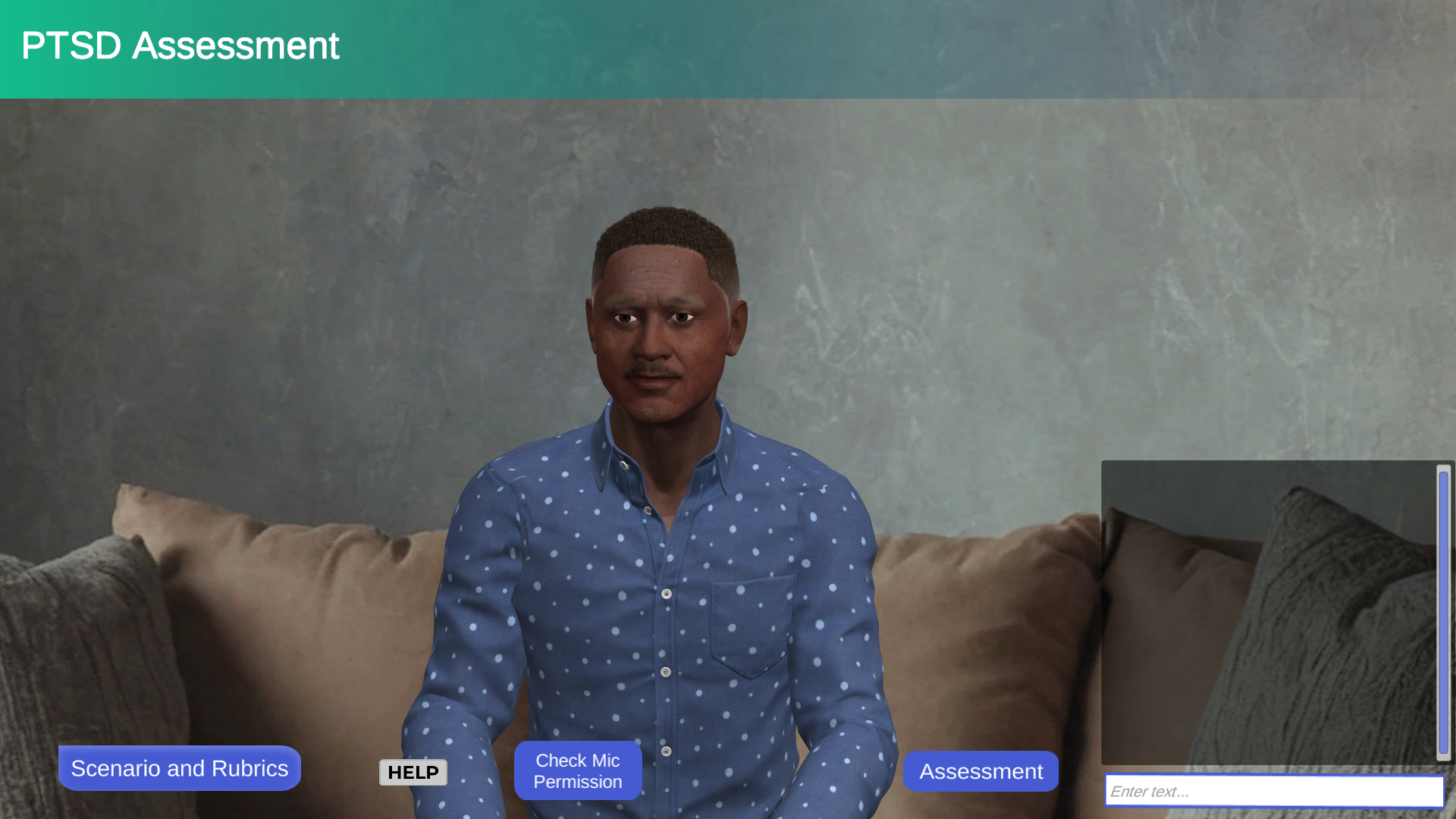
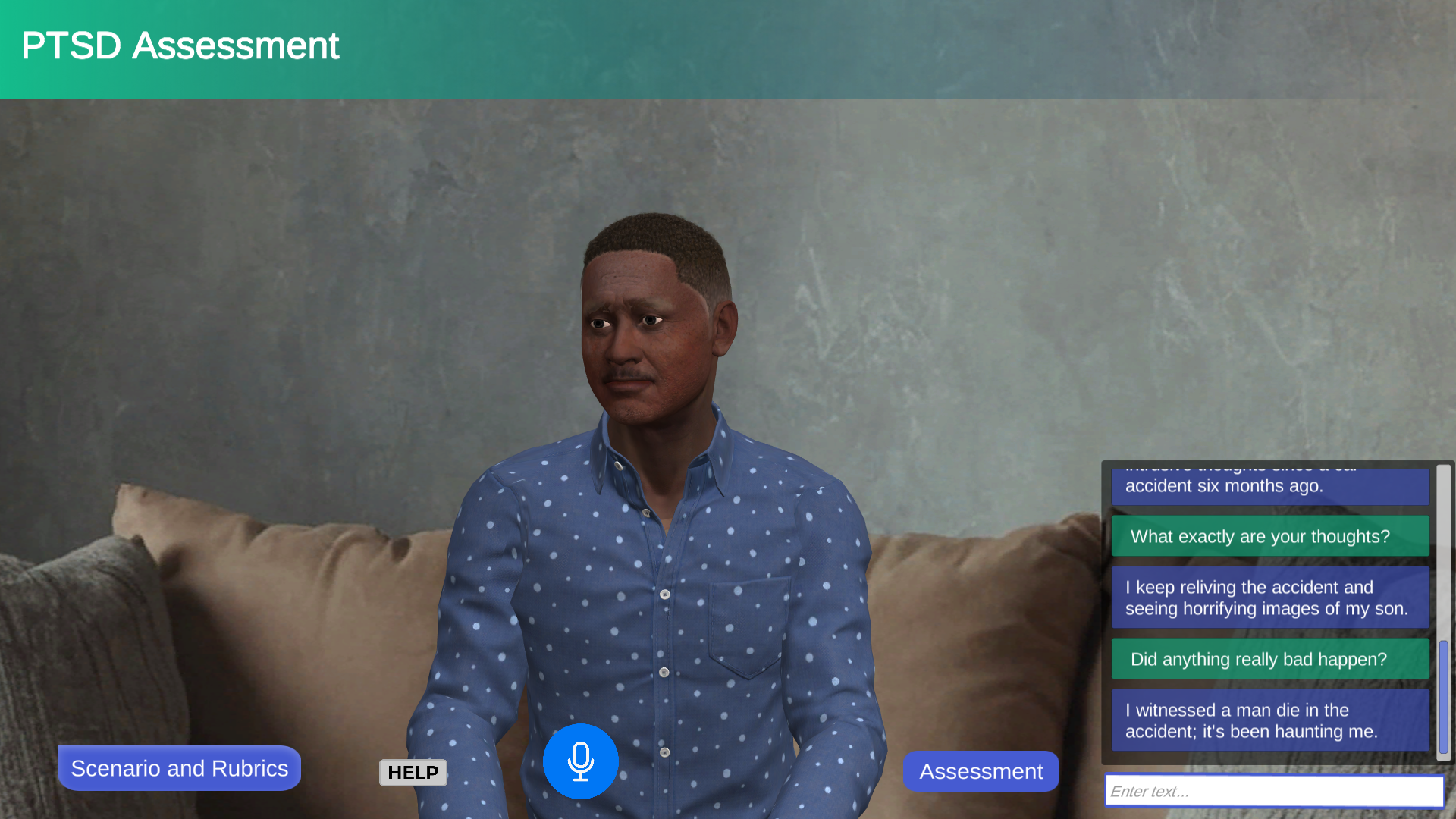
This Post Traumatic Stress Disorder (PTSD) Assessment tool is designed to help learners practice their patient assessment skills. Employing end-to-end AI and technologies like large language model (LLM) and deep learning, these virtual ‘clients’ possess the ability to respond like real humans. Learners can conduct a completely organic conversation with the client, asking them about their symptoms and problems faced. Based on the client’s responses, a line of diagnosis can be established and treatment plan formulated. The MedVR Ed XR Platform provides trainers and instructors the facility to review conversation logs and analyze learner performance based on customized rubrics. Based on the performance review, trainers will be able to provide precise and effective feedback.
Learning Objectives
- Build knowledge of patient’s trauma history
- Demonstrate understanding of patient’s health concerns
- Approach the patient’s trauma case with objectivity
- Conduct an accurate diagnosis
- Gain improved professional competence
References
- Blake, D. D., Weathers, F. W., Nagy, L. M., Kaloupek, D. G., Gusman, F. D., Charney, D. S., & Keane, T. M. (1995). The development of a Clinician-Administered PTSD Scale. Journal of traumatic stress, 8(1), 75-90.
- Breslau, N., Peterson, E. L., & Schultz, L. R. (2008). A second look at prior trauma and the posttraumatic stress disorder effects of subsequent trauma: a prospective epidemiological study. Archives of general psychiatry, 65(4), 431-437.
- Davidson, J. R., Book, S. W., Colket, J. T., Tupler, L. A., Roth, S., David, D., ... & Feldman, M. E. (1997). Assessment of a new self-rating scale for post-traumatic stress disorder. Psychological medicine, 27(1), 153-160.
What you'll practice
Core Skills Training
Core Skill
PTSD Assessment
Mark is a 32-year-old male who has been in a car accident about a month back and is now visiting for a PTSD assessment.
On his way home from work, a car jumped a red-light signal and came crashing into Mark’s car. Mark developed a back pain due to the impact of the hit. He does not vividly remember the details of the accident but gets agitated and anxious at the mere thought of it. He tries to push away the memories of the incident but often wakes up from his sleep in a traumatized state. The constant back pain serves as another reminder of the accident.
As a mental health professional, whether a psychiatrist, technician, or someone with a social work background, your task is to assess Mark’s condition, ask him relevant questions and understand his mental state to arrive at a decision about his treatment plan.
Tailored to You
Customize Your Program
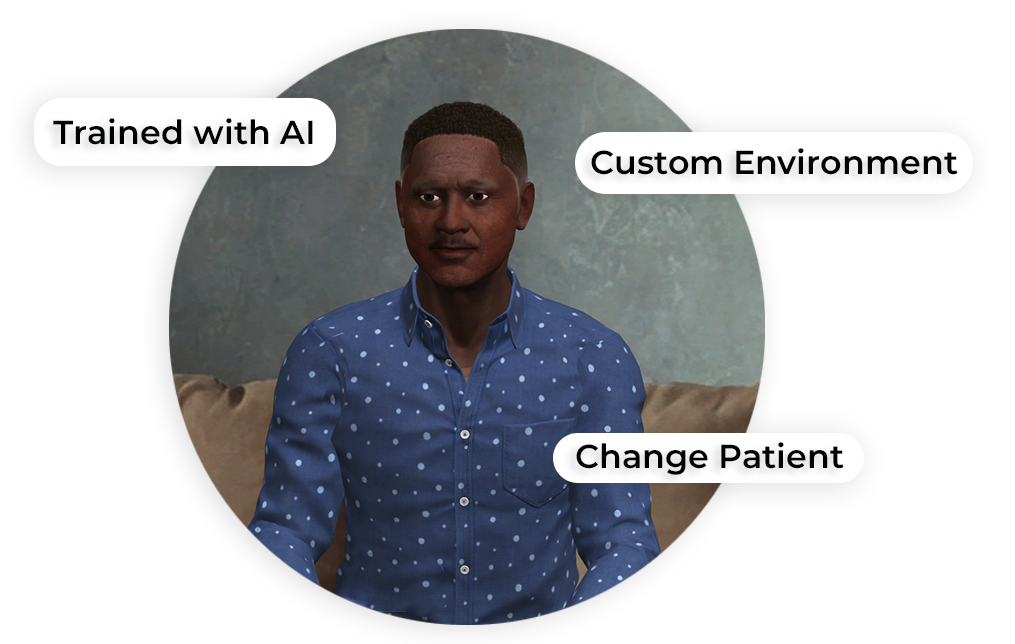
MedVR Education is bringing to you a no-code authoring platform to create new patient cases and customized patient history. Put together your own cases by making selections from a wide range of customizing features.
- Create with web-based authoring tool
- Publish in VR, desktop, and mobile devices
- Train your virtual patient by yourself
- Select patient from a diverse background
- Choose preferred virtual environment
- Perform real-time testing
- Track and train new data
Additional customization options are available and can be developed to meet your specific training needs.
 AI Patient Assessment
 Natural Language Processing
Get started
Ready to transform clinical training?
Book a demo to see PTSD Assessment and our full simulation library in action.