Clinical Simulation
Pulmonary Embolism in VR


About This Course
What you'll experience
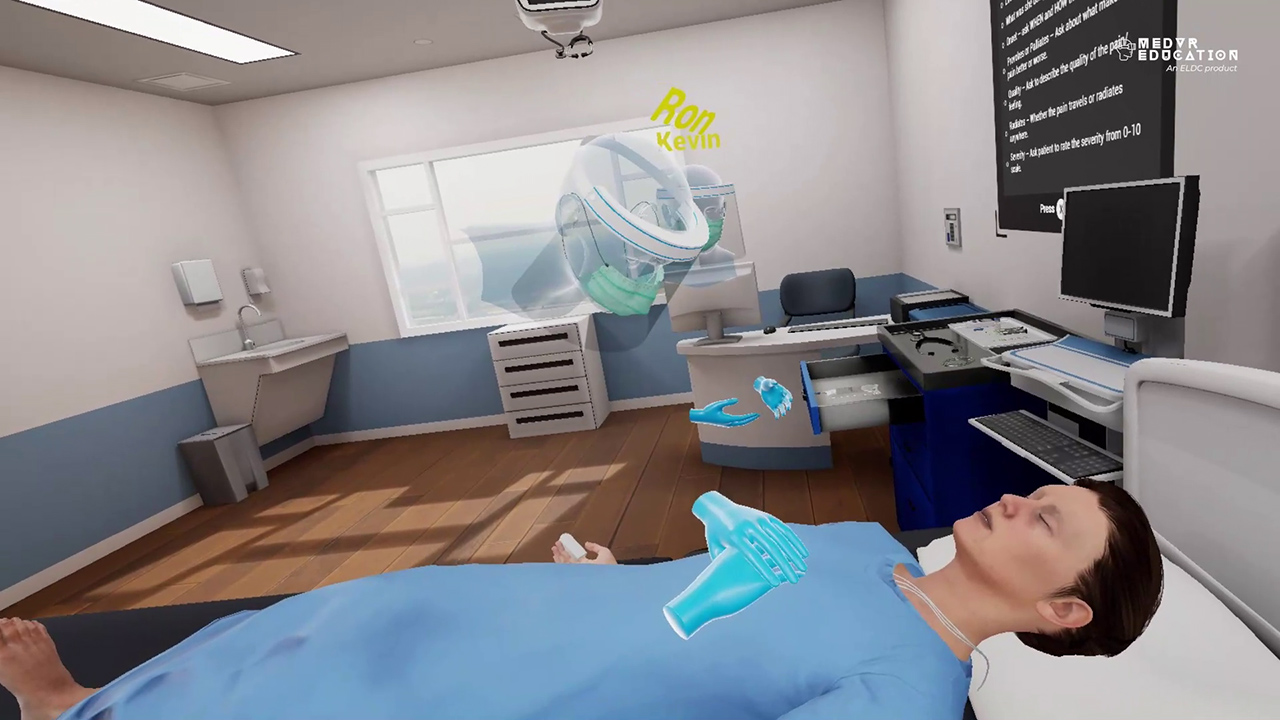
Joanne Black is a 55-year-old female diagnosed with ovarian cancer. She is admitted to the Gyne Oncology unit and is actively receiving chemotherapy. Joanne’s repeat CT show a decreased tumor burden and a surgery is planned for the next day. As a pre-op requirement, she received a blood transfusion for a Hb of 22 which ended 4 hours ago and was tolerated well. Approximately 30 minutes ago Joanne started developing shortness of breath and central chest discomfort. As a healthcare practitioner called upon to assess her, what would be your next course of action? This multiplayer open scenario VR session is designed to help learners identify and treat an acutely unwell patient suffering from pulmonary embolism.
Learning Objectives
- Perform a focused history/physical exam in an acutely unwell patient
- Effectively lead/manage a team to provide appropriate care for an acutely unwell patient
- Recognize risk for PE and initiate the appropriate workup
- Demonstrate clear leadership and effective team communication
- Appropriately ask for help and communicate concerns over the phone
- Urgently mobilize appropriate consultant services
References
- Josh Farkus. 2019. Submassive and Massive PE. Internet Book of Critical Care. https://emcrit.org/ibcc/pe/
- Amit Shah. 2018. PE Thrombolysis. Emergency Medicine Cases. https://emergencymedicinecases.com /video/emu-365-pe-thrombolysis-in-2018/
- Peter Reardon et al. 2018. Contemporary Management of the High-Risk Pulmonary Embolism: The Clot Thickens. Journal of Intensive Care Medicine. 34(8):603-608
What you'll practice
Core Skills Training
Core Skill
Pulmonary Embolism
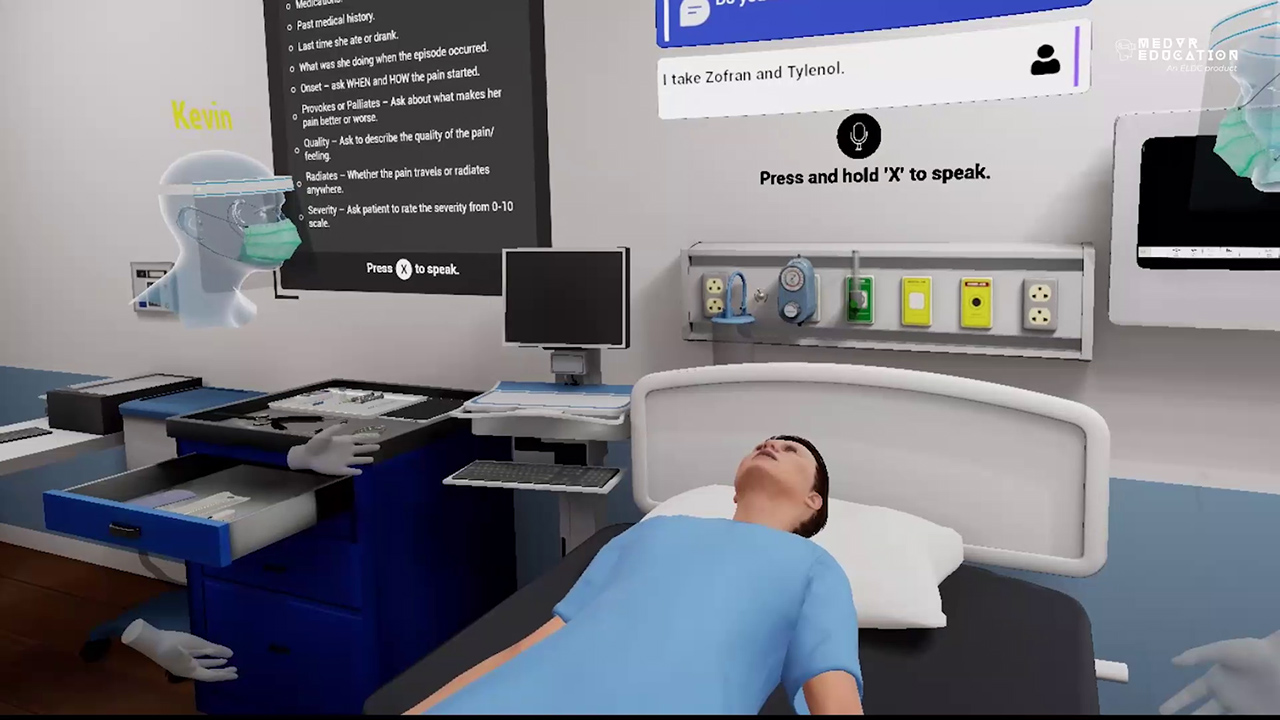
In the role of a healthcare practitioner, the learner is expected to assess a visibly dyspneic patient. As part of this module, the learner will interact with the patient following routine examination procedure. The learner will study the patient’s vitals, start IV fluids and interpret her ECG and CXR. With the patient’s condition deteriorating, the learners will call for an immediate CPR and raise a code blue.
Tailored to You
Customize Your Program
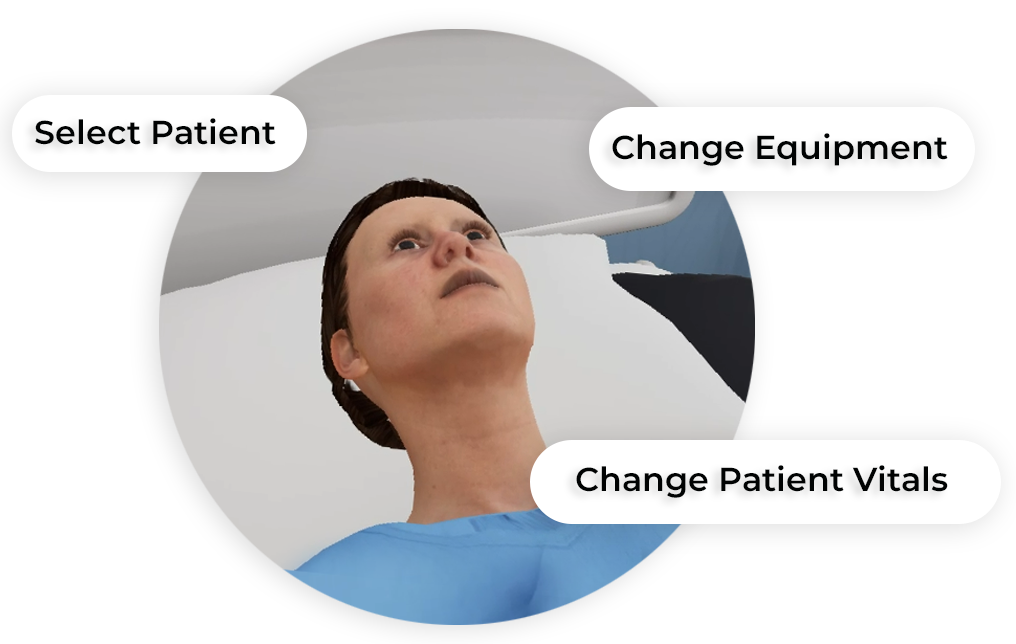
MedVR Education is bringing to you in-VR customization that will enable you to put together your own simulations by making selections from a wide range of feature choices.
- Select patient from a diverse background
- Choose preferred virtual environment
- Configure patient vitals
- Define simulation duration
- Create patient history and train with AI-Humans
- Customize session-end debriefing
- …..many more to come
Additional customization options are available and can be developed to meet your specific training needs.
 AI Patient Assessment
 Natural Language Processing
 Multi-player Sessions
 Physics-Based Interaction
How it works
Training
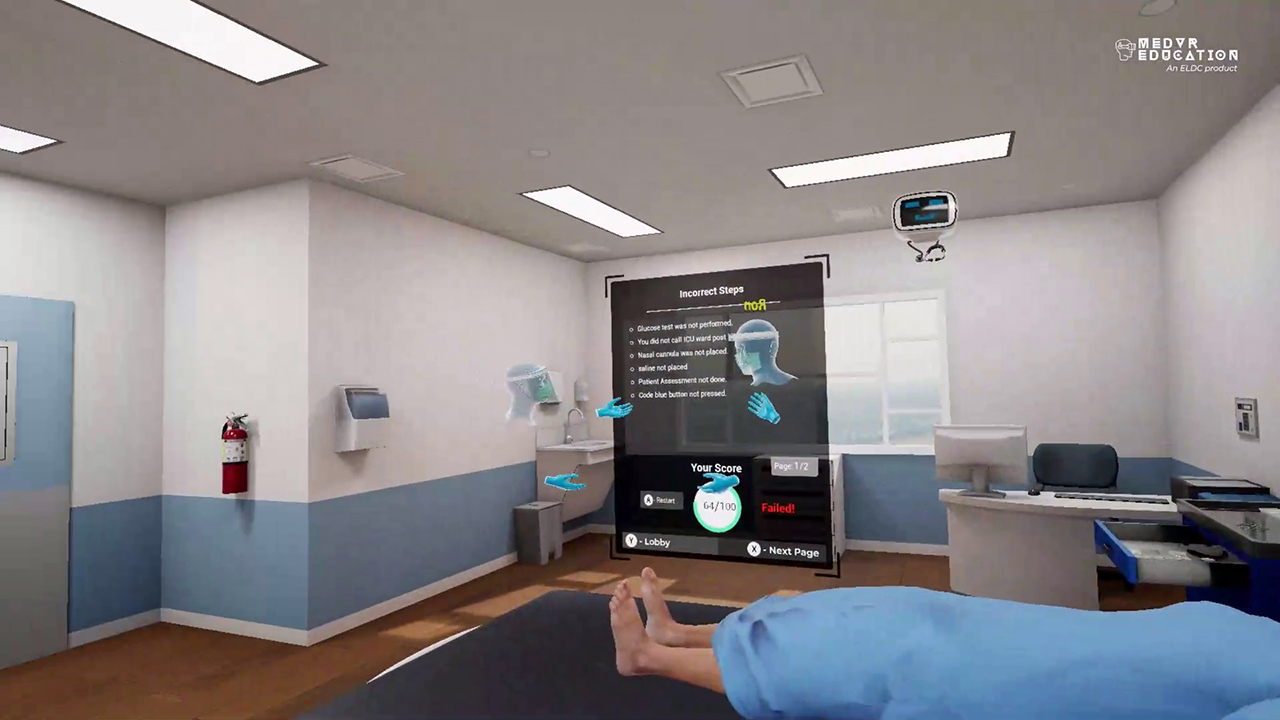
End-of-task debriefing to assess one’s performance, evaluate actions, and get the most out of the session. The debriefing includes crucial points related to the scenario.
- Thorough patient assessment
- Completion of necessary steps
- Correct medication administration to patient
- Sequential completion of task
- Execution of time-sensitive tasks
Get started
Ready to transform clinical training?
Book a demo to see Pulmonary Embolism in VR and our full simulation library in action.