Clinical Simulation
Respiratory Function Assessment


About This Course
What you'll experience
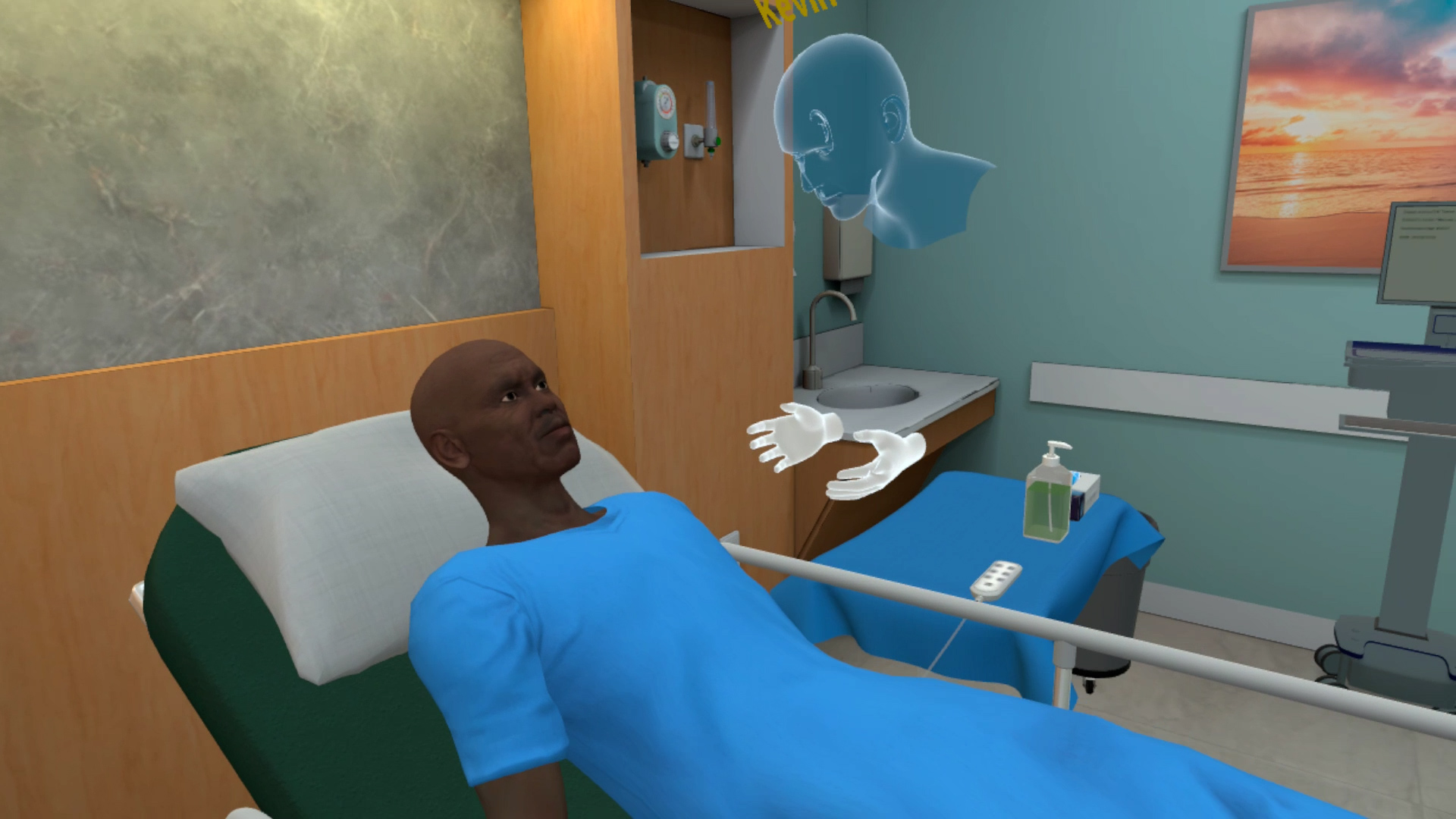
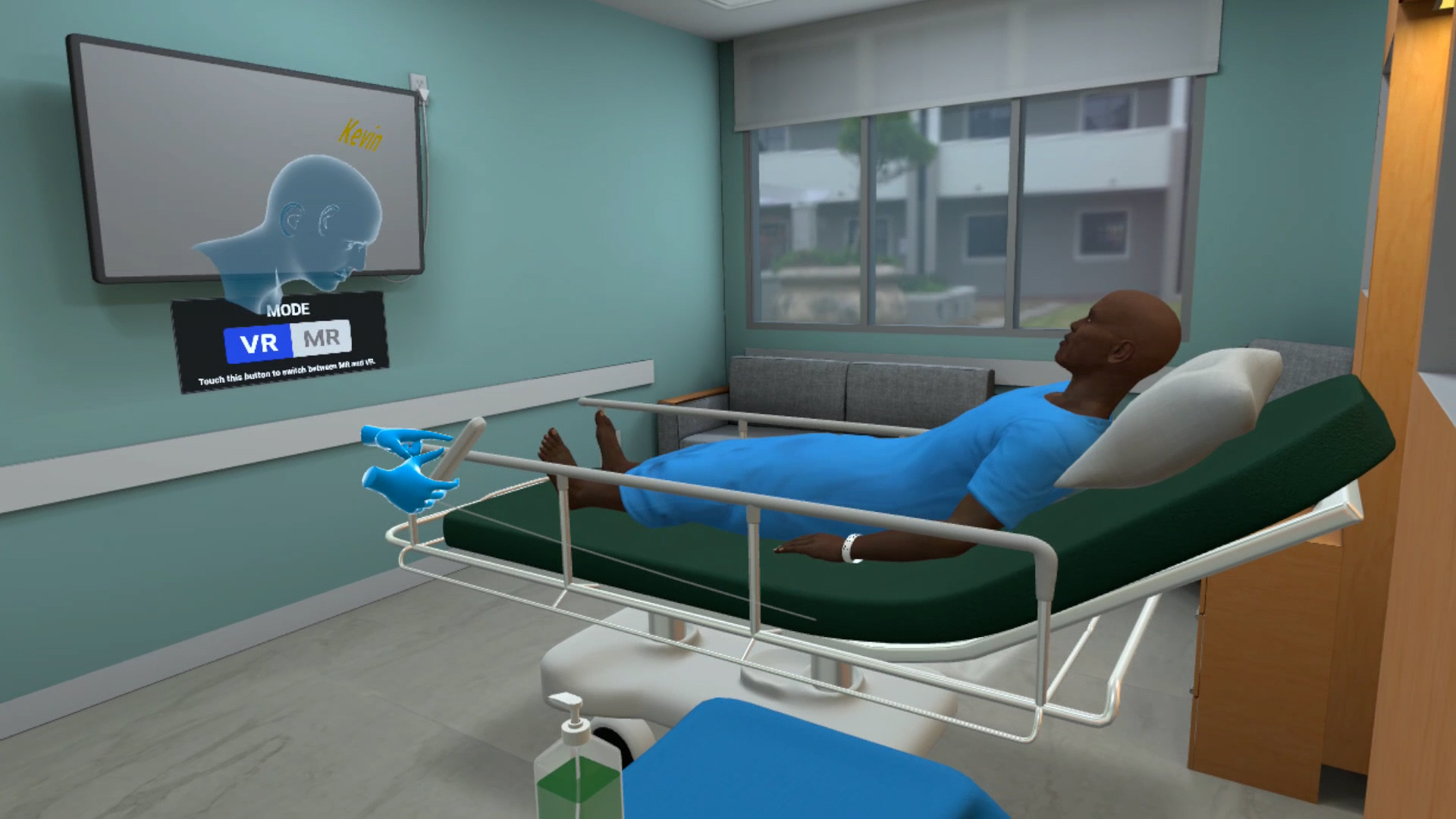
Fifty-one-year-old Henry Joseph has been experiencing shortness of breath since the past two days. Along with that he has also been experiencing a fluttering feeling in his chest and some swelling in his legs. Henry has come to the emergency room for a checkup. This VR simulation for Respiratory Function Assessment is designed to provide healthcare practitioners practice in performing the procedure in a controlled environment with a virtual patient. With both training and assessment modes, learners can perform the procedure and assess themselves on their performance.
Learning Objectives
- Assess respirations and chest movements using standard techniques
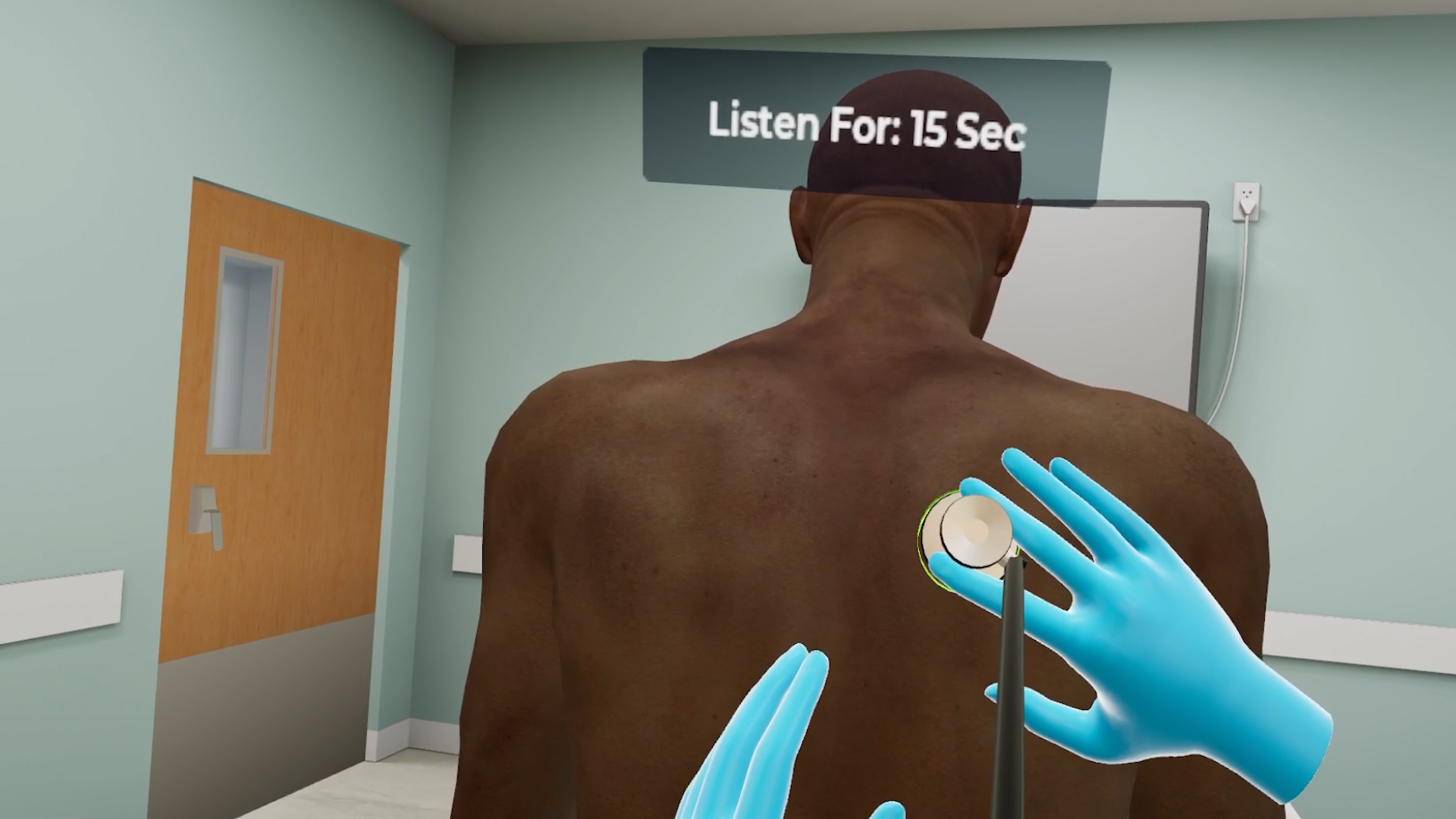
- Listening to breath sounds at the standard auscultation sites on the anterior and posterior chest wall
- Listening to abnormal breath sounds at the standard auscultation sites on the anterior chest wall
- Educate the patient on proper aftercare instructions
References
- American Lung Association. (n.d.). Pulmonary function tests (PFTs). Retrieved from https://www.lung.org/lung-health-diseases/lung-procedures-and-tests/pulmonary-function-tests
- Mayo Clinic. (2023). Pulmonary function tests. Retrieved from https://www.mayoclinic.org/tests-procedures/pulmonary-function-tests
What you'll practice
Core Skills Training
Core Skill
Assessing Respiratory Rate
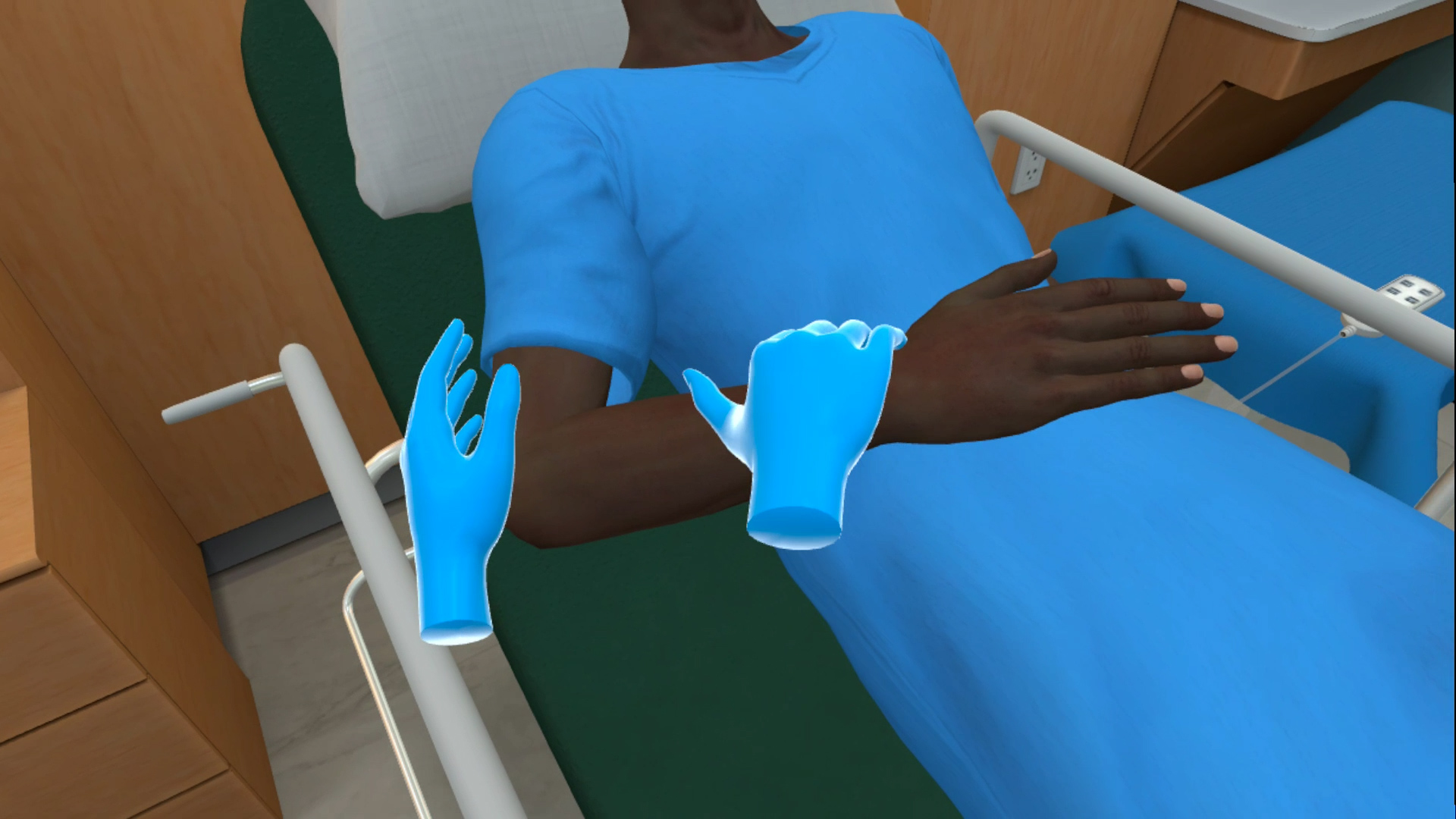
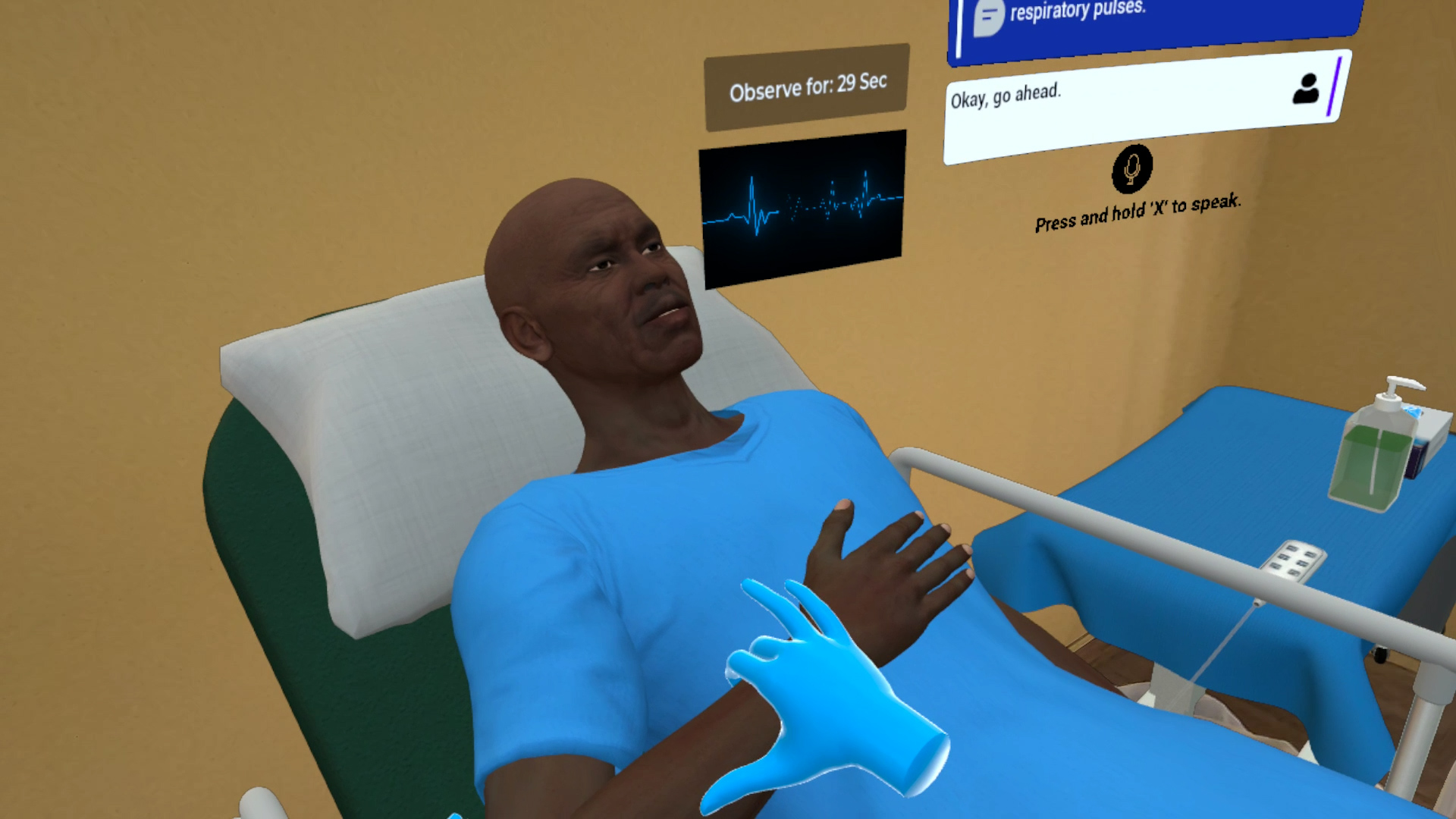
As a part of this respiratory function assessment procedure, the user will begin by confirming the patient’s name and date of birth and enquiring about any known allergies. The learner will then ask the patient to provide the symptoms that led to his visit to the ER. The learner will inform the patient that they will be listening to the patient’s lungs. To do so the learner will don gloves and proceed to placing finger on patient’s radial artery. The learner will place the patient’s wrist on the patient’s abdomen and count respirations for 30 seconds a couple of times.
All necessary affordances are provided to complete the procedure with efficiency.
Tailored to You
Customize Your Program
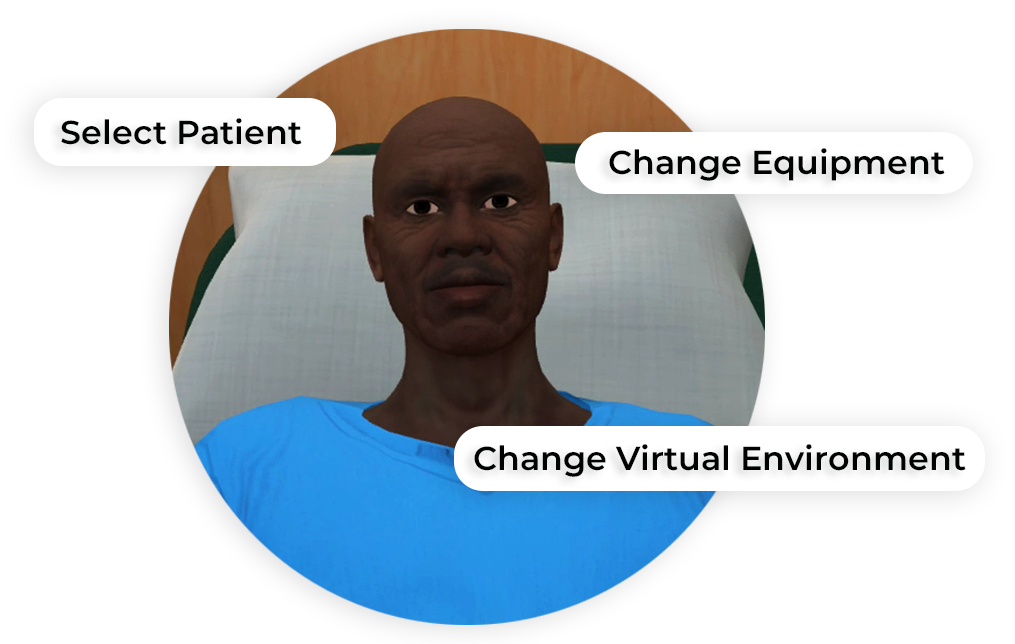
MedVR Education is bringing to you in-VR customization that will enable you to customize your procedural simulations by making selections from a range of feature choices.
- Select patient from a diverse background
- Choose preferred virtual environment
- Select equipment used in the procedure
- Modify difficulty level of the assessment mode
- …..many more to come
Additional customization options are available and can be developed to meet your specific training needs.
 Multi-player Sessions
 Physics-based Interactions
How it works
Training
With prompts, guidance and affordances learners are hand-held through the process to practice the procedure in a virtual environment with a virtual patient.
- Photorealistic virtual environment
- Physics-based interactions
- Detailed instructions
- Adequate affordances to assist in task completion
Measure progress
Assessment
Test acquired skills to perform the procedures from start to finish without prompts. An incorrect step will take the learner back to the start to start afresh.
- Live scoring
- Instant feedback
- Adequate affordances for efficient performance
- Time tracking to monitor activity completion
Get started
Ready to transform clinical training?
Book a demo to see Respiratory Function Assessment and our full simulation library in action.