Clinical Simulation
Urologic Sepsis


About This Course
What you'll experience
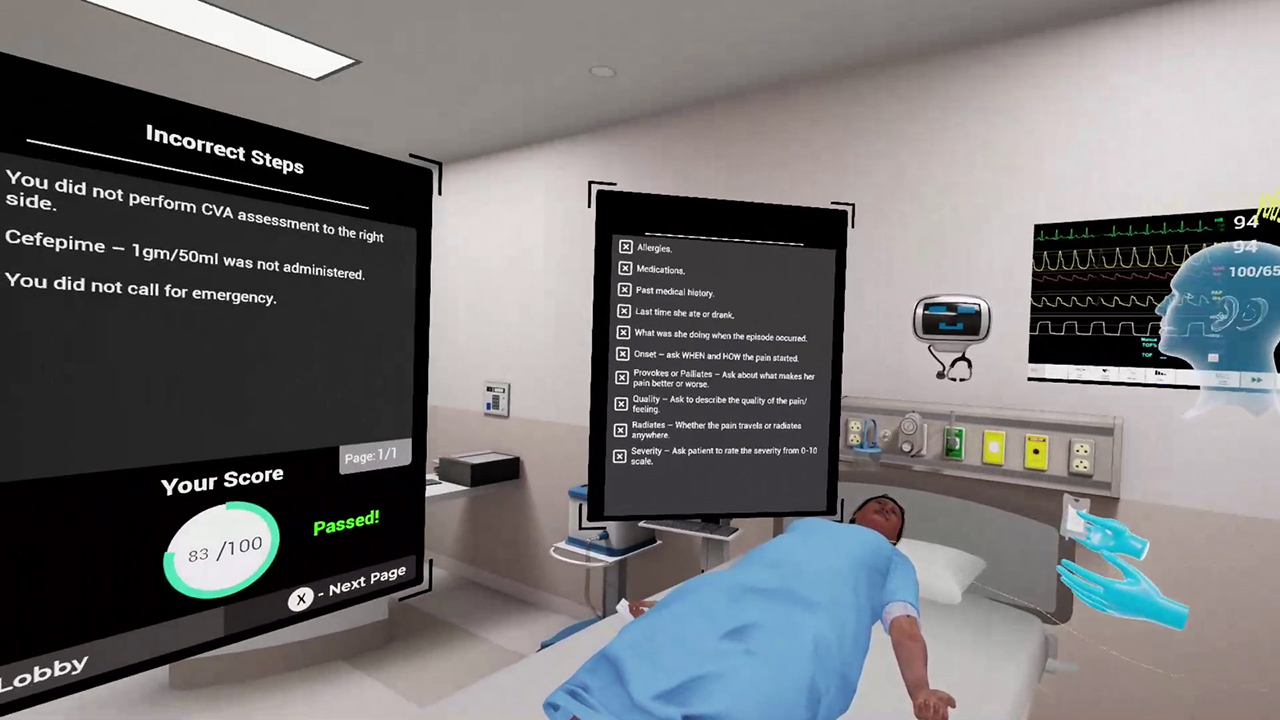
Stephanie, a 59 year old female, has called EMS due to a worsening left flank pain, nausea, and decreased PO intake. She has a 7-day history of dysuria, urinary frequency, and fever which was preceded by an intermittent left flank pain that is now constant. She has a past medical history of a ST-elevation myocardial infarction 5 years ago. Stephanie has become unstable requiring fluid resuscitation, vasopressors, and empiric antibiotic treatment. The team leader will manage the patient with severe sepsis secondary to an infected ureteric calculus, then arrange emergent urologic consultation and admission to hospital. This multiplayer VR session on urologic sepsis is designed to provide learners practice in handling an emergency sepsis patient.
Learning Objectives
- Conducting initial assessment of patient
- Early recognition of sepsis and identifying a likely source of infection
- Timely implementation of broad-spectrum antibiotics and source control
- Eliminate other differential diagnoses of shock
References
- Tintinalli’s Emergency Medicine. Chapters 50, 56, and 89
- EM Cases. “Episode 122 Sepsis & Septic Shock – What Matters Live from EM Cases Course”, with Dr. Sara Gray
- Kane SP and Benken ST. “Vasopressor Selection in Septic Shock”, Society of Critical Care Medicine
- Farkas J. “Vasopressors”, The Internal Book of Critical Care
What you'll practice
Core Skills Training
Core Skill
Urologic Sepsis
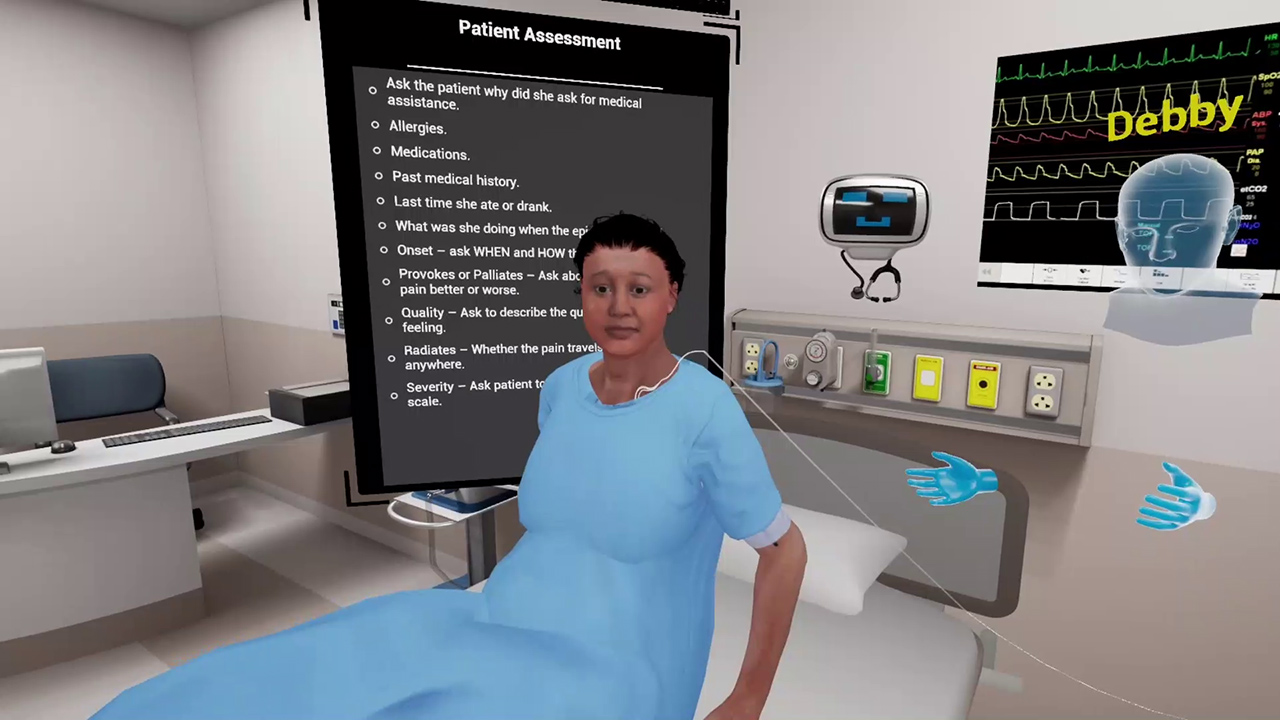
In this scenario, learners will be required to conduct an initial patient assessment using SAMPLE and OPQRST, and standard physical assessment to identify the symptoms of urologic sepsis.
As the condition of the patient deteriorates and recognizing the patient to be suffering from septic shock, a call is placed to the physician and an SBAR provided. The physician would prescribe medications and provide further instructions.
All necessary affordances are made available to learners to help them complete the assessment and related tasks efficiently.
Tailored to You
Customize Your Program
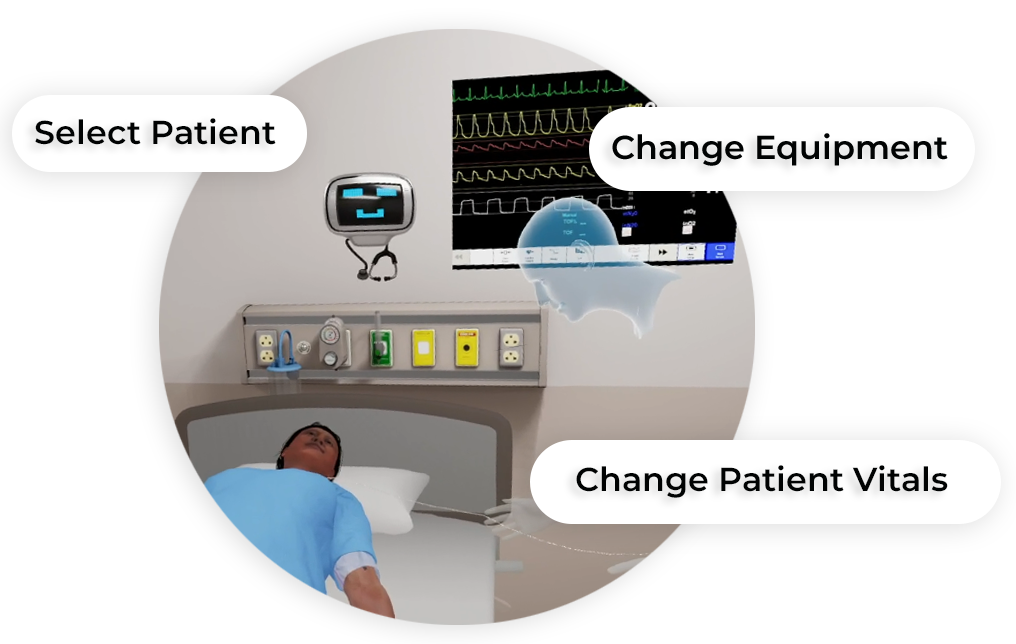
MedVR Education is bringing to you in-VR customization that will enable you to put together your own simulations by making selections from a wide range of feature choices.
- Select patient from a diverse background
- Choose preferred virtual environment
- Configure patient vitals
- Define simulation duration
- Create patient history and train with AI-Humans
- Customize session-end debriefing
- …..many more to come
Additional customization options are available and can be developed to meet your specific training needs.
 AI Patient Assessment
 Natural Language Processing
 Multi-player Sessions
 Physics-Based Interaction
How it works
Training
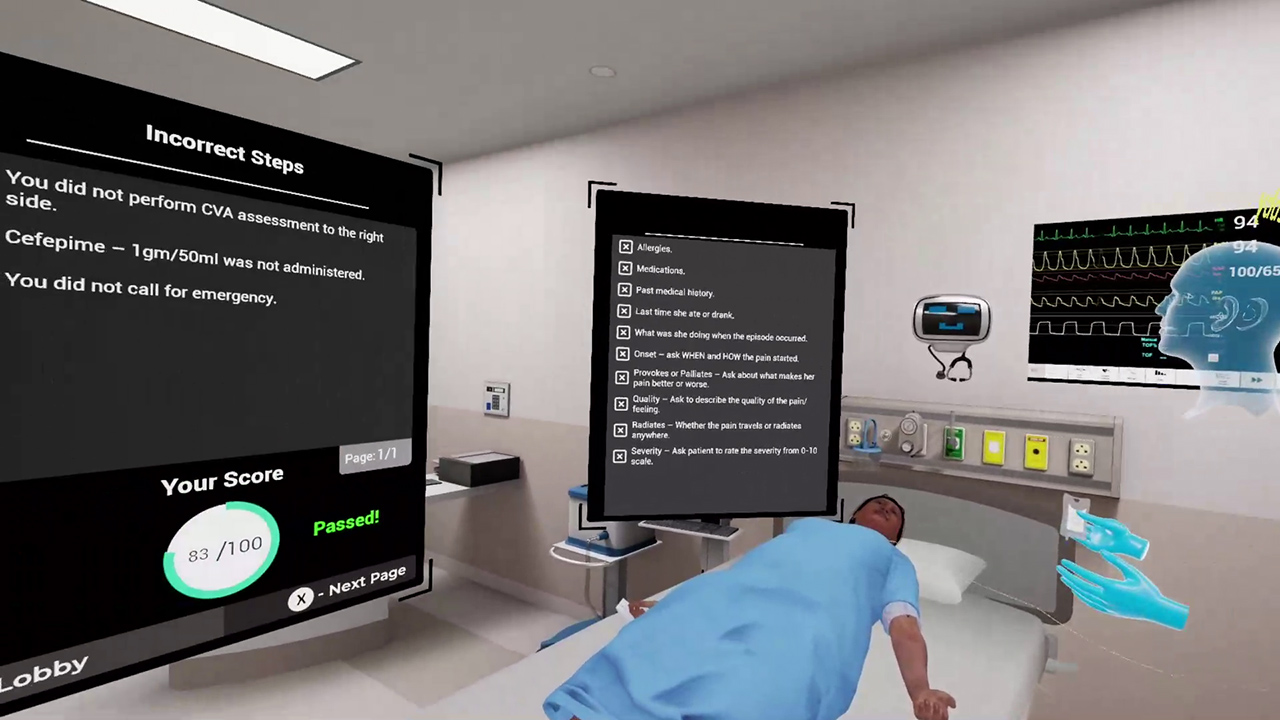
End-of-task debriefing to assess one’s performance, evaluate actions, and get the most out of the session. The debriefing includes crucial points related to the scenario.
- Thorough patient assessment
- Completion of necessary steps
- Correct medication administration to patient
- Sequential completion of task
- Execution of time-sensitive tasks
Get started
Ready to transform clinical training?
Book a demo to see Urologic Sepsis and our full simulation library in action.