Clinical Simulation
Verbal De-escalation


About This Course
What you'll experience
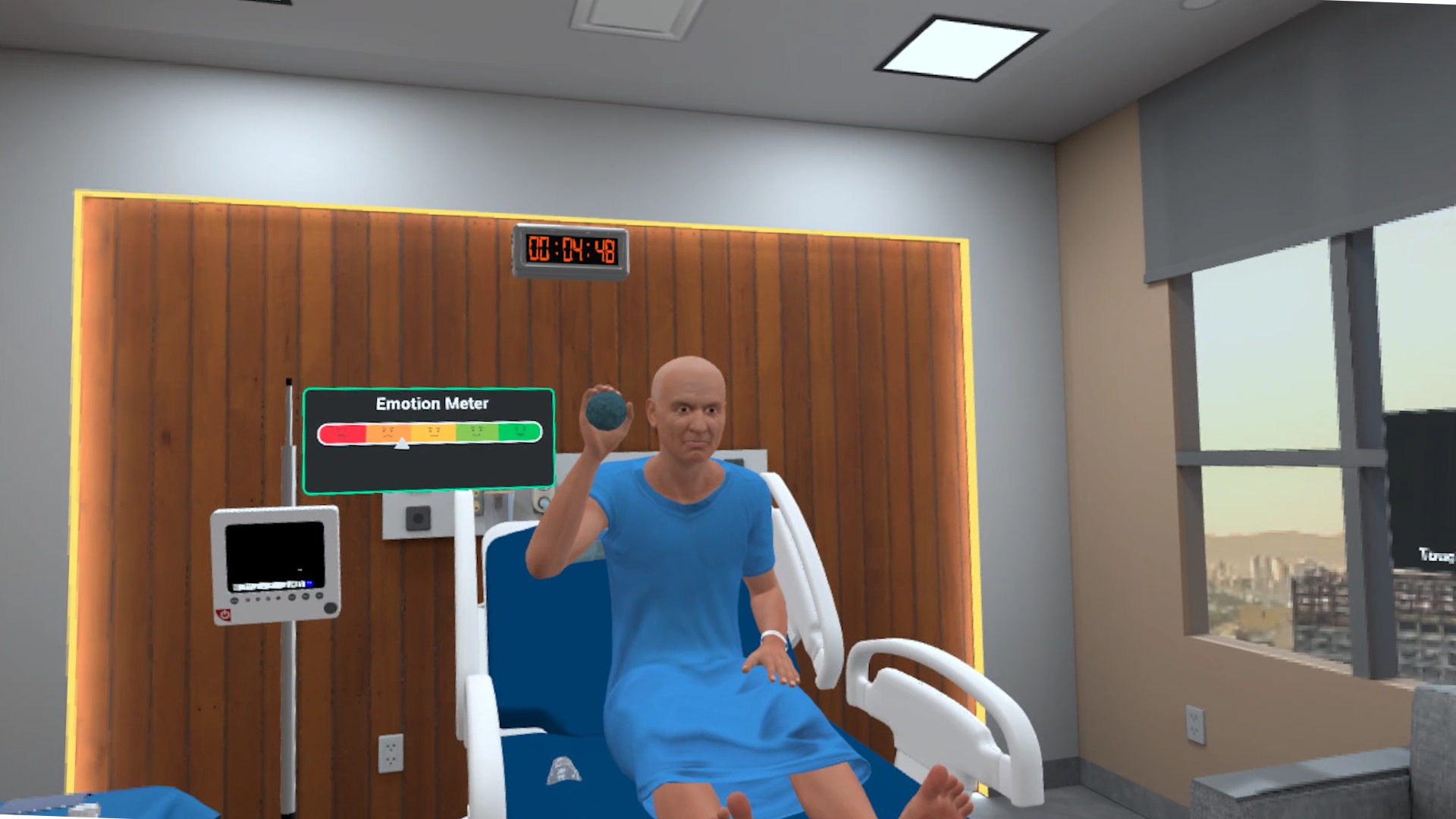
68-year-old Robert Johnson has been admitted for complications related to his chronic obstructive pulmonary disease (COPD). He is also on medication to manage his anxiety and depression. Currently he is on oxygen therapy as he was experiencing increased shortness of breath. When the nurse approaches him, he appears agitated and starts shouting at the nurse, making it difficult to check his vitals or administer medication. As a nurse, the first task is to apply de-escalation techniques to calm down the patient. This VR simulation for Verbal De-escalation is designed to provide practitioners practice in managing and de-escalating tensed situations like an uncooperative patient. It helps test learners on their patient management and critical thinking skills.
Learning Objectives
- Apply active listening and empathy to de-escalate tense situations
- Model the use of respectful language and maintain a composed tone during interactions with agitated patients or family members
- Identify and apply appropriate conflict resolution strategies for various scenarios encountered in clinical practice
- Demonstrate collaborative problem-solving techniques to address the underlying issues contributing to the aggression
References
- Crisis Prevention Institute. (2023). De-escalation tips and techniques for verbal intervention.
- American Psychological Association. (2020). Strategies for verbal de-escalation.
What you'll practice
Core Skills Training
Core Skill
Applying Verbal De-escalation Techniques
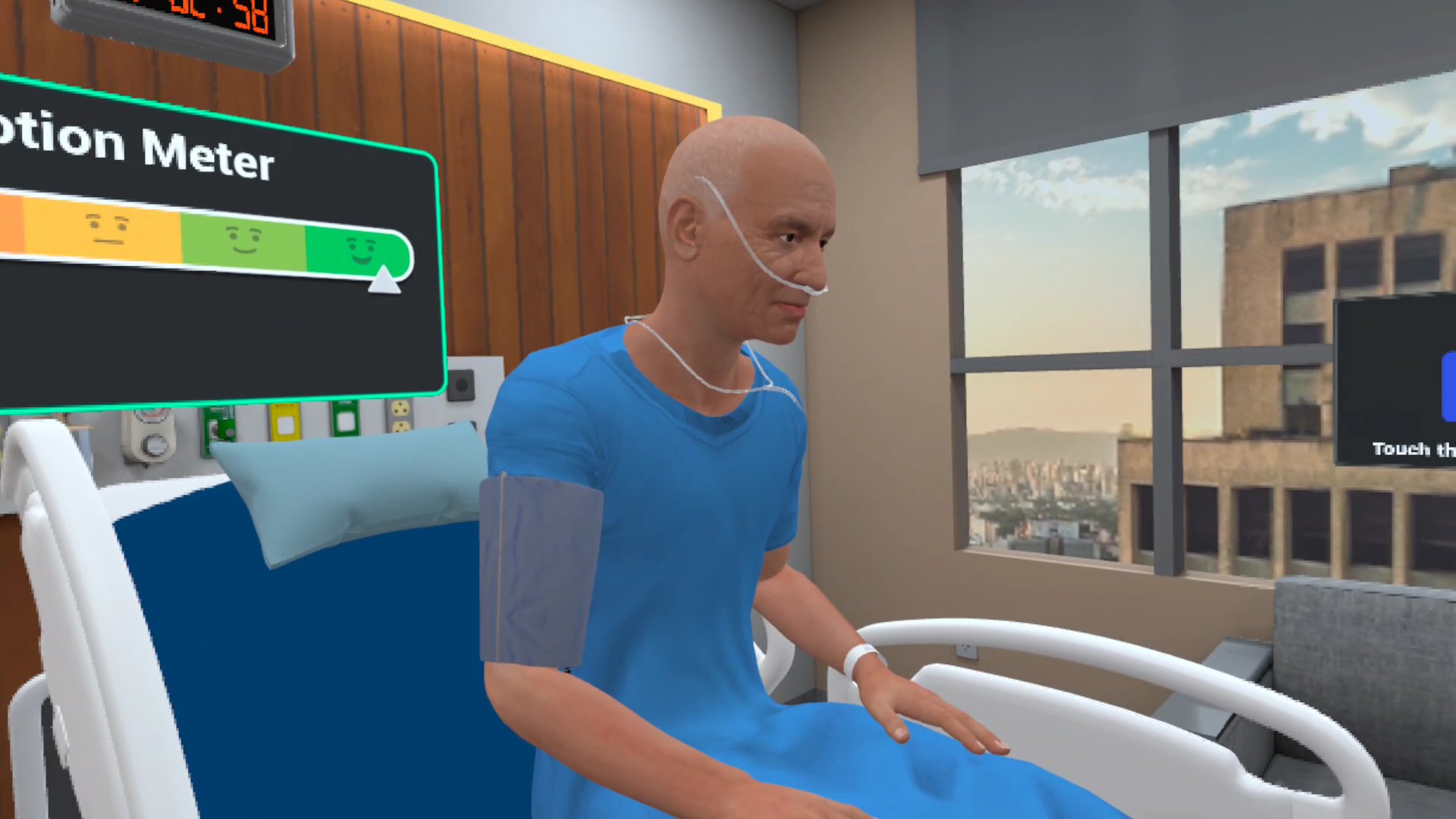
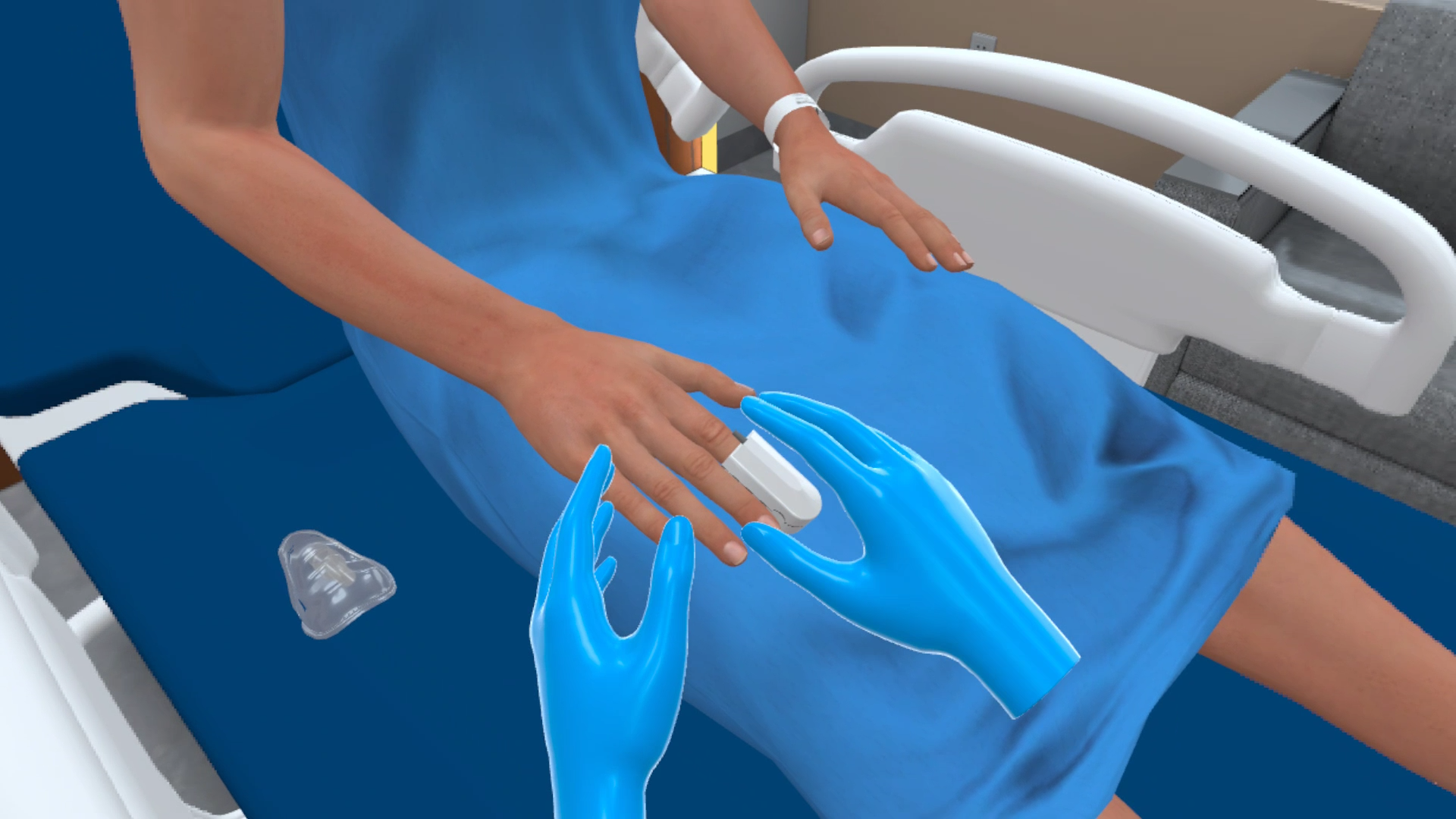
As a part of this Verbal De-escalation procedure, the learner approaches the patient and explains the requirement of checking vitals and administering medication. On being confronted by an agitated and angry patient, the user will try to practice de-escalation techniques by talking calmly and using reassuring statements. The learner will evaluate the patient’s vitals, administer the medication and offer to check the problem-causing mask to help provide relief to the patient.
All necessary affordances are provided to complete the procedure with efficiency.
Tailored to You
Customize Your Program
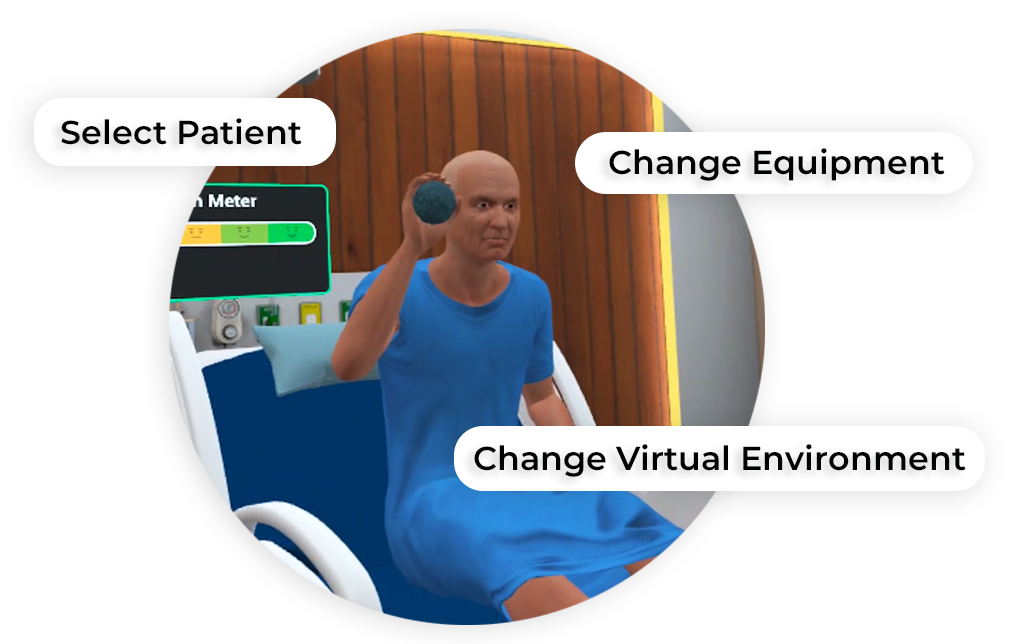
MedVR Education is bringing to you in-VR customization that will enable you to customize your procedural simulations by making selections from a range of feature choices.
- Select patient from a diverse background
- Choose preferred virtual environment
- Configure patient vitals
- Define simulation duration
- Create patient history and train with AI-Humans
- Customize session-end debriefing
- …..many more to come
Additional customization options are available and can be developed to meet your specific training needs.
 Multi-player Sessions
 Physics-based Interactions
How it works
Training
End-of-task debriefing to assess one’s performance, evaluate actions, and get the most out of the training. Examples of topics being touched upon in the debriefing include the following:
- Thorough patient assessment
- Completion of necessary steps
- Correct medication administration to patient
- Sequential completion of task
- Execution of time-sensitive tasks
Get started
Ready to transform clinical training?
Book a demo to see Verbal De-escalation and our full simulation library in action.