Clinical Simulation
Verbal De-escalation (Calm to Angry)


About This Course
What you'll experience
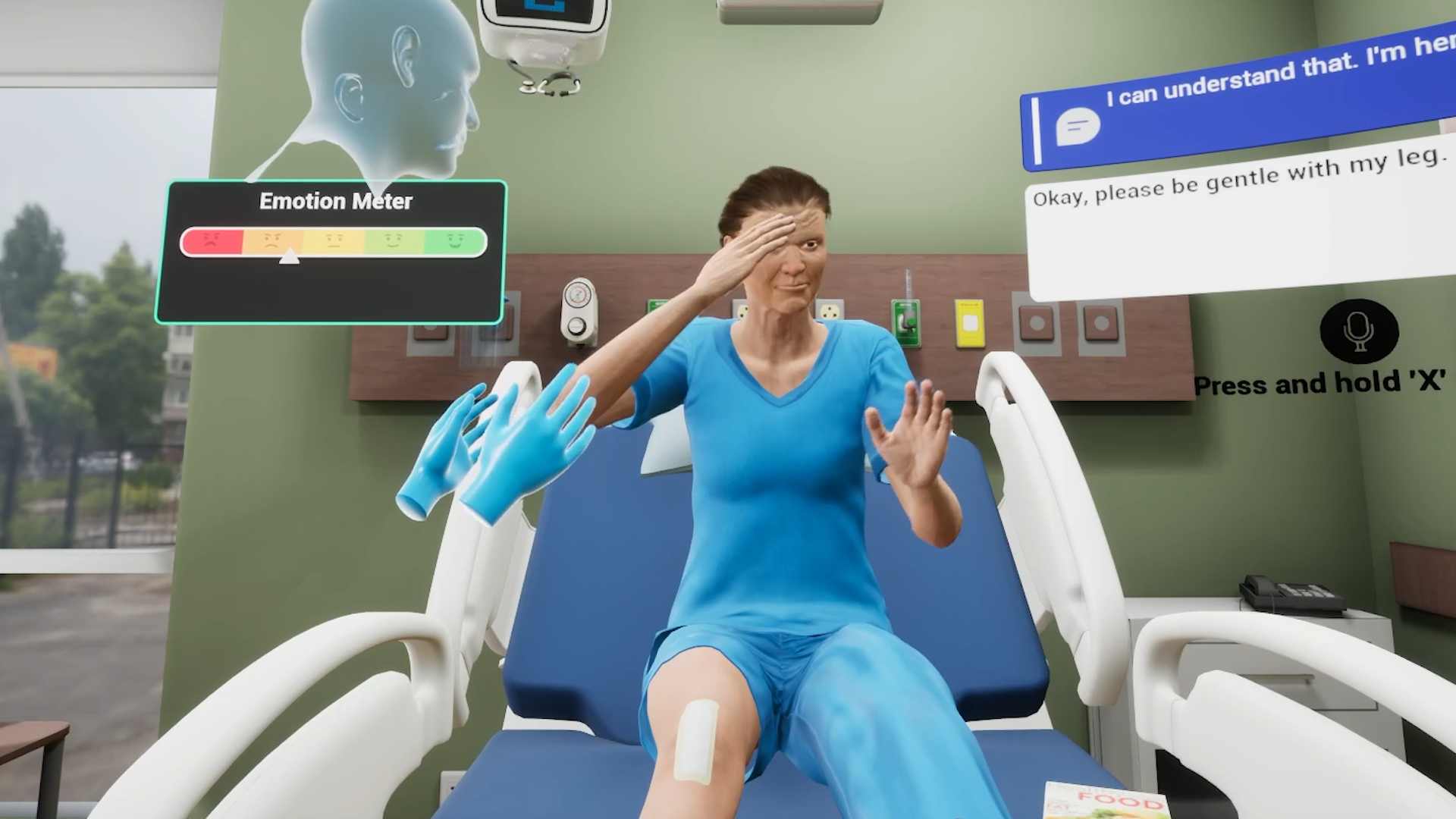
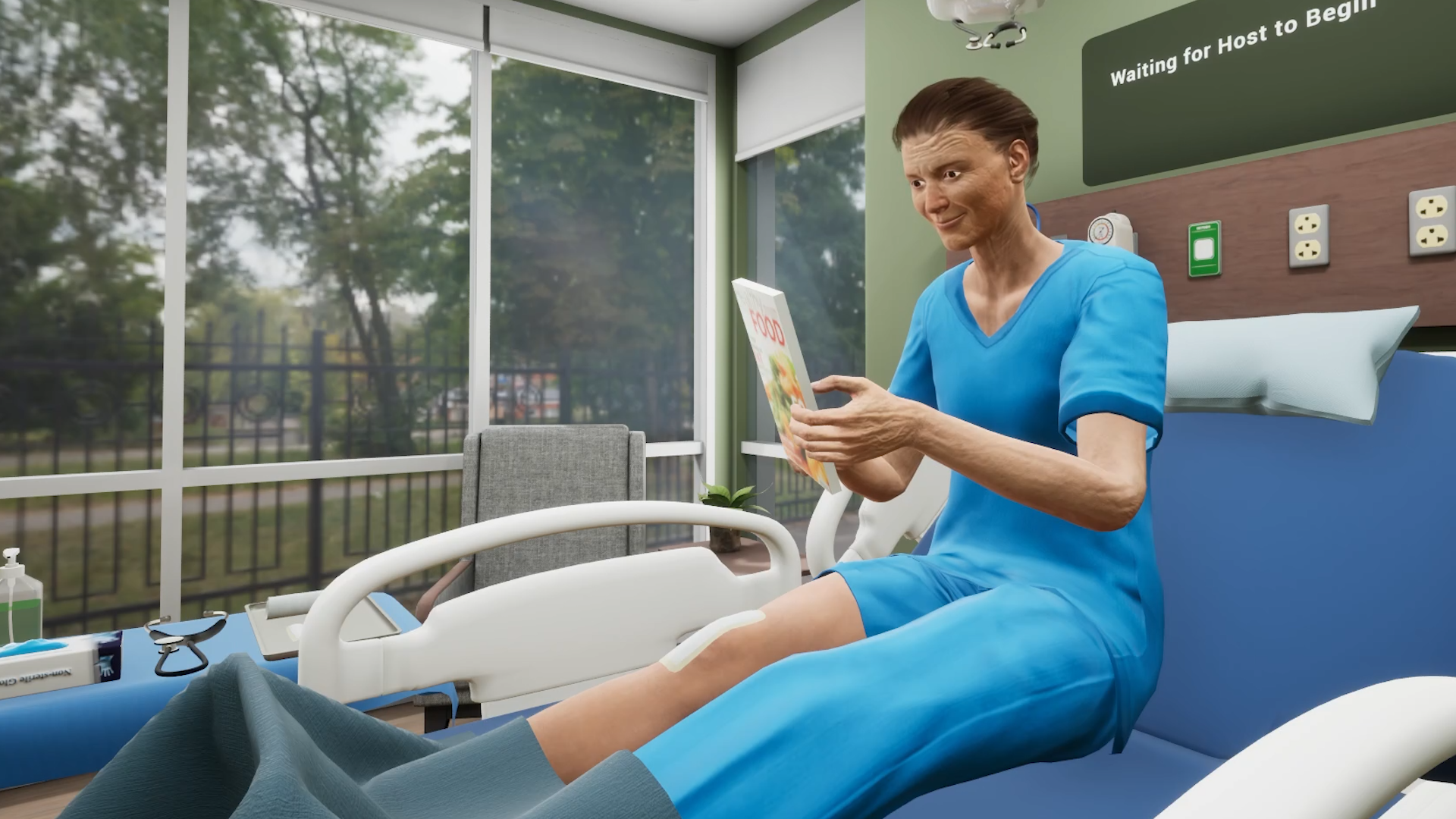
Fifty-two-year-old Jane Davis is admitted to hospital after having undergone surgery for total knee replacement. She has minor discomfort but manageable with medication. When the nurse approaches to change her bandage, she accidently brushes against the incision site. Though usually calm, Mrs. Davis is infuriated by the pain it caused, gets abusive with the nurse and refuses to have her dressing changed. This VR simulation for Verbal De-escalation is designed to provide practitioners practice in managing and de-escalating tensed situations like an uncooperative patient. It helps test learners on their patient management and critical thinking skills.
Learning Objectives
- Applying active listening and empathy to de-escalate tense situations
- Modeling the use of respectful language and maintain a composed tone during interactions with agitated patients or family members
- Identifying and applying appropriate conflict resolution strategies for various scenarios encountered in clinical practice
- Demonstrating collaborative problem-solving techniques to address the underlying issues contributing to the aggression
References
- Crisis Prevention Institute. (2023). De-escalation tips and techniques for verbal intervention.
- American Psychological Association. (2020). Strategies for verbal de-escalation.
What you'll practice
Core Skills Training
Core Skill
Applying Verbal De-escalation Techniques
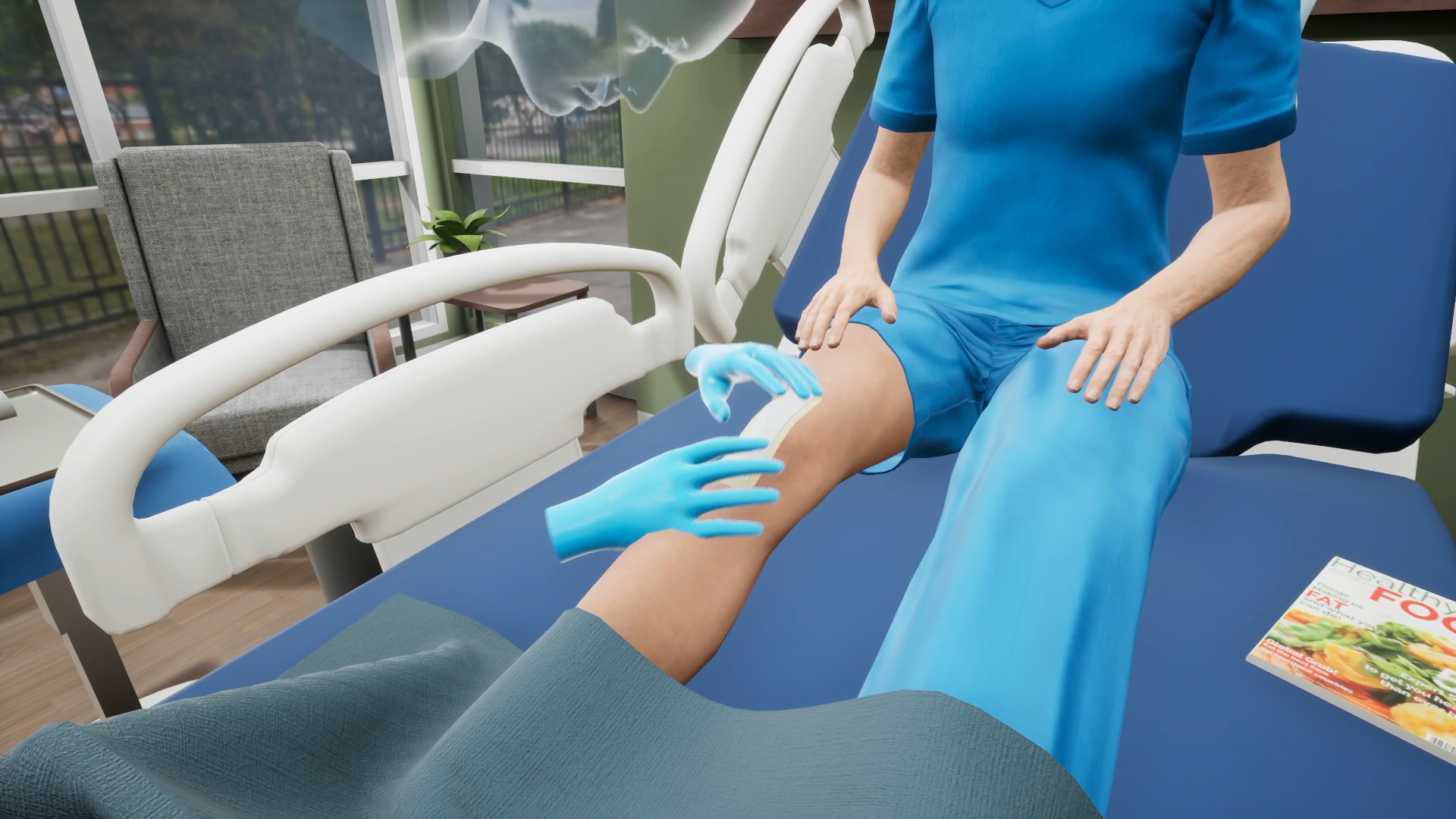
As a part of this Verbal De-escalation procedure, the learner approaches the patient to check on them and change the bandage. After enquiring about her condition, the nurse continues with preparing the supplies and starts removing the old bandages. While doing so, the nurse accidentally brushes against the incision site, causing the patient to wince in pain and subsequently become agitated and uncooperating. As the situation gets tense, the nurse must apply verbal de-escalation techniques to bring things under control and complete the dressing change for the surgical site.
All necessary affordances are provided to complete the procedure with efficiency.
Tailored to You
Customize Your Program
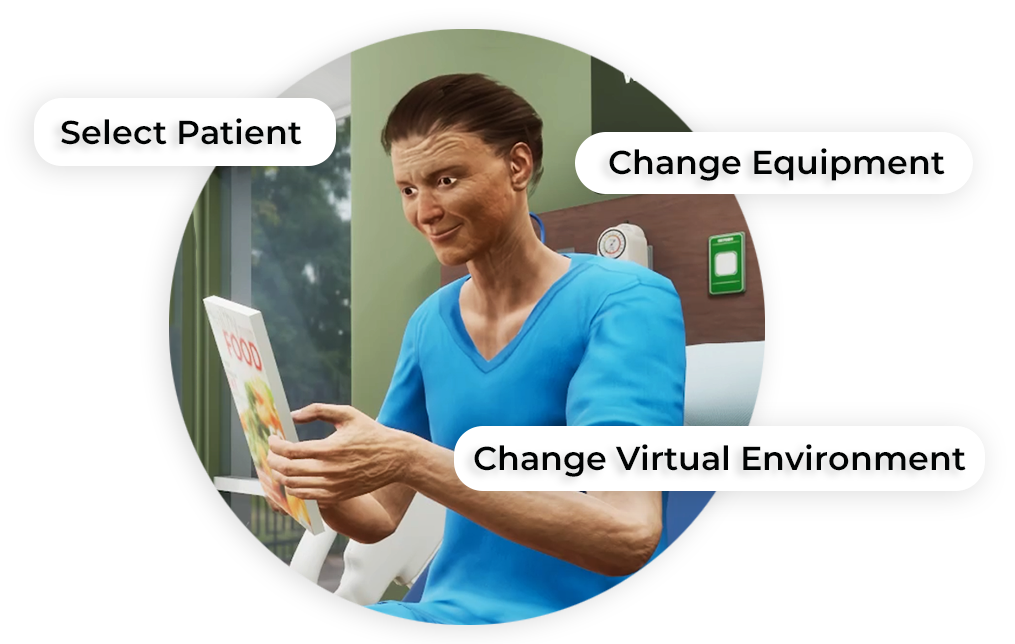
MedVR Education is bringing to you in-VR customization that will enable you to customize your procedural simulations by making selections from a range of feature choices.
- Select patient from a diverse background
- Choose preferred virtual environment
- Configure patient vitals
- Define simulation duration
- Create patient history and train with AI-Humans
- Customize session-end debriefing
- …..many more to come
Additional customization options are available and can be developed to meet your specific training needs.
 Multi-player Sessions
 Physics-based Interactions
How it works
Training
End-of-task debriefing to assess one’s performance, evaluate actions, and get the most out of the training. Examples of topics being touched upon in the debriefing include the following:
- Thorough patient assessment
- Completion of necessary steps
- Correct medication administration to patient
- Sequential completion of task
- Execution of time-sensitive tasks
Get started
Ready to transform clinical training?
Book a demo to see Verbal De-escalation (Calm to Angry) and our full simulation library in action.