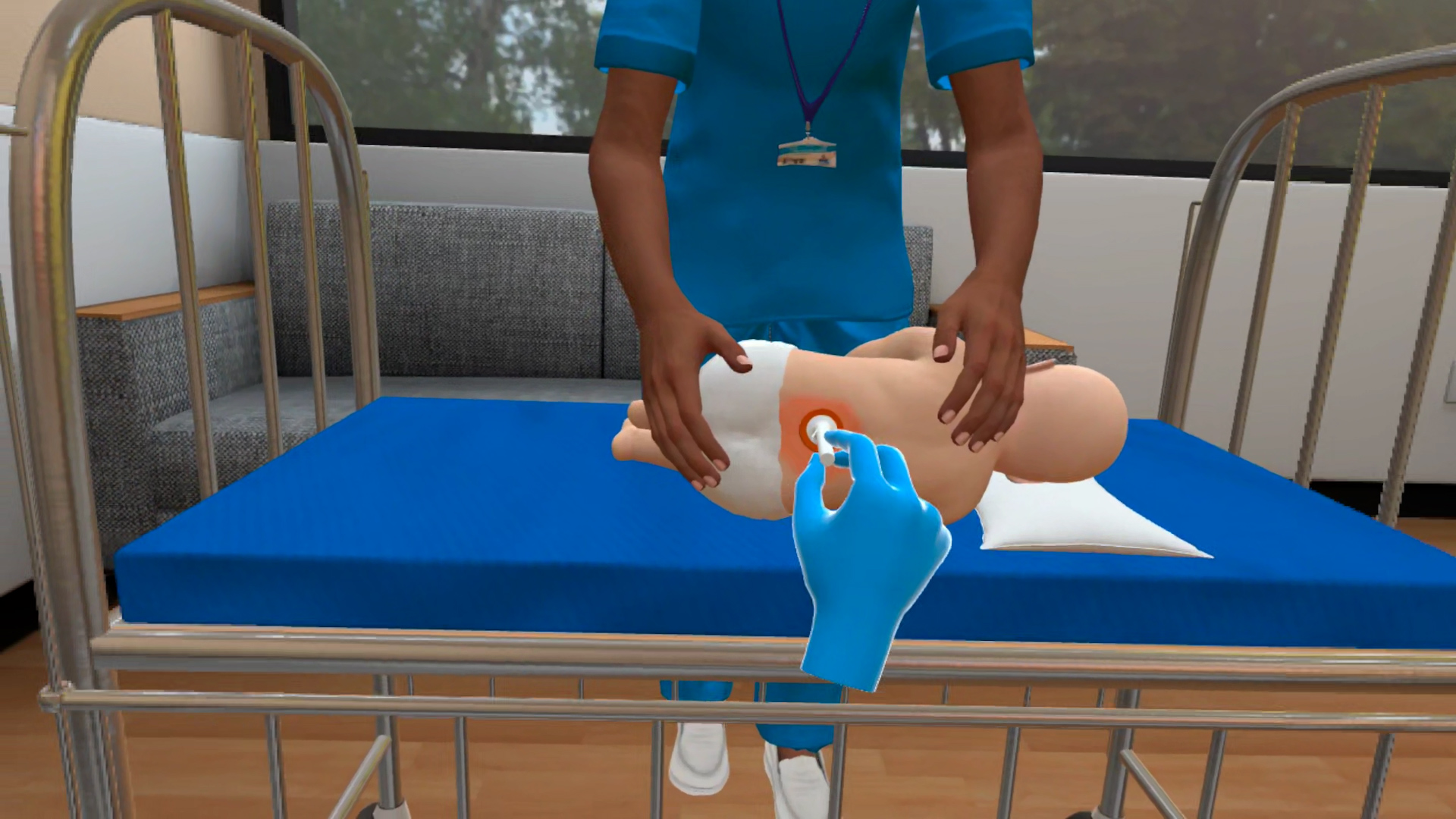
Infant Lumbar Puncture

SIMULATION TYPE
Procedural

SIMULATION DURATION
10 - 20 minutes

PATIENT AGE GROUP
Infant (4 Weeks Old)

TARGET AUDIENCE
RN, NP, PA, Physician, Medical Students

Four-week-old infant James presents to the Emergency Department with fever and an elevated white blood cell count, requiring a bedside lumbar puncture for diagnostic evaluation. Performing an infant lumbar puncture requires precision, sterile technique, patient safety, and effective coordination with caregivers and assisting staff.
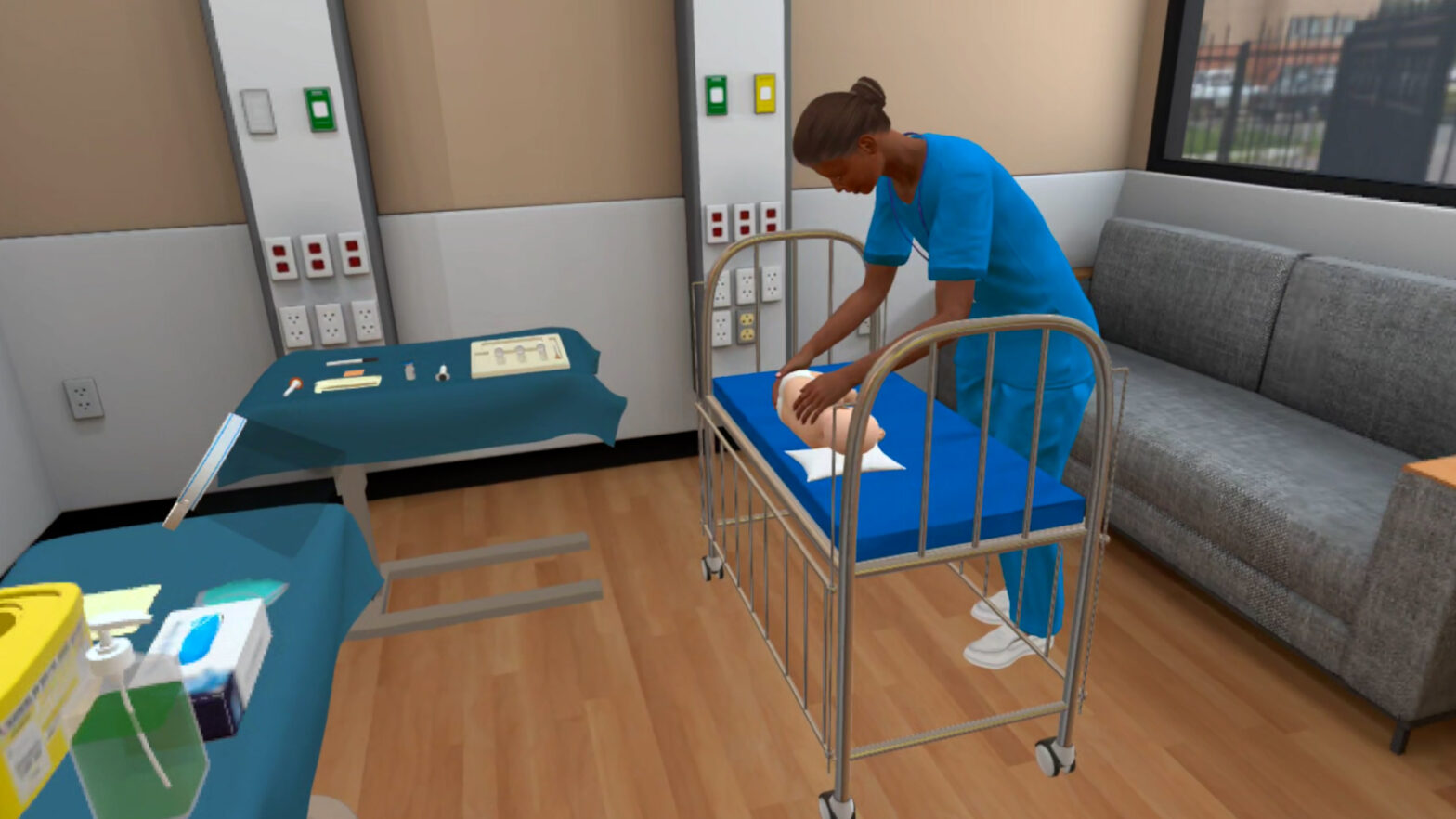
This VR simulation provides learners with a realistic, immersive environment to practice performing an infant lumbar puncture in a controlled Emergency Department setting. Learners progress through patient preparation, sterile setup, anatomical landmark identification, local anesthetic administration, spinal needle insertion, cerebrospinal fluid collection, specimen handling, and post-procedure care while following strict infection control and procedural safety standards.
The module includes both training and assessment modes to reinforce correct sequencing, sterile technique, procedural accuracy, patient safety, and clinical decision-making during pediatric bedside procedures.
- Preparing the patient and environment for a safe lumbar puncture procedure
- Identifying anatomical landmarks and locating the L3/L4 interspace accurately
- Correctly administering local anesthetic prior to needle insertion
- Safely inserting and advancing the spinal needle using proper technique
- Collecting cerebrospinal fluid samples in the correct sequence and quantity
- Disposing of sharps and contaminated materials according to infection control standards
- Completing accurate specimen handling and procedural documentation
- Srinivasan, L., Harris, M. C., & Shah, S. S. (2012). Lumbar puncture in the neonate: Challenges in decision making and interpretation.
Customize Your Program
Get rid of the editor. Adopt in-VR customization.
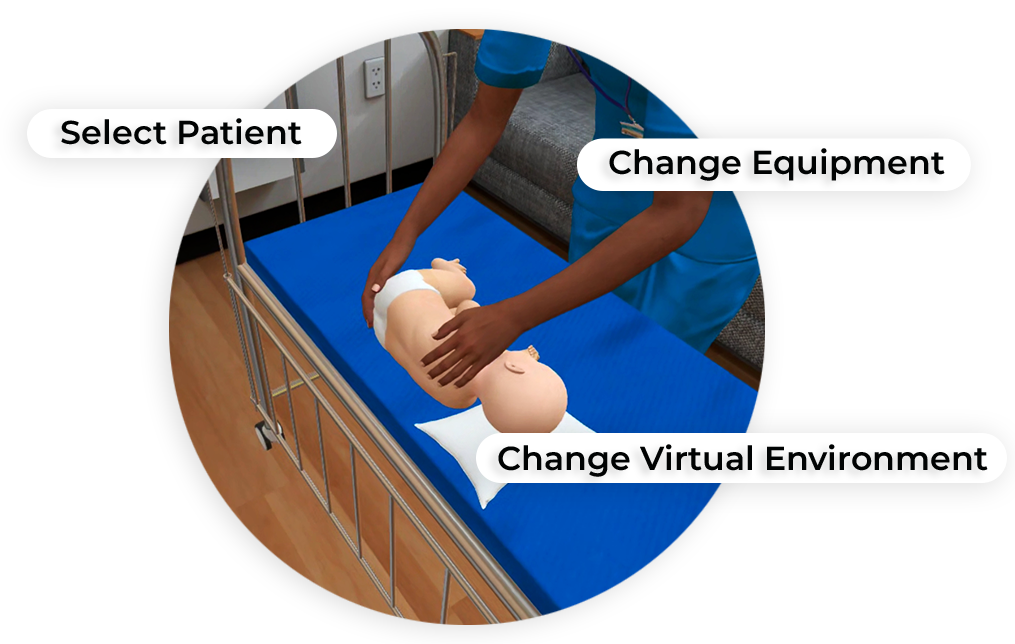
MedVR Education’s in-VR customization allows educators to tailor the infant lumbar puncture simulation to different learning objectives and clinical skill levels.
- Select patient positioning and assistant support variations
- Choose Emergency Department room configuration
- Adjust procedural difficulty and assessment strictness
- Modify sterile field challenges and environmental distractions
- Additional customization options coming soon.
 AI Patient Assessment
 Natural Language Processing
 Multi-playerSessions
 Physics-based Interactions
Core Skills Training
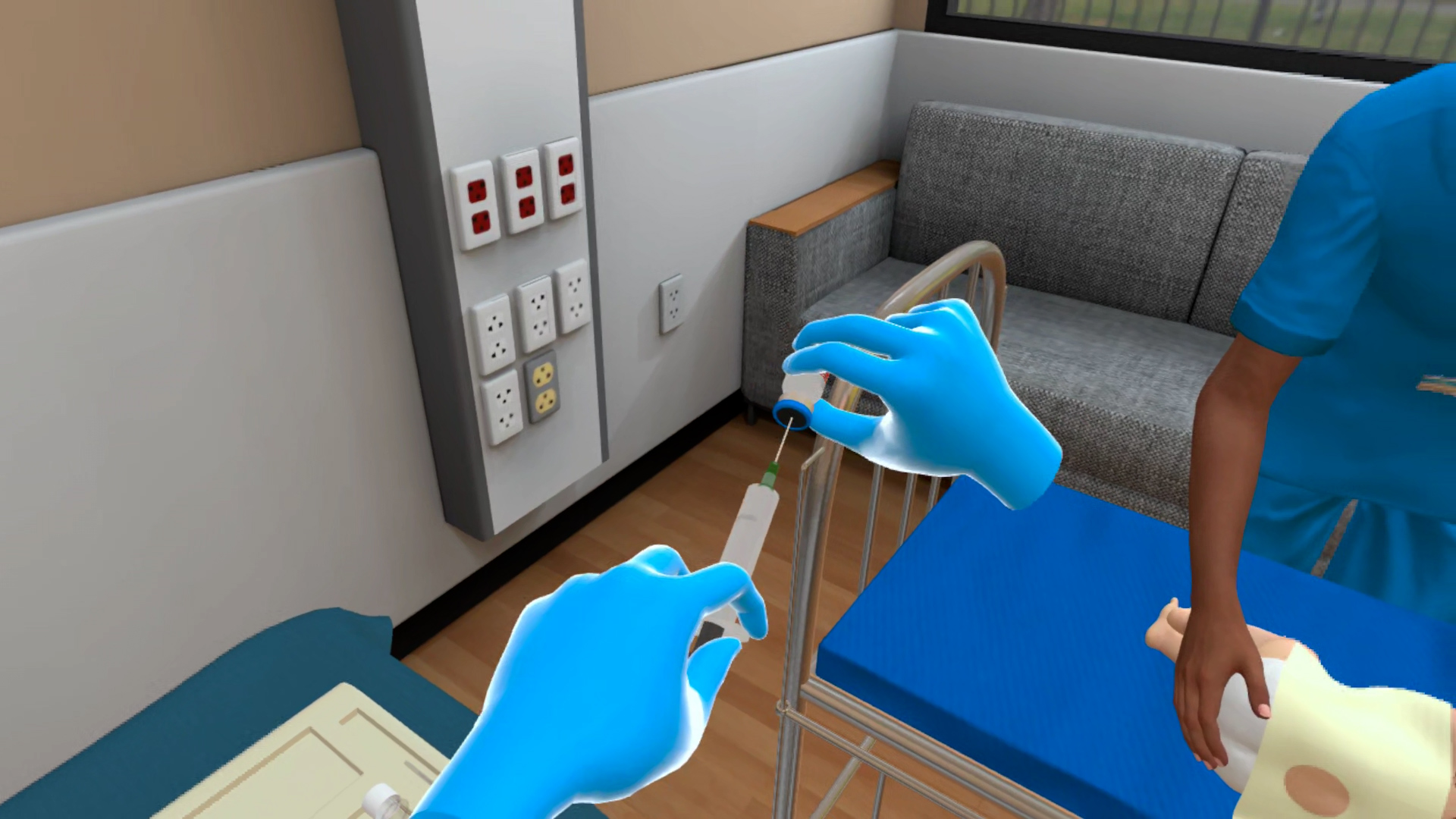
Performing Infant Lumbar Puncture
As part of this procedure, the learner begins by reviewing the patient presentation, performing hand hygiene, and applying appropriate personal protective equipment. The learner identifies anatomical landmarks by palpating the iliac crest and locating the L3/L4 interspace before marking the insertion site. After preparing the sterile field and donning sterile gloves, the learner disinfects the lumbar area, places the sterile drape, prepares lidocaine, and organizes collection tubes. The learner then administers local anesthetic and inserts the spinal needle at the correct angle toward the umbilicus while maintaining sterile technique.Once cerebrospinal fluid is obtained, the learner collects samples sequentially into the designated tubes, safely removes the spinal needle, applies dressing to the site, disposes of sharps properly, and completes post-procedure care according to clinical best practices.
Training
With prompts, guidance, and affordances, learners are guided step-by-step through performing an infant lumbar puncture in a virtual Emergency Department environment.
- Photorealistic Emergency Department room environment
- Physics-based interaction with procedural equipment and sterile supplies
- Guided instructions and visual cues
- Affordances supporting sterile technique, positioning, and procedural sequencing
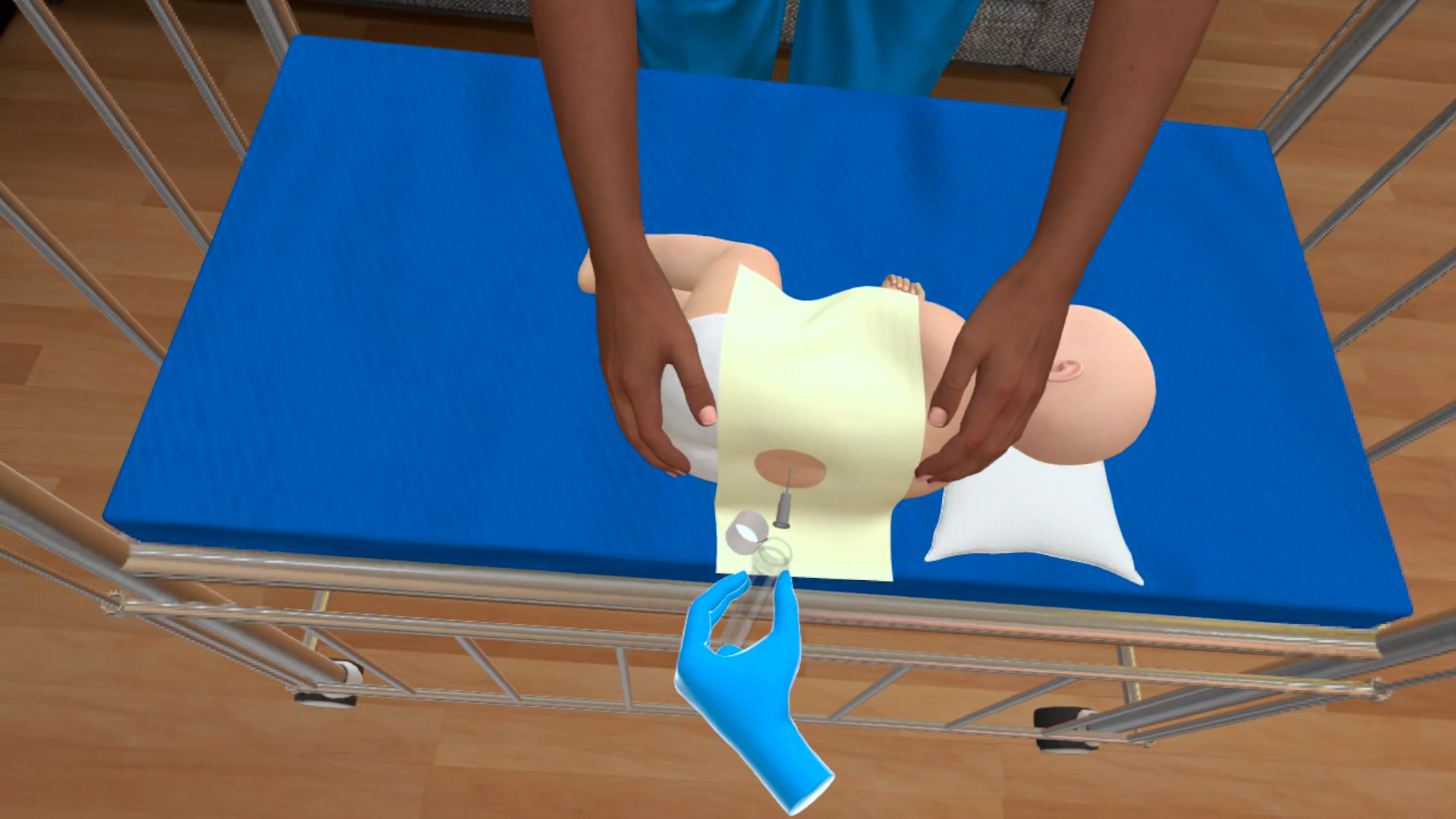
Assessment
Learners demonstrate independent performance of the procedure from start to finish without prompts. Incorrect steps require the learner to restart and complete the task correctly.
- Live scoring
- Immediate feedback
- Sequence and technique validation
- Time tracking for task completion