AIDET Communication Training for Environmental Services

SIMULATION TYPE
Informational / Communication Training

SIMULATION DURATION
10 minutes

TARGET AUDIENCE
Environmental Services (EVS) Team Members, Hospital Housekeeping Staff, Healthcare Support Staff, Patient Experience Teams, and Allied Health Learners
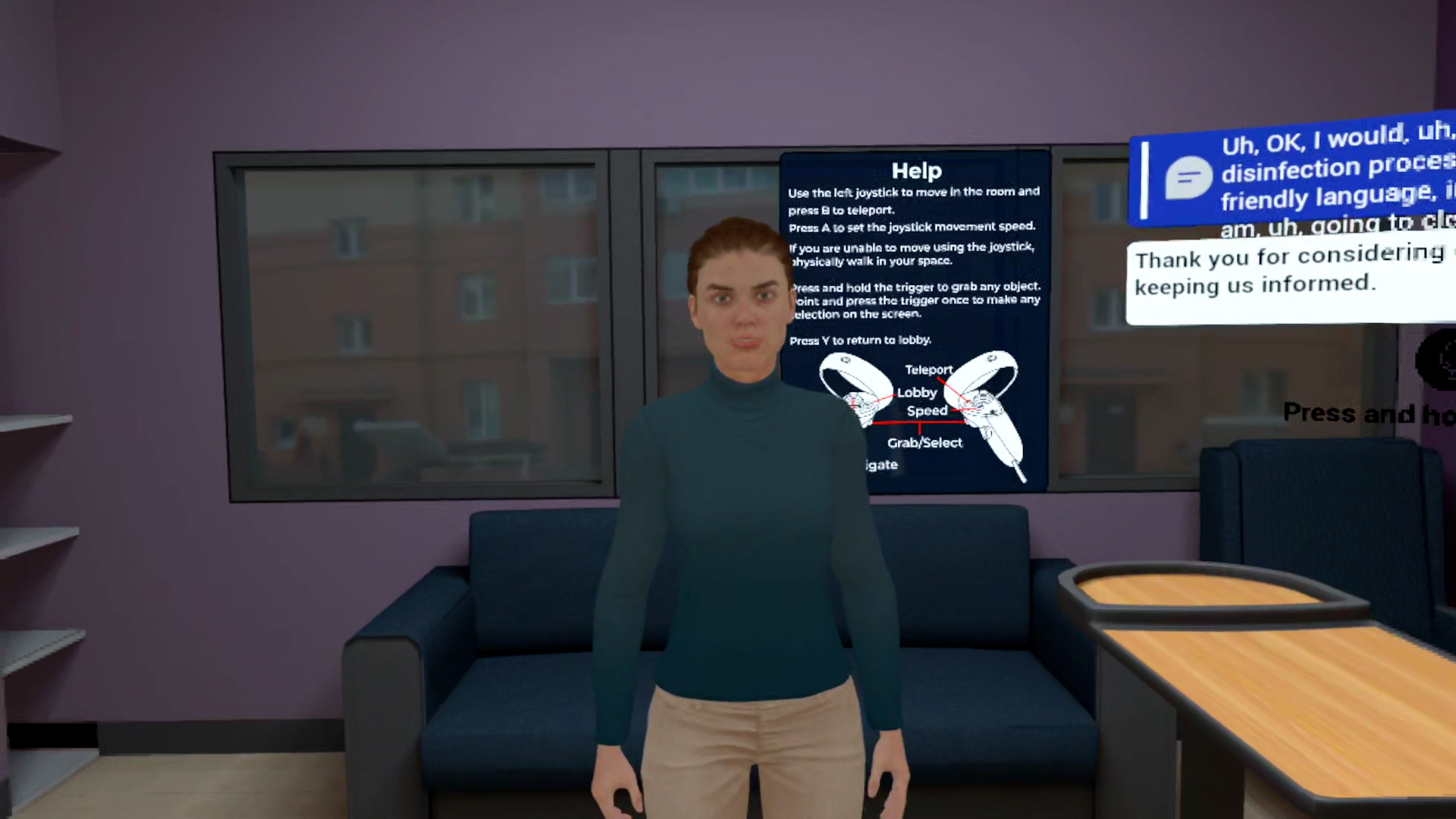
Effective communication helps Environmental Services (EVS) team members create a safe, respectful, and positive hospital environment while cleaning occupied patient rooms.
This VR simulation introduces learners to the five AIDET principles: Acknowledge, Introduce, Duration, Explanation, and Thank You, demonstrating how to apply them when interacting with pediatric patients and their families.
Through instructional audio and interactive response tasks, learners practice professional communication, explain cleaning procedures, set realistic expectations, respect patient privacy, and respond appropriately to concerns outside their role.
The module reinforces professionalism, patient comfort, and effective communication to enhance the patient and family experience.
- Understanding the AIDET communication framework and its five essential components.
- Acknowledging pediatric patients and their families with a friendly, respectful, and professional greeting.
- Introducing oneself, identifying the Environmental Services role, and explaining the purpose of the visit.
- Demonstrating appropriate eye contact, professional posture, attentive listening, and positive body language.
- Respecting patient privacy, personal space, belongings, and family needs during occupied room cleaning.
- Recognizing concerns outside the EVS role and notifying the appropriate clinical team member.
- Register, S. J., Blanchard, E., Belle, A., Viles, A., Moore, S. P., MacLennan, P., & White, M. L. (2020). Using AIDET® education simulations to improve patient experience scores.
Customize Your Program
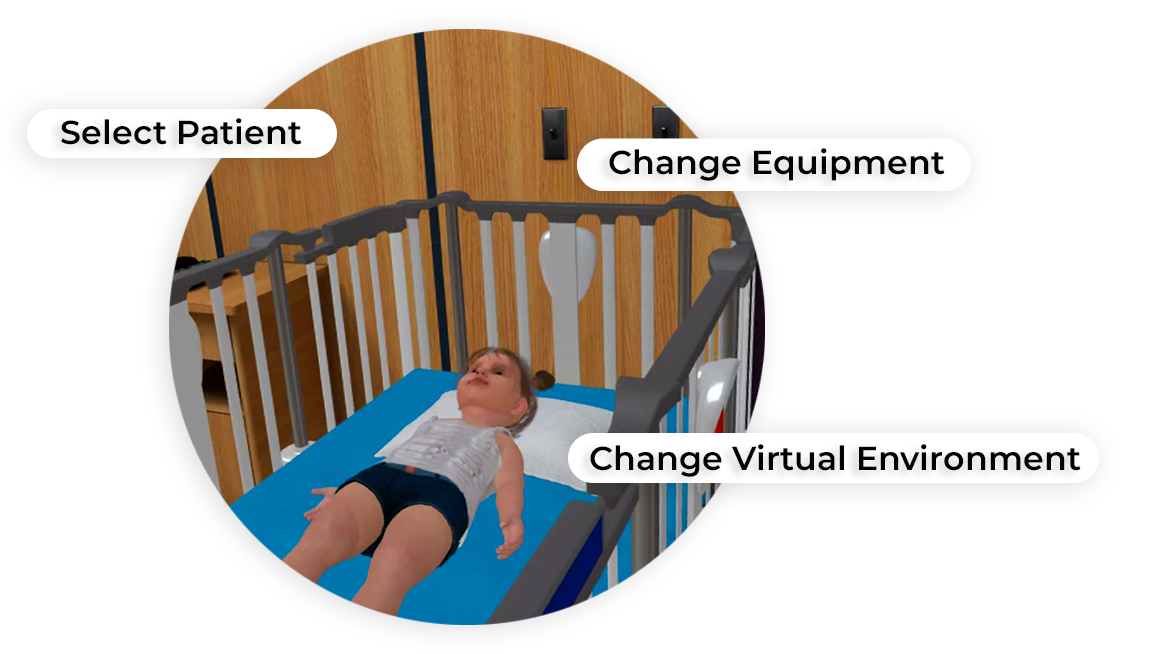
MedVR Education’s in-VR customization approach can support educators in adapting AIDET communication training to different EVS learning objectives, experience levels, and hospital communication standards.
- Customize patient and caregiver interaction scenarios.
- Adapt communication tasks for different learner experience levels.
- Modify instructional content to align with institutional AIDET guidelines.
- Introduce variations in patient and family concerns.
- Emphasize specific communication skills, including introductions, time expectations, and responding to concerns.
- Adapt scenarios to reinforce professionalism, privacy, and patient-centered service.
 AI Patient Assessment
 Natural Language Processing
 Multi-playerSessions
 Physics-based Interactions
Core Skills Training
Performing a Pediatric Sore Throat Assessment
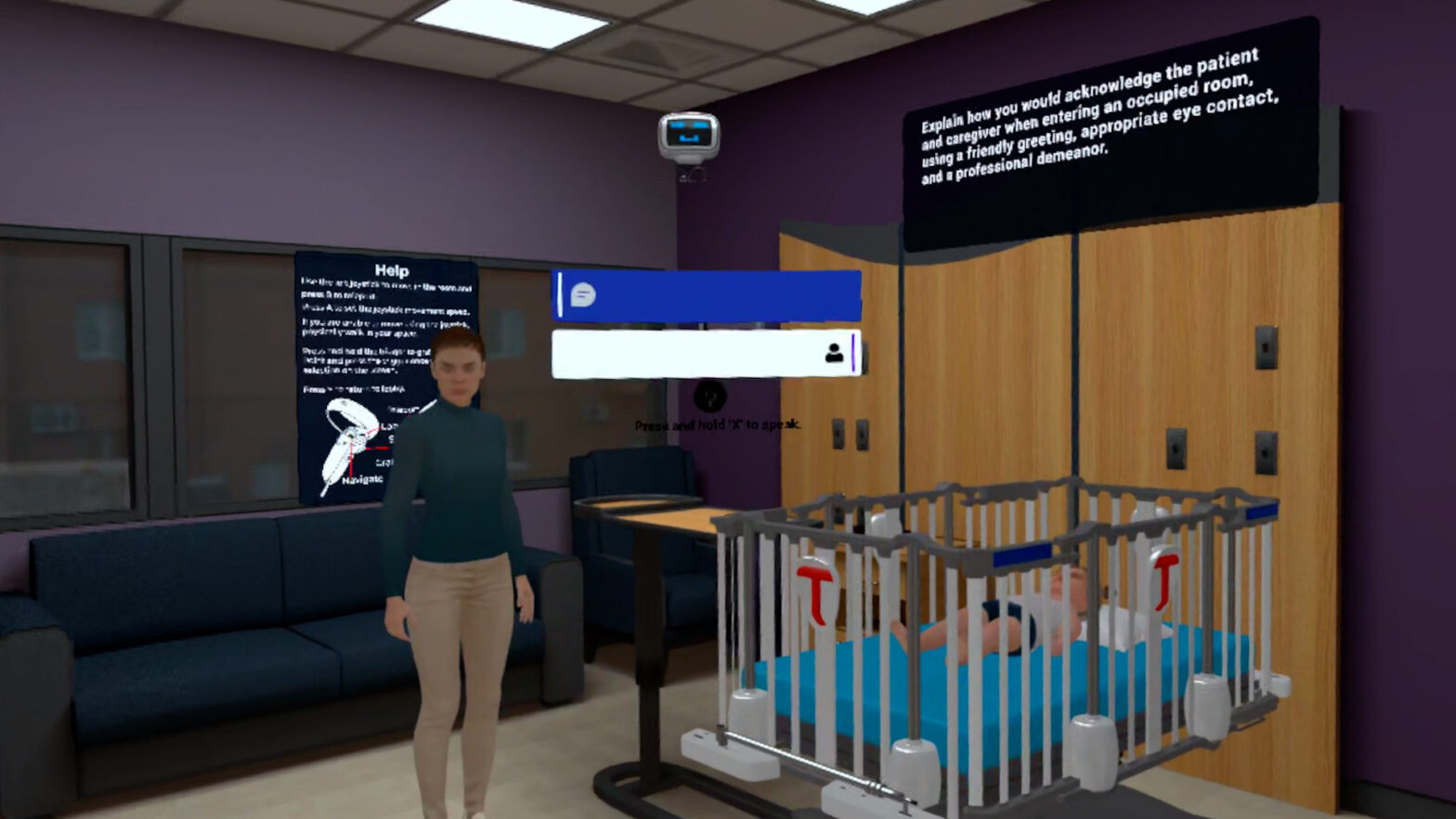
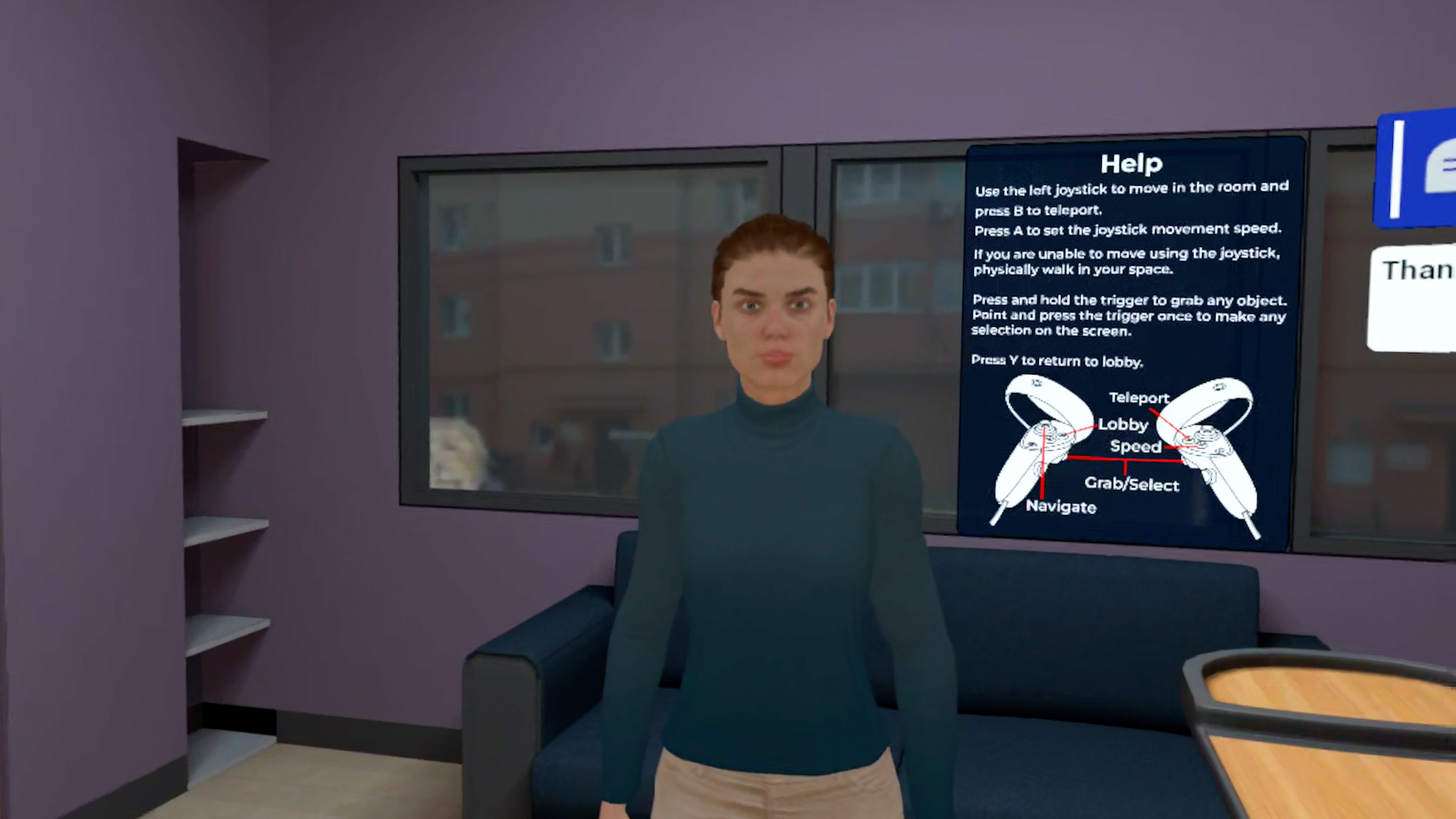
As part of this training, the learner begins by understanding the purpose of AIDET and the importance of effective communication when entering an occupied pediatric patient room. The learner is introduced to the five components of the framework and learns how each contributes to a professional, patient-centered interaction. The learner then progresses through instructional and response tasks covering Acknowledge, Introduce, Duration, Explanation, and Thank You. These activities focus on greeting patients and caregivers appropriately, identifying the EVS role, explaining the purpose of the visit, communicating the expected cleaning duration, and describing cleaning and disinfection procedures in simple language while respecting patient privacy and personal belongings.The module concludes with a review of the AIDET framework, reinforcing effective communication, professionalism, and a positive patient and family experience during occupied patient room cleaning activities.
Training
With instructional audio, explanations, and interactive learner response activities, learners are guided through the AIDET communication framework in a virtual healthcare environment.
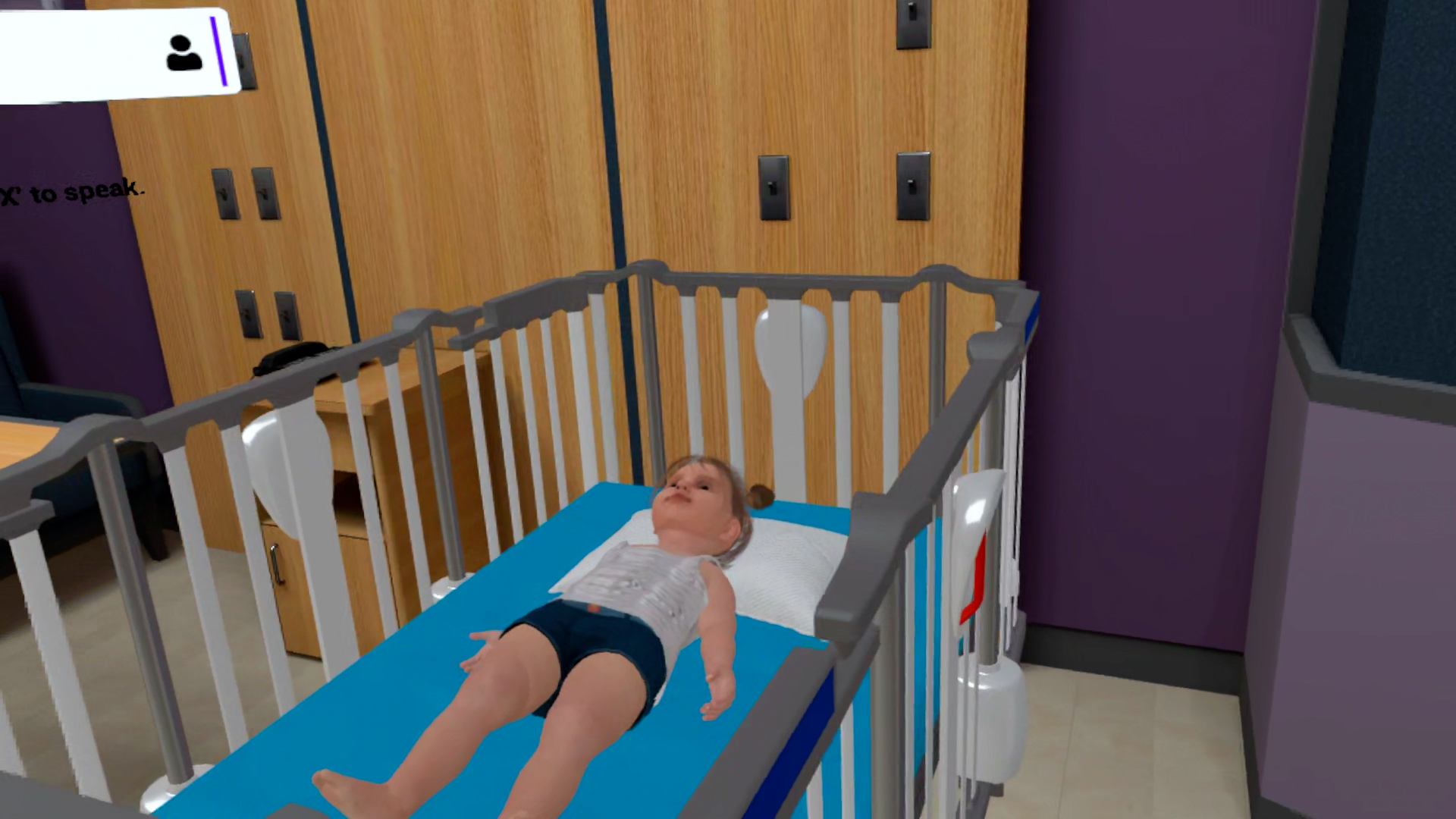
- Immersive hospital-based learning scenario focused on pediatric patients and their families.
- Audio-based explanations covering each component of the AIDET framework.
- Guided instruction on professional greetings, introductions, time expectations, and cleaning explanations.
- Communication scenarios emphasizing patient comfort, privacy, and family-centered interaction.
- Instruction on professional body language, attentive listening, and age-appropriate communication.
- Summary and reinforcement of AIDET principles for future occupied patient room cleaning activities.
Assessment
Learners demonstrate their understanding of AIDET through short response activities following the instructional sections. Each response task encourages learners to explain how they would apply the relevant communication principle in an occupied pediatric patient room.
- Interactive learner response activities.
- Knowledge reinforcement after each AIDET component.
- Evaluation of understanding of professional communication principles.
- Assessment of appropriate patient and caregiver interaction.
- Application of clear explanations and realistic expectations.
- Recognition of concerns requiring referral to clinical staff.
- Review of key learning points and overall AIDET comprehension.