Arterial Blood Gas

SIMULATION TYPE
Procedural

SIMULATION DURATION
10 minutes

PATIENT AGE GROUP
Adult

TARGET AUDIENCE
RN, NP, PA, Physician, Medical Students

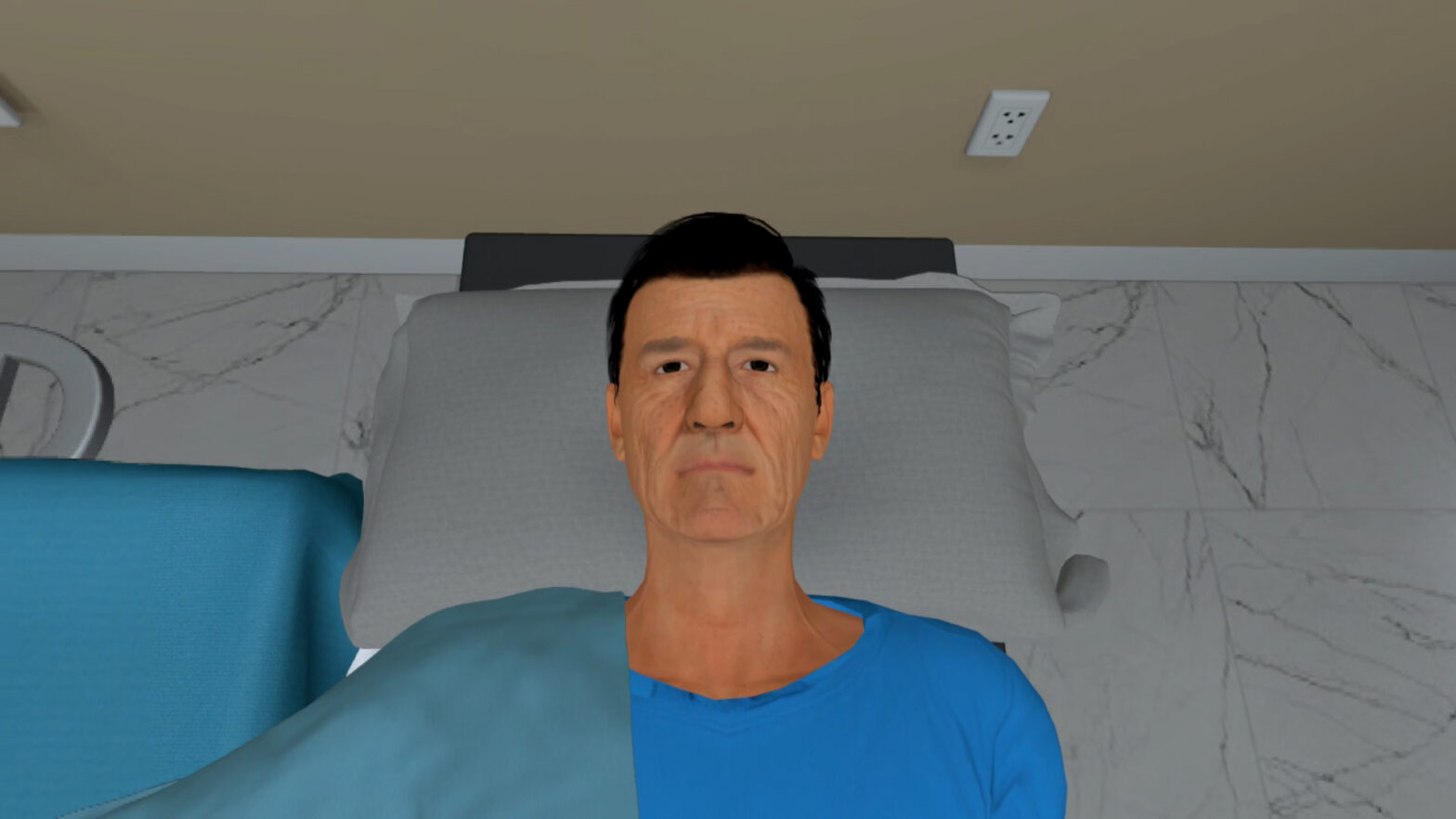
Seventy-six-year-old Michael Carter is admitted to the Intensive Care Unit with increased work of breathing and hypoxemia. An arterial blood gas (ABG) sample is required to assess oxygenation, ventilation, and acid–base status to guide clinical decision-making.
This VR simulation provides healthcare learners with a realistic opportunity to perform arterial blood gas sampling in a controlled, immersive ICU environment. Learners practice patient communication, arterial assessment, sample collection, and post-procedure care while maintaining safety and accuracy.
The simulation supports both guided training and assessment modes, enabling learners to build procedural confidence, refine technique, and demonstrate competency in arterial blood sampling.
- Preparing the patient and maintaining proper infection control during arterial sampling
- Performing an Allen test to assess collateral circulation
- Identifying and palpating the radial artery accurately
- Obtaining an arterial blood sample using correct needle angle and technique
- Managing the sample safely by removing air and securing the syringe
- Applying post-procedure pressure, dressing, and proper disposal of sharps
- Hennessey, I. A. M., & Japp, A. G. (2015). Arterial Blood Gases Made Easy (2nd ed.). Elsevier.
Customize Your Program
Get rid of the editor. Adopt in-VR customization.
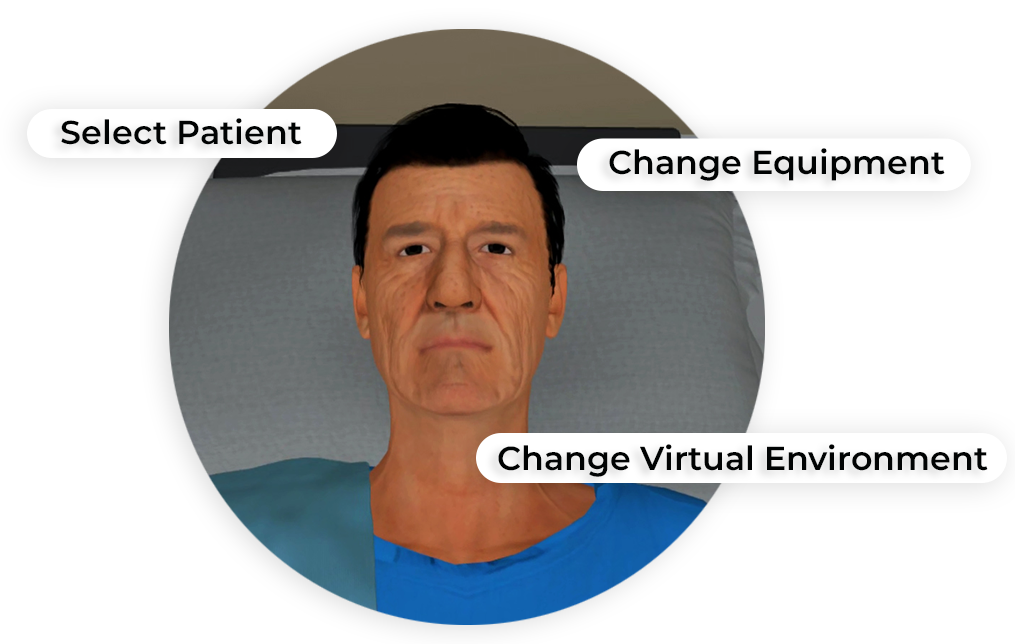
MedVR Education is bringing to you in-VR customization that will enable you to customize your procedural simulations by making selections from a range of feature choices.
- Select patient from a diverse background
- Choose preferred virtual environment
- Select equipment used in the procedure
- Modify difficulty level of the assessment mode
- …..many more to come
 Multi-playerSessions
 Physics-based Interactions
Core Skills Training
Performing Arterial Blood Gas Sampling
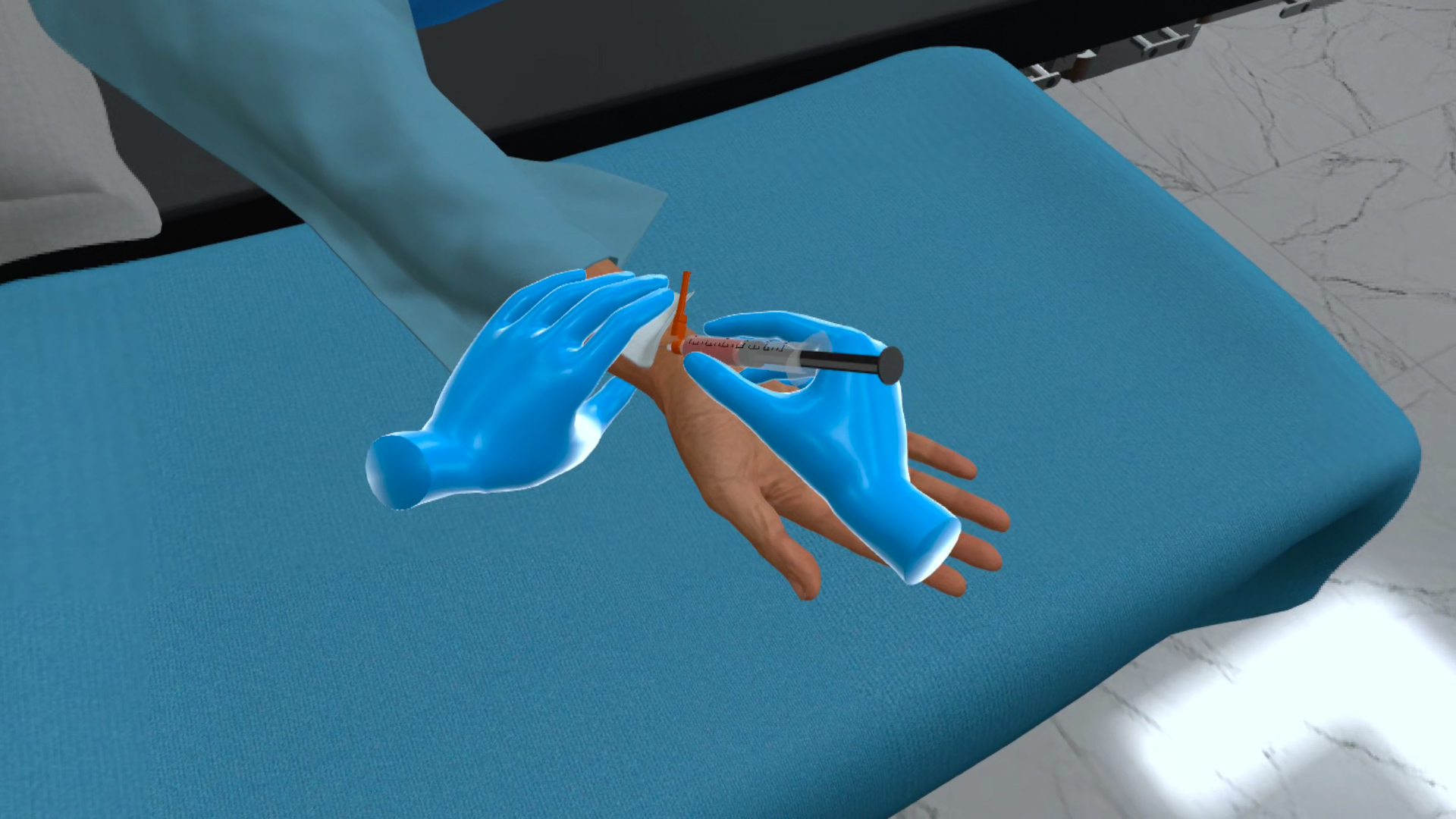
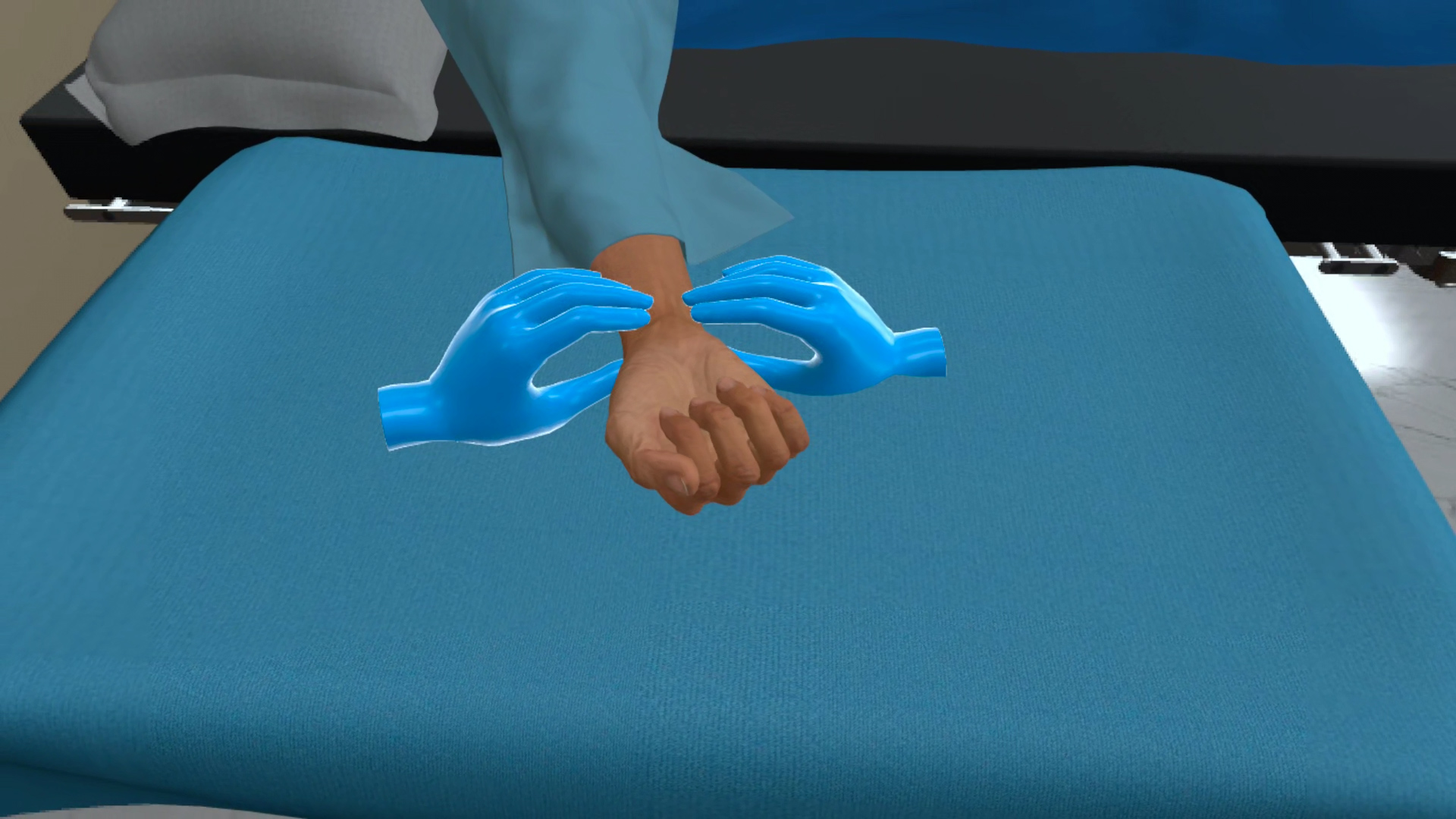
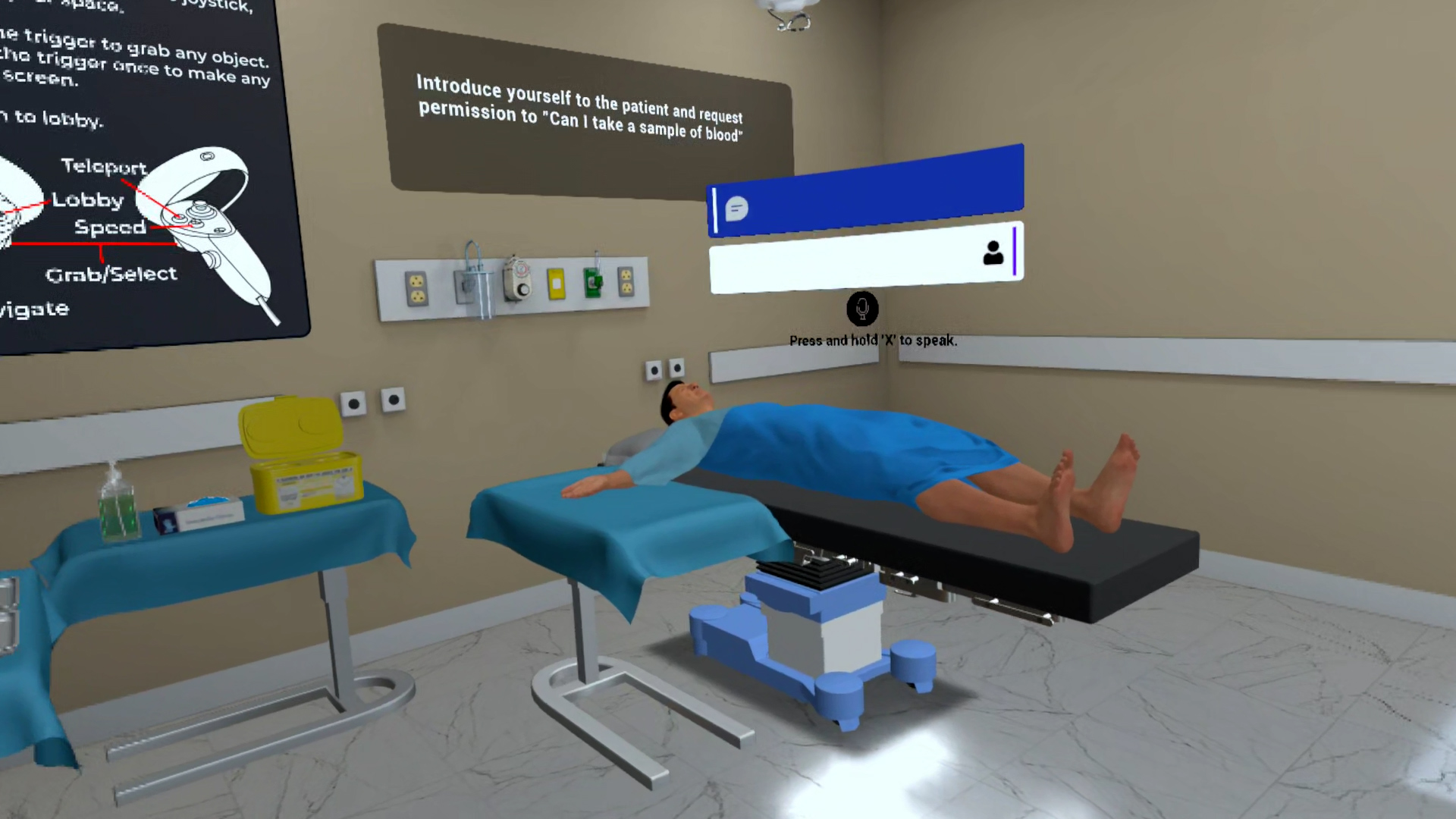
As part of the Arterial Blood Gas procedure, the learner begins by introducing themselves to the patient, confirming consent, and explaining the purpose of the arterial blood draw. After performing hand hygiene and donning non-sterile gloves, the learner prepares the equipment and positions the patient’s arm on a bedside table. The learner performs an Allen test by compressing both the radial and ulnar arteries, observing blanching of the hand, and confirming adequate collateral circulation upon release of the ulnar artery. The radial artery site is then cleansed using an alcohol swab. Using palpation to locate the arterial pulse, the learner inserts the heparinized blood gas syringe at a 45-degree angle toward the fingers. Pulsatile blood flow confirms arterial access, and the syringe is allowed to fill appropriately. Following sample collection, firm pressure is applied to the puncture site, the needle is safely capped and disposed of in a sharps container, and the syringe is cleared of air and capped. The site is dressed, and hand hygiene is performed to complete the procedure.
Training
With prompts, guidance, and visual affordances, learners are supported step-by-step through the ABG sampling process in a virtual ICU setting with a simulated patient.
- Photorealistic ICU environment
- Physics-based interactions
- Clear procedural prompts and cues
- Equipment handling with realistic feedback
- Guided reinforcement of best practices
Assessment
Learners demonstrate acquired skills by performing the ABG procedure independently from start to finish without prompts. Any critical error resets the simulation, encouraging accuracy and procedural discipline.
- Live scoring
- Immediate performance feedback
- Time tracking for procedure completion
- Evaluation of technique, safety, and sequence