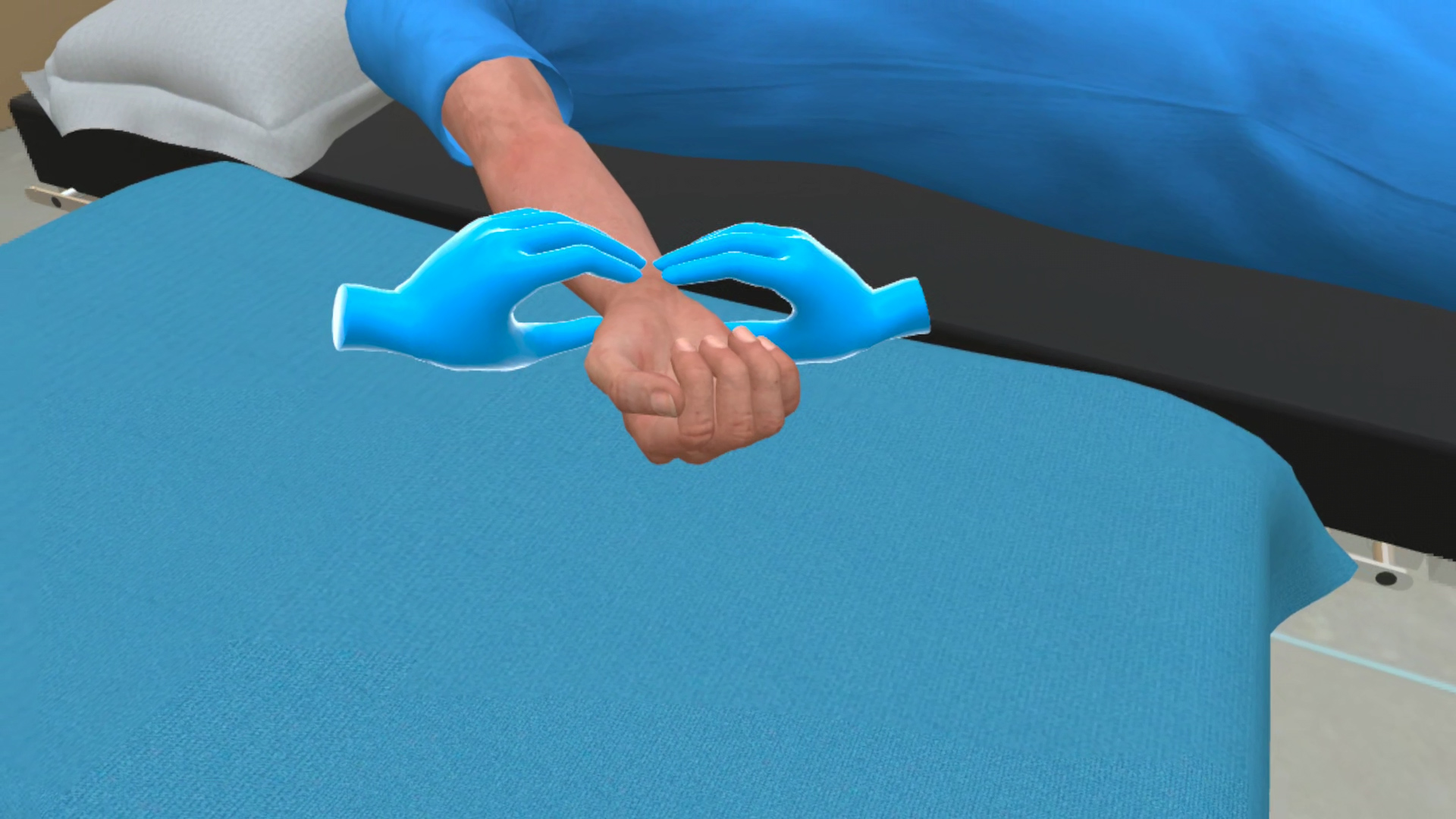
Arterial Line Placement

SIMULATION TYPE
Procedural

SIMULATION DURATION
15 - 20 minutes

PATIENT AGE GROUP
Adult

TARGET AUDIENCE
RN, NP, PA, Physician, Medical Students

Seventy-six-year-old critically ill patient requires continuous blood pressure monitoring and frequent arterial blood sampling in the Intensive Care Unit (ICU). The patient is intubated, sedated, and hemodynamically unstable, making arterial line placement essential for accurate real-time monitoring and clinical decision-making.
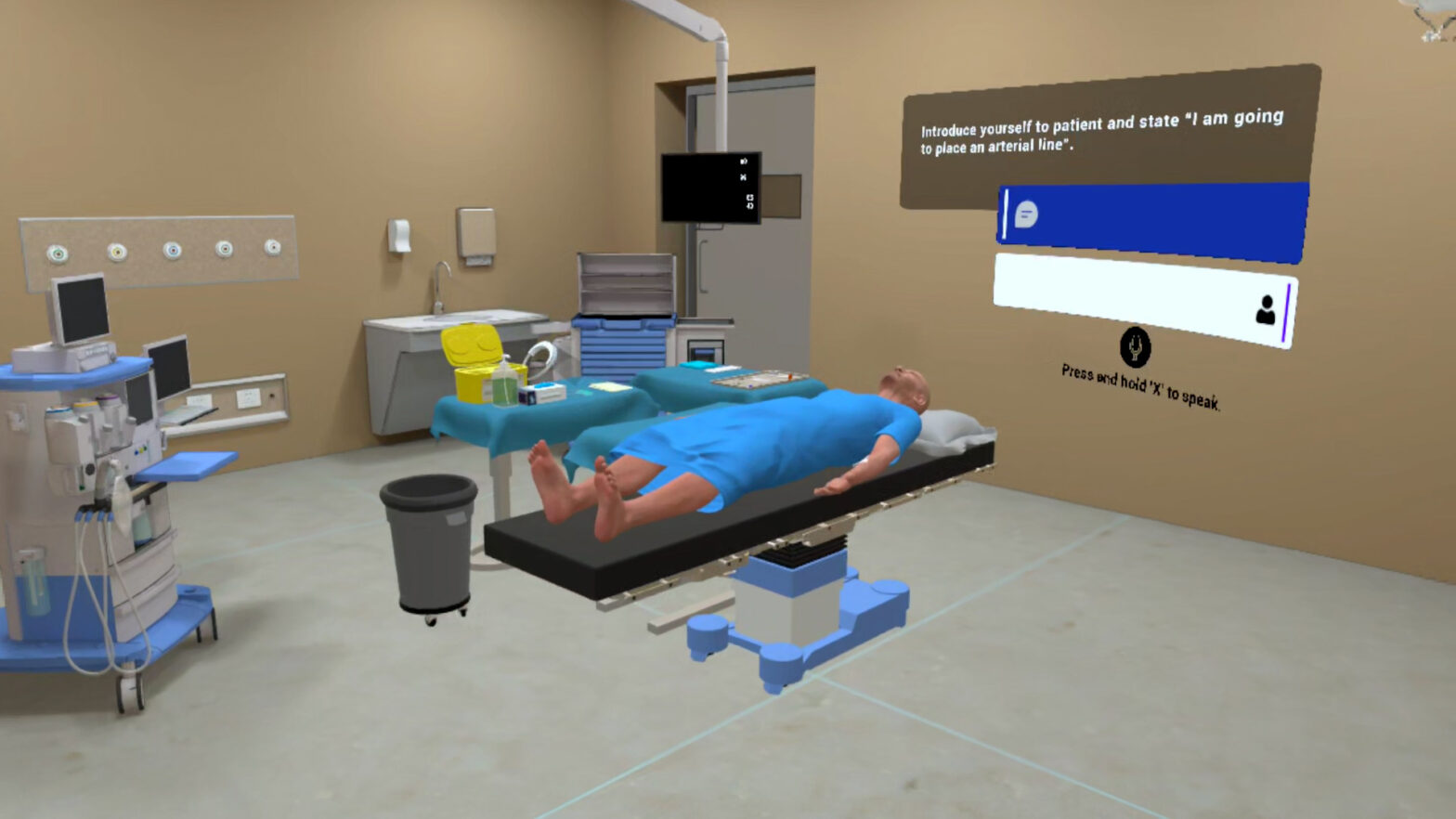
This VR simulation provides learners with a realistic, immersive ICU environment to practice arterial line placement in a controlled and safe setting. Learners perform the full procedure including patient preparation, aseptic technique, arterial access, catheter insertion, waveform confirmation, securing the line, and post-procedure care.
The module includes both guided training and independent assessment modes to reinforce correct procedural sequencing, sterile technique, patient safety, and adherence to clinical standards during invasive bedside procedures.
- Preparing equipment and maintaining a sterile field
- Conducting and interpreting the Allen test
- Identifying anatomical landmarks and palpating the radial artery
- Performing arterial puncture using correct angle and technique
- Advancing guidewire and catheter safely
- Securing the catheter using sutures and dressing
- Disposing of sharps and maintaining infection control
- Armstrong, C., Butson, B., & Kwa, P. (2023). Arterial line insertion. Emergency Medicine Australasia, 35(1), 142–147.
Customize Your Program
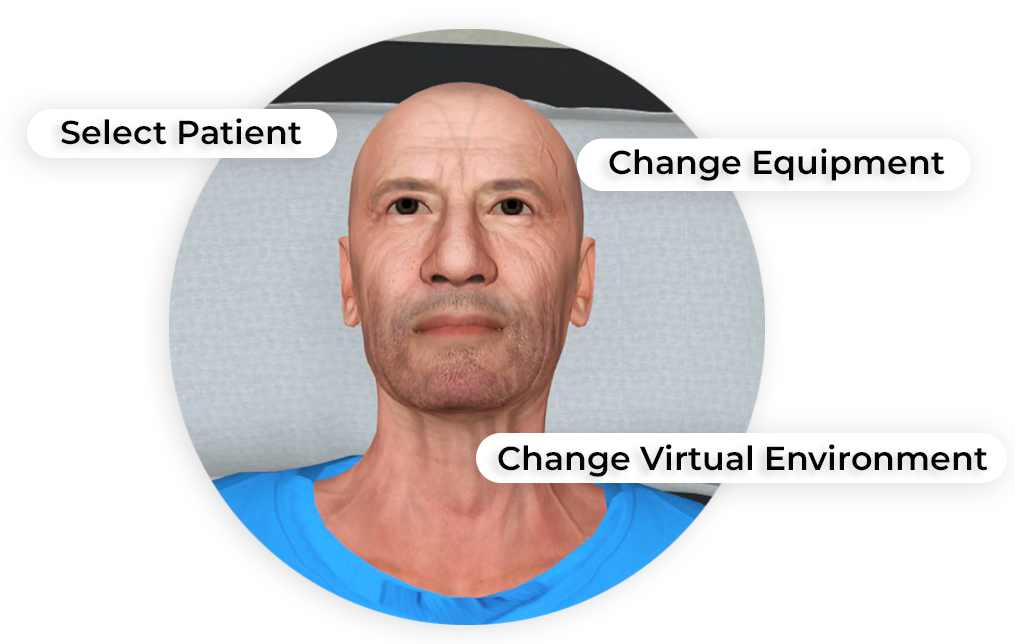
Get rid of the editor. Adopt in-VR customization.
MedVR Education’s in-VR customization allows educators to tailor the arterial line placement simulation to varying skill levels and clinical scenarios.
- Select patient condition (stable vs unstable hemodynamics)
- Adjust anatomical difficulty and pulse palpability
- Customize assessment strictness and scoring parameters
- Additional customization options coming soon
 Multi-playerSessions
 Physics-based Interactions
Core Skills Training
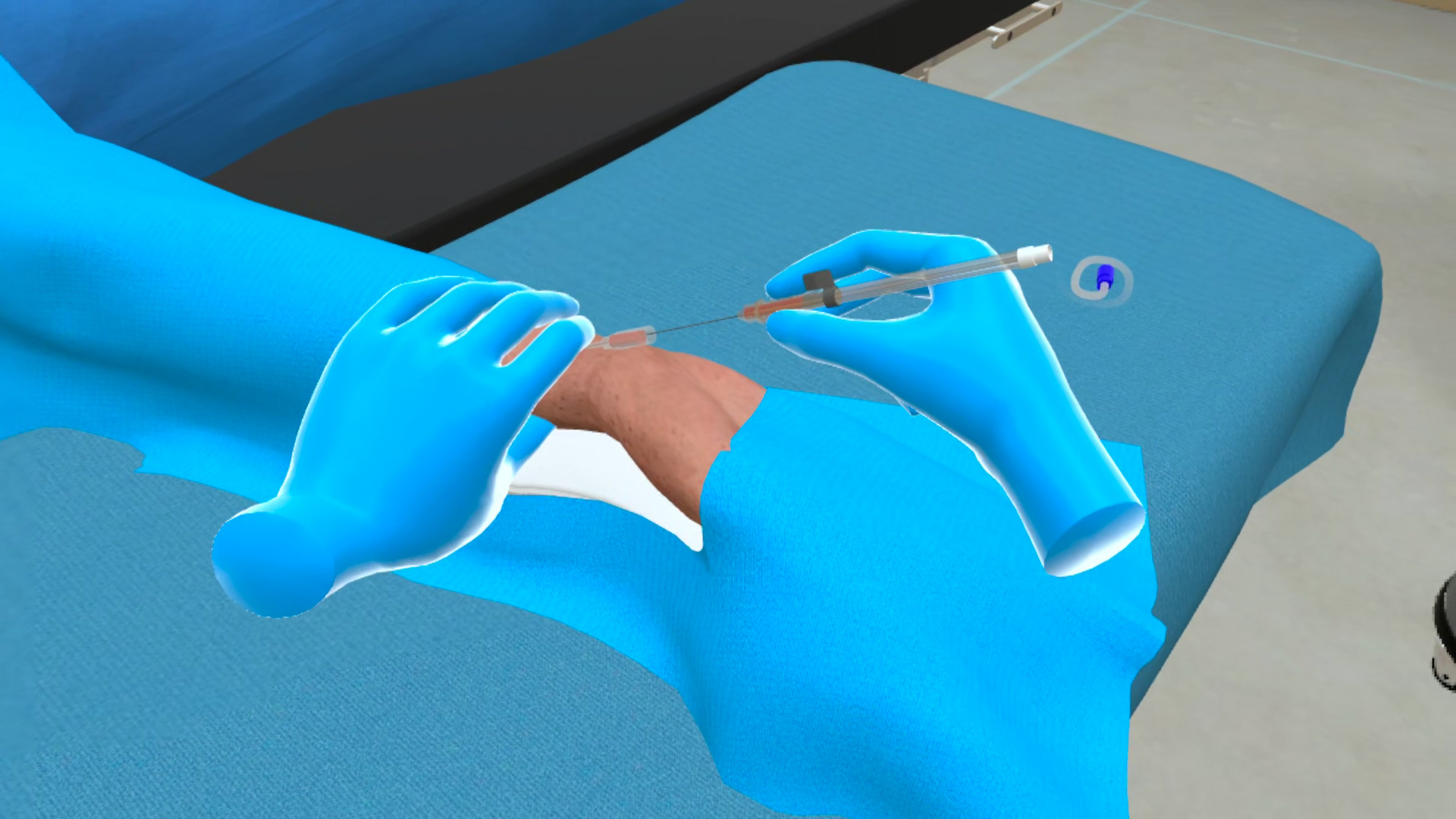
Performing Arterial Line Placement
As part of this procedure, the learner begins by preparing the ICU environment and verifying equipment. The learner introduces themselves and explains the procedure, recognizing that the patient is intubated and unable to respond. After performing hand hygiene and donning non-sterile gloves, the learner conducts the Allen test to assess collateral circulation. The patient’s arm is positioned and secured on an arm board to ensure stability during the procedure.The learner then transitions to sterile technique by donning appropriate PPE and sterile gloves, cleaning the insertion site with antiseptic solution, and applying a sterile drape.Using palpation to locate the radial artery, the learner inserts the arterial catheter at the correct angle. Upon observing pulsatile blood flow, the guidewire is advanced, followed by catheter placement. The needle and wire are removed safely while maintaining hemostasis.The learner connects the catheter to the transducer system, confirms a proper arterial waveform on the monitor, secures the line with sutures and dressing, and disposes of sharps appropriately. The procedure concludes with patient reassessment, cleanup, and documentation.
Training
With prompts, guidance, and interactive cues, learners are guided step-by-step through arterial line placement in a high-fidelity ICU environment.
- Photorealistic ICU setting with ventilated patient
- Physics-based interaction with equipment and instruments
- Guided instructions for sterile technique and procedural steps
- Real-time feedback on positioning, insertion angle, and sequencing
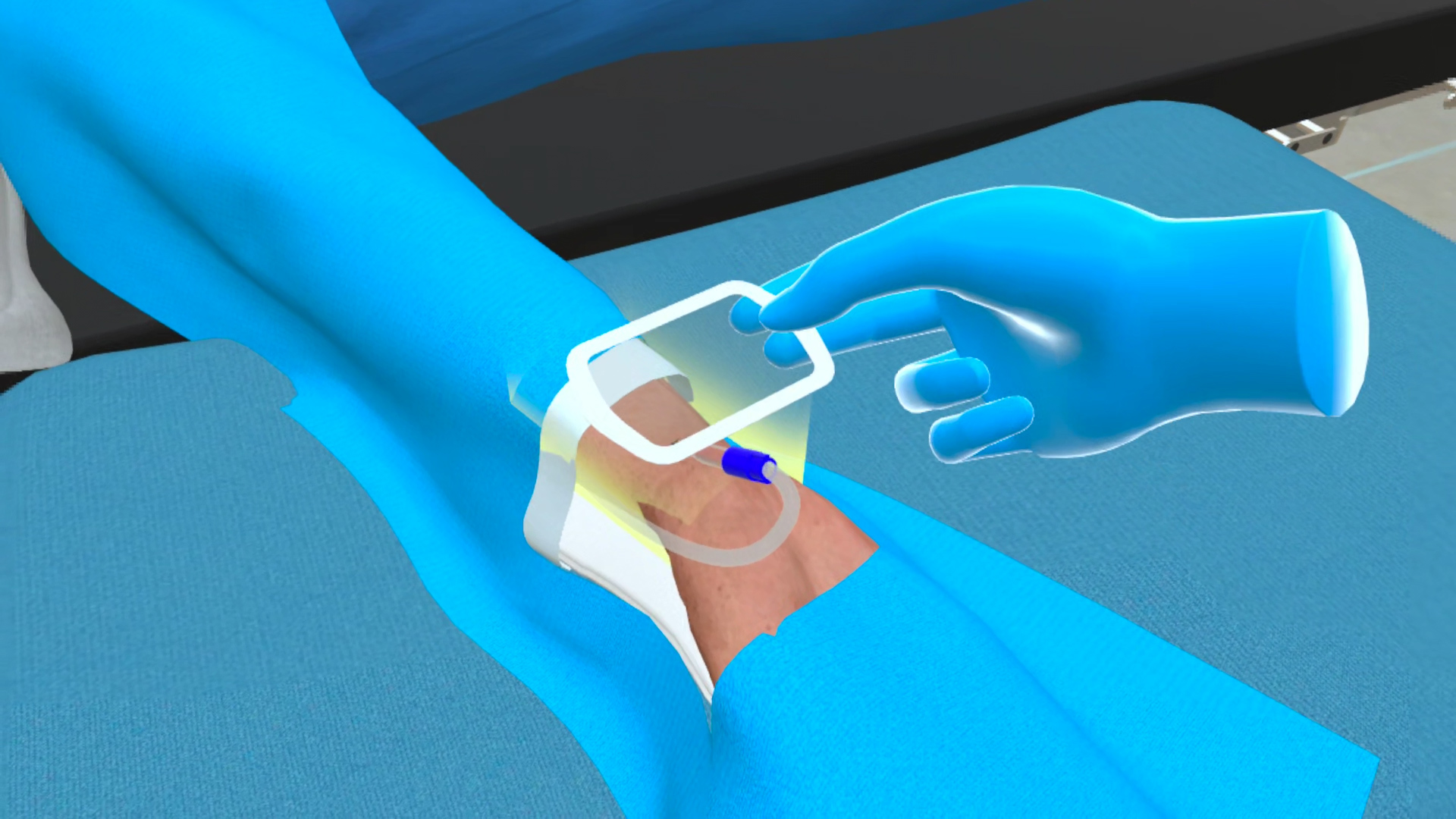
Assessment
Learners demonstrate independent performance of arterial line placement without prompts. Incorrect technique or sequence requires repetition until competency is achieved.
- Live scoring
- Instant feedback
- Validation of sterile technique and procedural accuracy
- Time tracking for completion