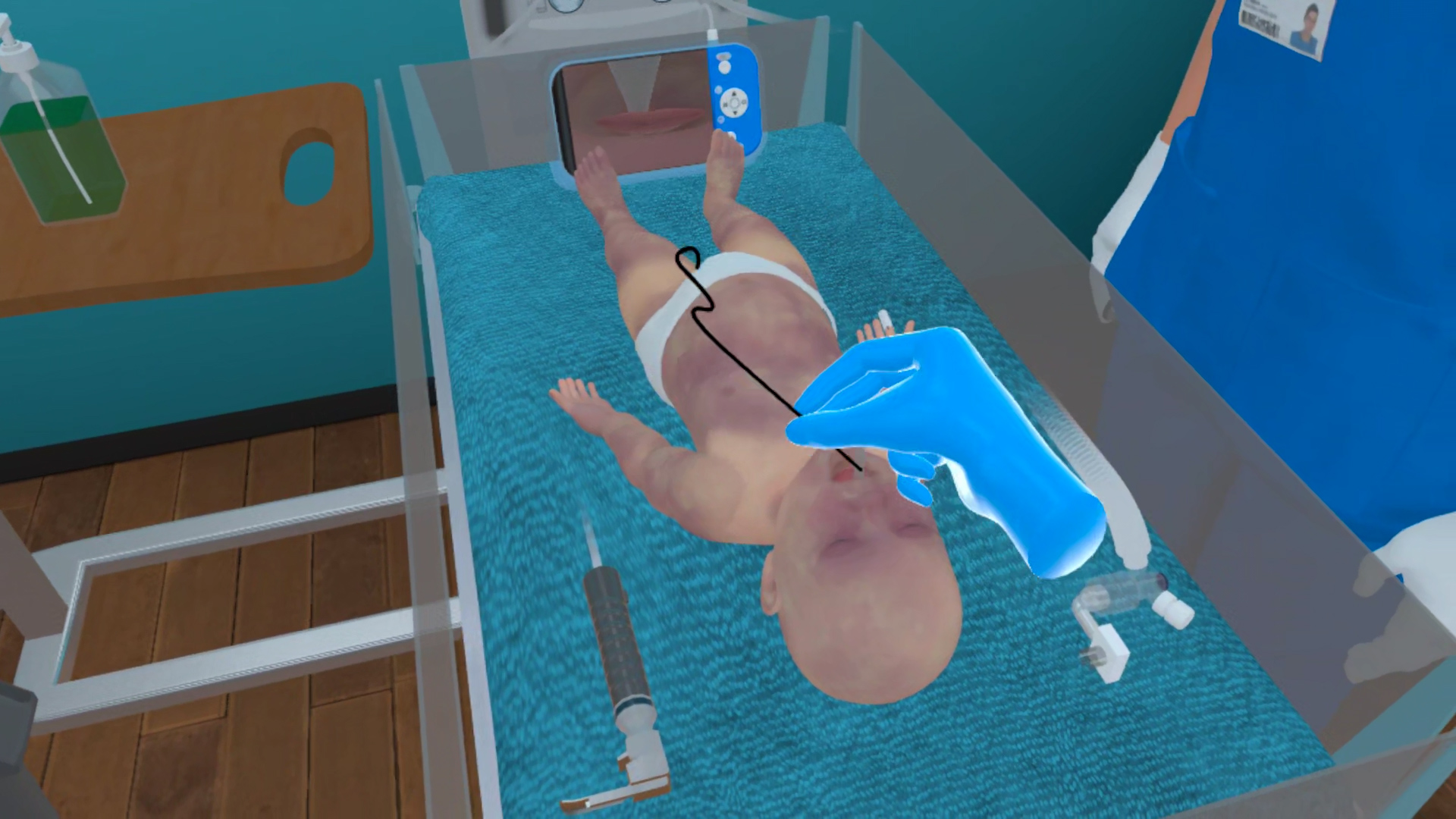
Neonatal Advanced Airway Insertion

SIMULATION TYPE
Procedural

SIMULATION DURATION
15–20 minutes

PATIENT AGE GROUP
Neonate (Newborn)

TARGET AUDIENCE
Nursing Students, Medical Students, Pediatric Residents, Neonatal Fellows.

A term newborn delivered without significant maternal risk factors develops respiratory distress immediately after birth. Despite appropriate initial resuscitation and effective corrective ventilation steps (MR SOPA), adequate chest rise cannot be achieved, and the infant’s heart rate remains below 100 beats per minute. The resuscitation team must establish an advanced airway using either a Laryngeal Mask Airway (LMA) or an Endotracheal Tube (ETT) according to Neonatal Resuscitation Program (NRP) guidelines.
This VR simulation provides learners with a realistic, immersive delivery room environment where they practice advanced neonatal airway management during a time-critical resuscitation. Learners assess the newborn, select the appropriate airway device and size, perform LMA or endotracheal tube placement, confirm proper positioning using chest rise and a CO₂ detector, provide effective positive pressure ventilation, evaluate heart rate response, adjust oxygen concentration when indicated, and continue resuscitation following established NRP protocols.
The module includes both training and assessment modes to reinforce correct airway selection, procedural accuracy, effective ventilation, clinical decision-making, teamwork, and patient safety during neonatal emergencies.
- Recognizing indications for advanced airway placement during neonatal resuscitation
- Selecting the appropriate airway device (LMA or ETT) based on gestational age, weight, and clinical condition
- Choosing the correct airway size and required equipment
- Performing proper airway insertion using sterile and safe procedural technique
- Confirming airway placement through chest rise, heart rate improvement, and CO₂ detection
- Delivering effective positive pressure ventilation at the appropriate rate
- Reassessing the infant’s heart rate and respiratory status following airway placement
- Escalating care appropriately when ventilation remains ineffective
- Adjusting oxygen concentration according to the infant’s clinical response
- Demonstrating effective communication and teamwork throughout neonatal resuscitation
- Weiner, G. M., & Zaichkin, J. (Eds.). (2021). Textbook of neonatal resuscitation (8th ed.). American Academy of Pediatric
Customize Your Program
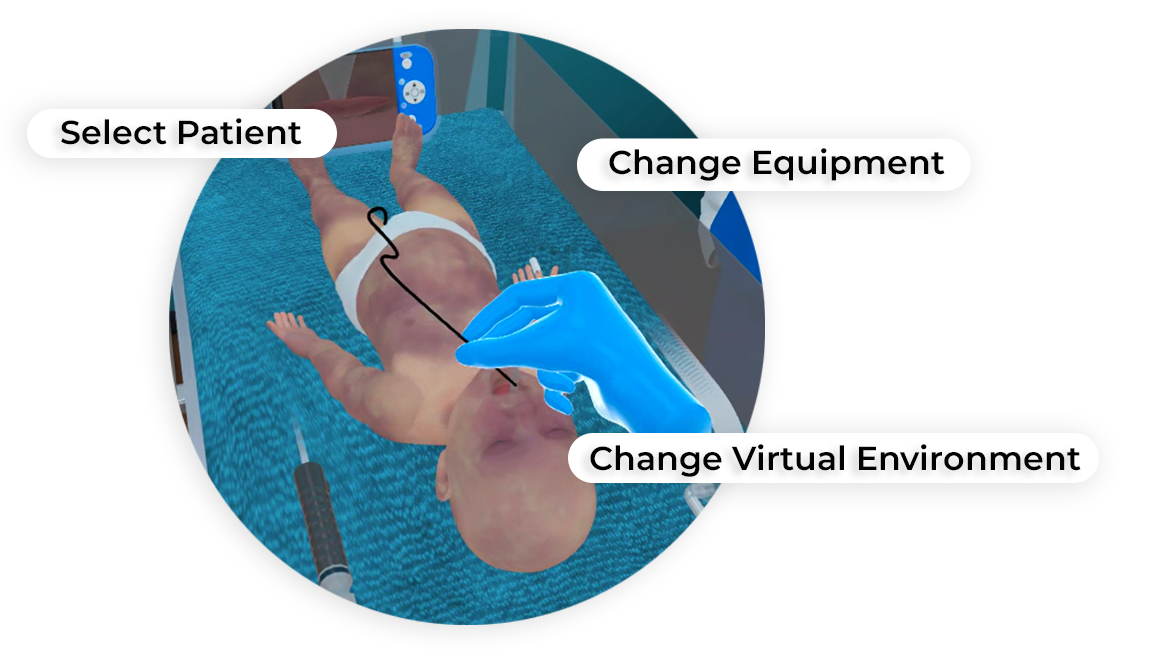
MedVR Education’s in-VR customization allows educators to tailor the Neonatal Advanced Airway Insertion simulation to different learner levels and neonatal resuscitation objectives.
- Select LMA or Endotracheal Tube clinical pathways
- Customize gestational age and newborn weight scenarios
- Adjust airway difficulty and assessment strictness
- Modify environmental distractions, equipment alarms, and team communication challenges
- Additional customization options coming soon
Additional customization options are available and can be developed to meet your specific training needs.
 AI Patient Assessment
 Natural Language Processing
 Multi-playerSessions
 Physics-based Interactions
Core Skills Training
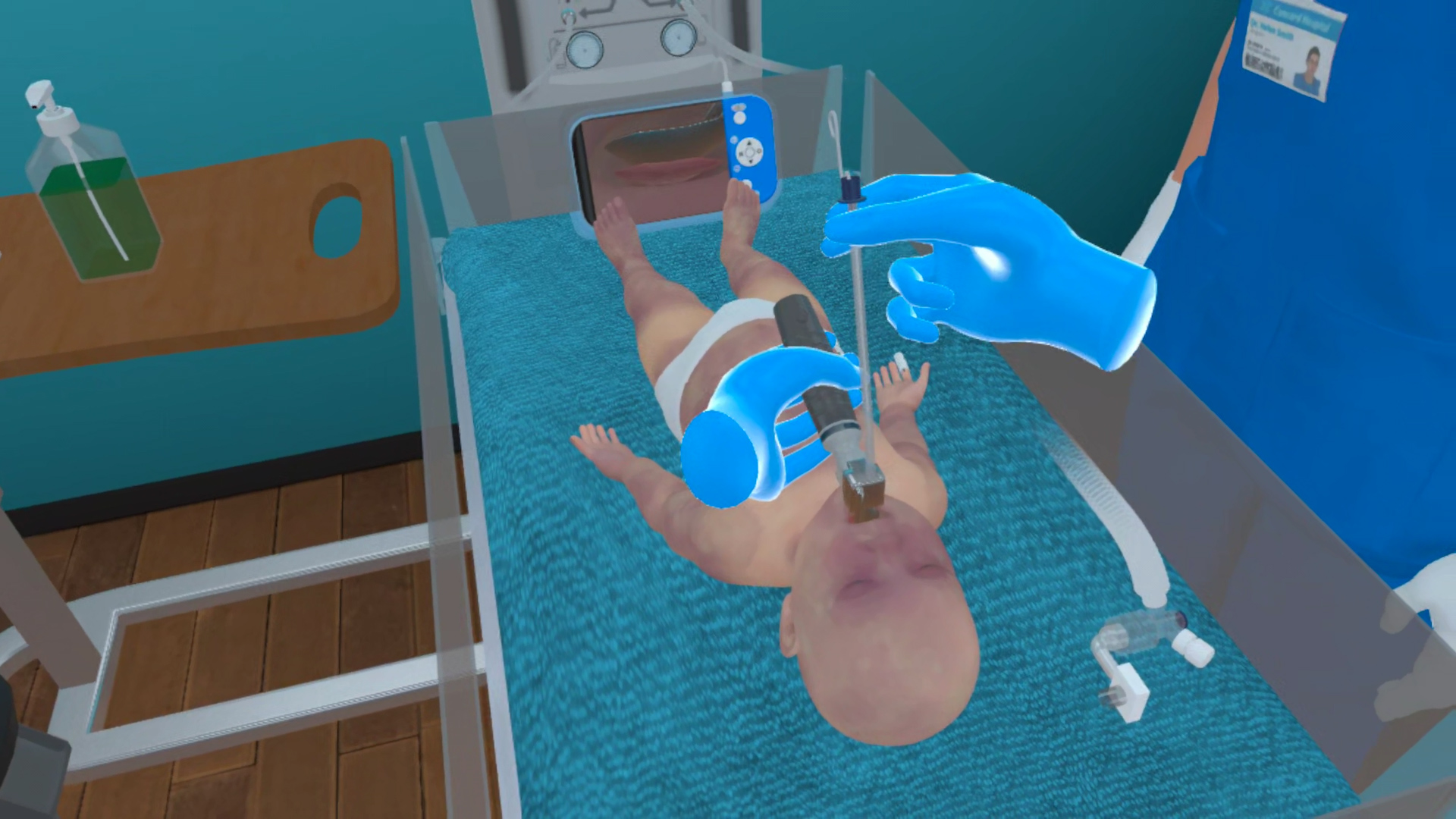
Performing Neonatal Advanced Airway Insertion
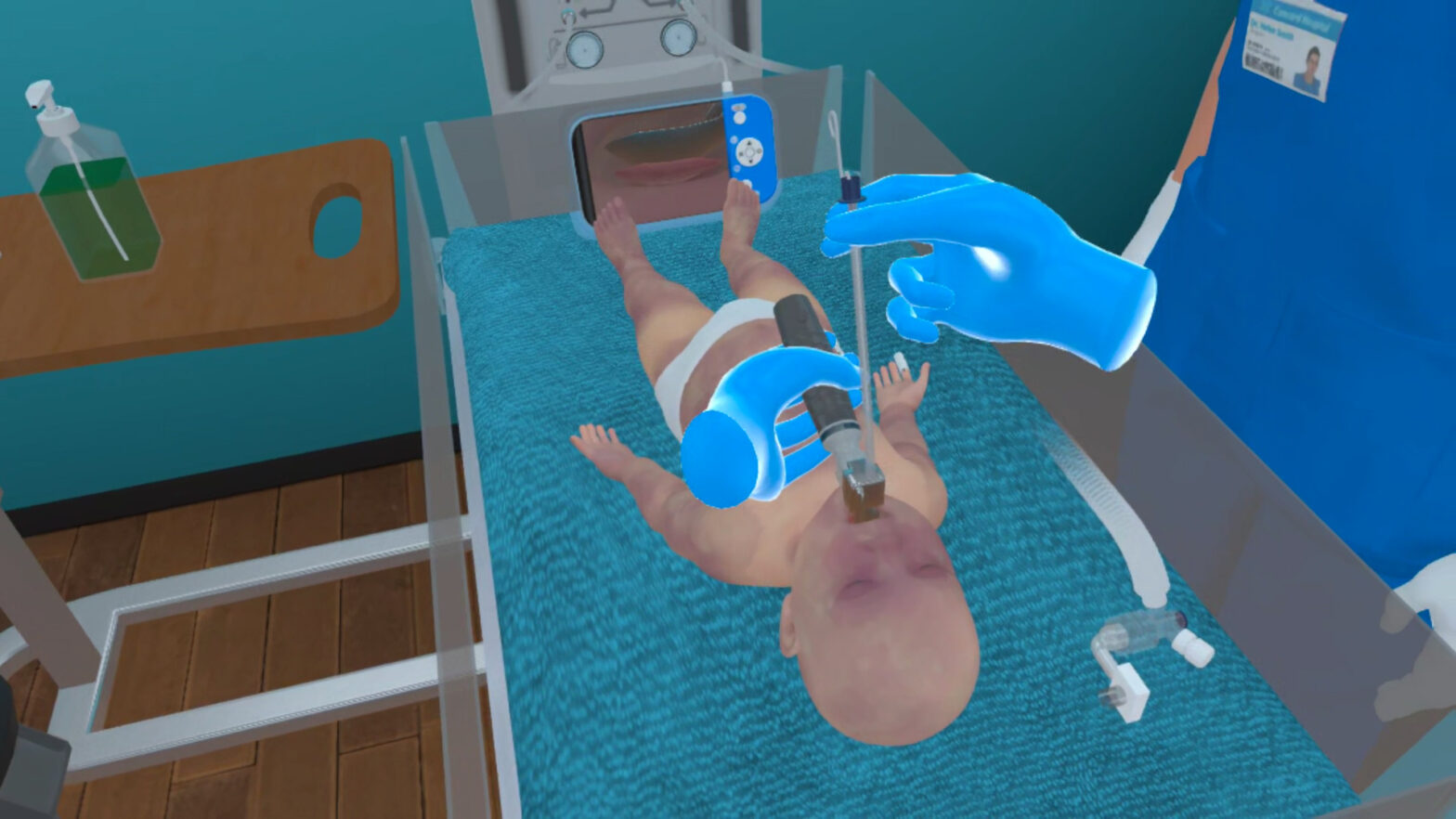
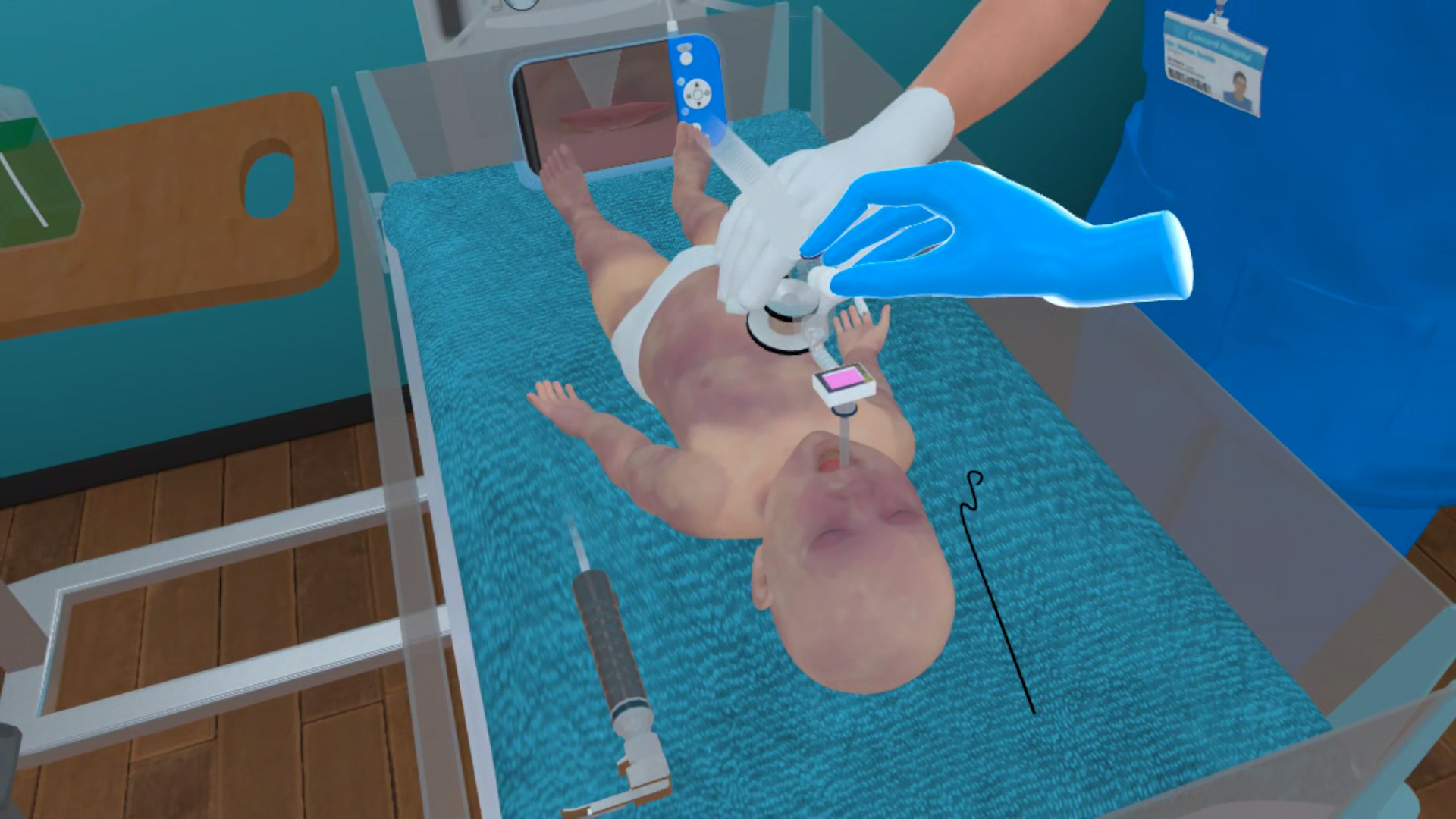
The learner assesses the newborn after unsuccessful mask ventilation and MR SOPA corrective steps, evaluating heart rate, tone, color, and chest movement to determine the need for an advanced airway.The learner selects and prepares an appropriately sized LMA or endotracheal tube based on gestational age and weight, and communicates the plan to the resuscitation team. The learner then places the selected airway, initiates ventilation, and confirms placement through chest rise, heart rate improvement, and CO₂ detection.For endotracheal intubation, the learner selects the correct equipment, performs laryngoscopy, inserts and secures the tube, confirms placement, and continues ventilation while reassessing the infant. If ventilation remains inadequate, the learner adjusts oxygen delivery and follows NRP guidelines.
Training
With prompts, guidance, and affordances, learners are guided step-by-step through advanced neonatal airway insertion in a realistic delivery room environment.
- Photorealistic neonatal delivery room and radiant warmer environment
- Physics-based interaction with airway devices and neonatal resuscitation equipment
- Guided instructions and visual coaching
- Affordances supporting airway selection, placement technique, ventilation, and decision-making
Assessment
Learners demonstrate independent performance of neonatal advanced airway management without prompts. Incorrect actions or critical failures require the learner to restart and successfully complete the procedure.
- Live scoring
- Immediate feedback
- Airway placement and ventilation validation
- Time tracking for critical interventions