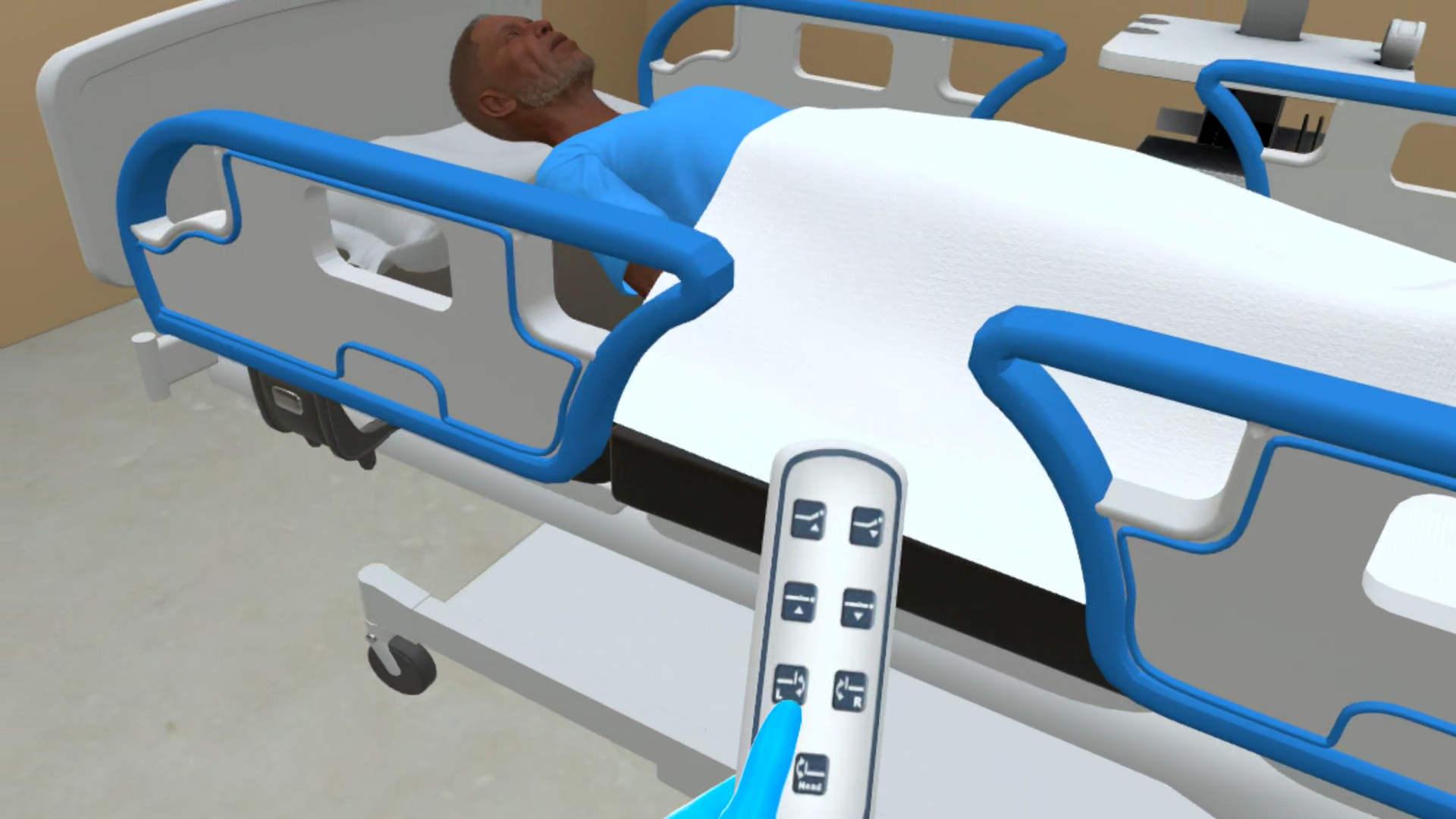
Ultrasound of Patient’s Bladder

SIMULATION TYPE
Procedural

SIMULATION DURATION
15–20 minutes

PATIENT AGE GROUP
Adult (63 Years Old)

TARGET AUDIENCE
Nursing Students, Medical Students, Emergency Medicine Learners, Sonography Learners

Sixty-three-year-old James Anderson presents to the Emergency Department with lower abdominal pain and urinary retention symptoms requiring a bedside bladder ultrasound for diagnostic evaluation. Performing a bladder ultrasound requires proper patient preparation, safe equipment handling, accurate probe positioning, effective patient communication, and correct interpretation of bladder volume findings.
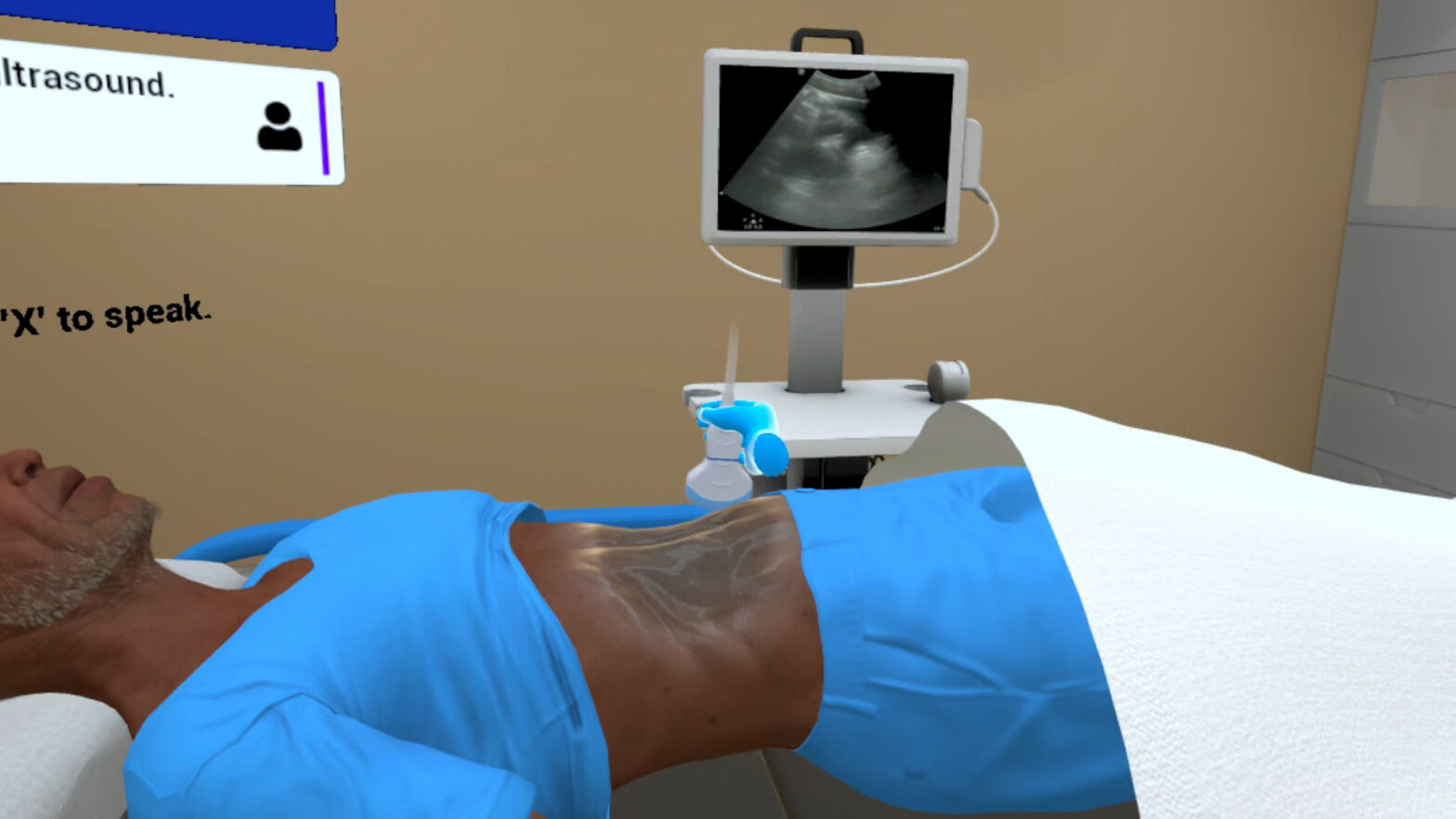
This VR simulation provides learners with a realistic, immersive environment to practice performing a bedside bladder ultrasound in a controlled emergency department setting. Learners progress through patient identification, hand hygiene, patient interviewing, stretcher repositioning, ultrasound machine setup, gel application, transducer positioning, bladder visualisation, bladder volume assessment, patient communication, and post-procedure care while following clinical safety and infection control standards.
The module includes both training and assessment modes to reinforce correct sequencing, patient interaction, ultrasound scanning technique, equipment handling, clinical decision-making, and procedural accuracy during bedside bladder assessment procedures.
- Preparing the patient and ultrasound equipment for a safe bladder scan procedure
- Performing proper hand hygiene and appropriate PPE use
- Introducing the procedure and verifying patient identity accurately
- Assessing patient symptoms related to urinary retention and abdominal discomfort
- Correctly preparing and operating the ultrasound machine and transducer
- Applying ultrasound gel and positioning the transducer using proper anatomical landmarks
- Completing appropriate procedural documentation and reporting results
- Rumack, C. M., Wilson, S. R., Charboneau, J. W., & Levine, D. (2018). Diagnostic ultrasound (5th ed.). Elsevier.
Customize Your Program
Partner with MedVR Education to tailor the bladder ultrasound simulation to your organization’s unique learning objectives, clinical workflows, and learner skill levels.
- Select patient symptom severity and bladder volume variations
- Choose the Emergency Department room configuration
- Adjust procedural difficulty and assessment criteria
- Modify environmental distractions and patient communication complexity
- Customize the ultrasound machine interface and scanning challenges
Additional customization options are available and can be developed to meet your specific training needs.
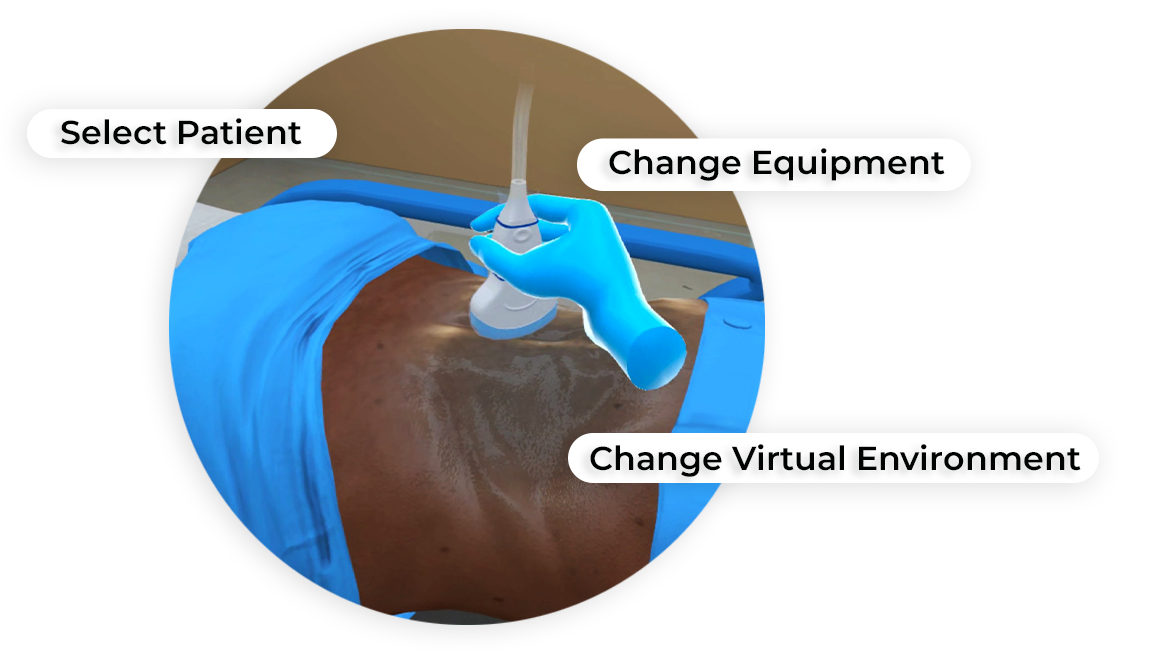
 AI Patient Assessment
 Natural Language Processing
 Multi-playerSessions
 Physics-based Interactions
Core Skills Training
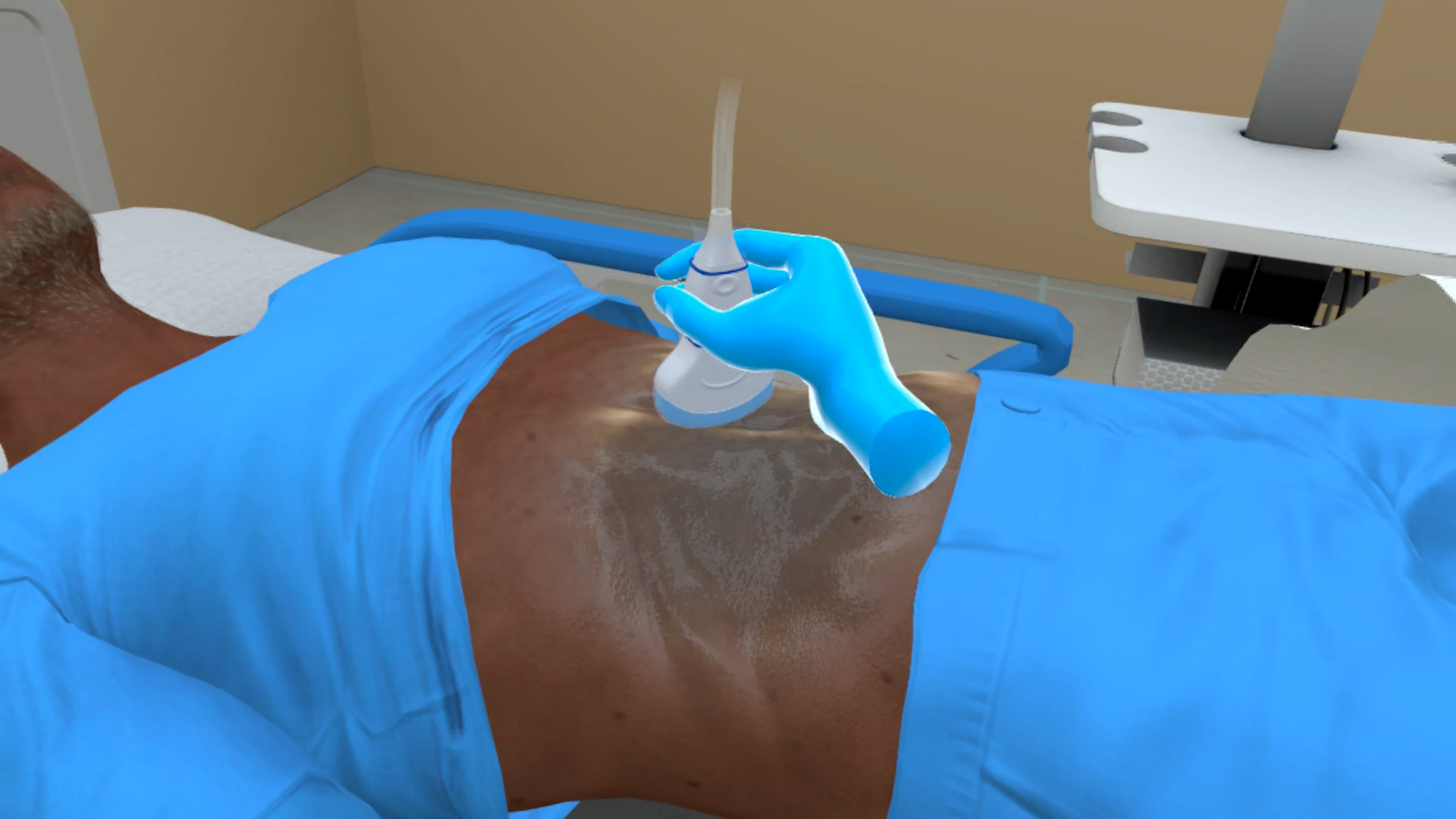
Performing Ultrasound of Patient’s Bladder
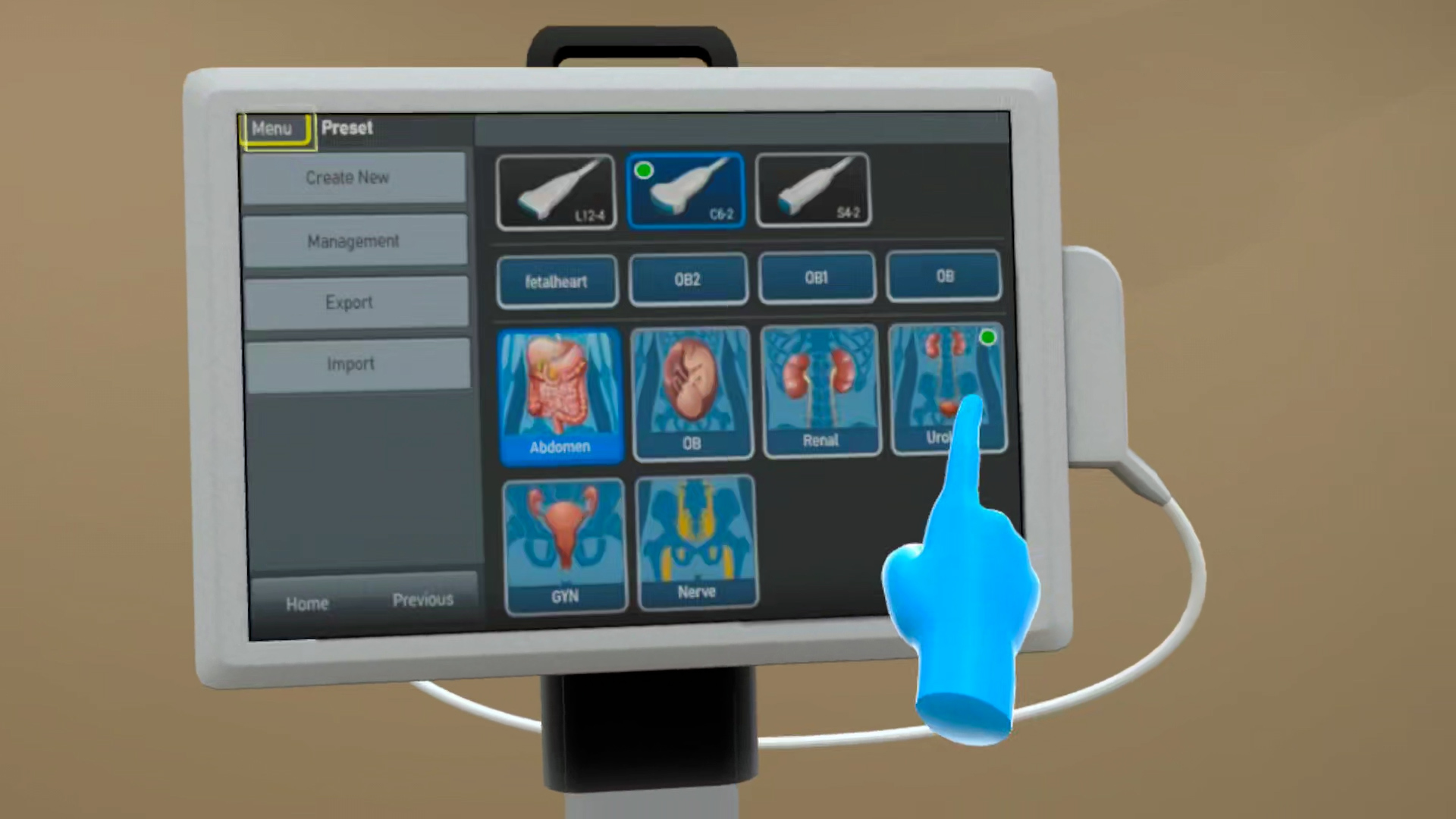
As part of this procedure, the learner begins by reviewing the patient presentation, performing hand hygiene, and introducing themselves to the patient. The learner verifies patient identity and asks assessment questions regarding abdominal pain, urinary retention, urine output, and urinary symptoms prior to beginning the procedure. After educating the patient and obtaining consent, the learner adjusts the stretcher height, lowers the bed rail, exposes the lower abdomen appropriately, and applies ultrasound gel to the scanning area. The learner then prepares the ultrasound machine by signing into the system, selecting the patient worklist, choosing the transducer, and activating the urology/bladder scanning mode.The learner positions the transducer directly above the pubic symphysis with correct probe orientation and scans the bladder using appropriate rocking, tilting, and fanning techniques to visualize the bladder fully. Once the bladder volume is identified, the learner communicates the findings to the patient, cleans the patient’s abdomen, repositions the bed safely, disposes of supplies appropriately, performs hand hygiene, and documents the procedure according to clinical best practices.
Training
With prompts, guidance, and affordances, learners are guided step-by-step through performing a bedside bladder ultrasound in a virtual Emergency Department environment.
- Photorealistic Emergency Department room environment
- Physics-based interaction with ultrasound equipment, stretcher controls, gel, towels, and procedural supplies
- Guided instructions and visual cues
- Affordances supporting proper probe placement, patient positioning, and scanning technique
- Realistic ultrasound screen visualization and bladder imaging simulation
Assessment
Learners demonstrate independent performance of the procedure from start to finish without prompts. Incorrect steps require the learner to restart and complete the task correctly.
- Live scoring
- Immediate feedback
- Sequence and technique validation
- Patient communication assessment
- Time tracking for task completion